OVERVIEW
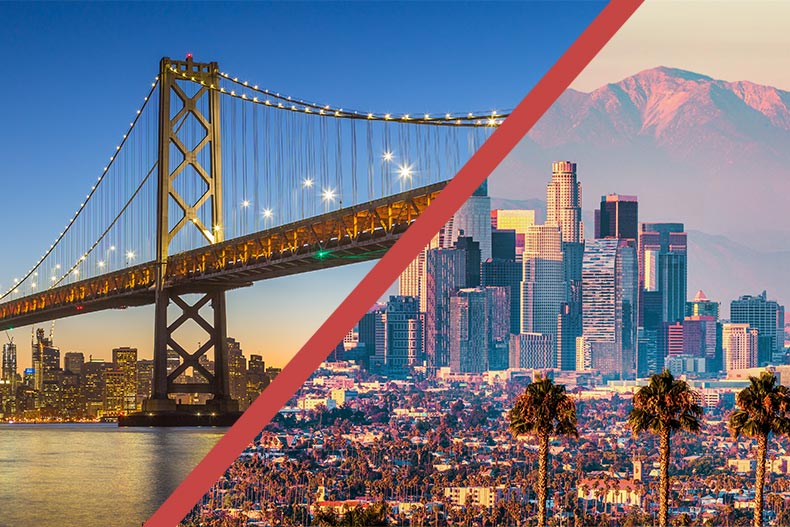
San Francisco and Los Angeles are both viable California retirement destinations, but they suit different lifestyles and budgets. San Francisco has a median home price of $1,195,000, a walkable layout, and milder summers that rarely exceed 70 degrees, while Los Angeles averages $969,000 for homes, offers warmer beaches and more sprawl, and requires a car. Both cities have multiple 55+ and active adult communities and top-ranked hospitals, including UCSF Health and Cedars-Sinai Medical Center.
Are you looking to retire in (or to) California? If so, you probably have both San Francisco and Los Angeles on your list. With its beautiful weather, beaches, and wide range of activities, California is a dream retirement destination. It’s also a big state with many different places to consider.
If you’ve narrowed it down to San Francisco vs. Los Angeles, then you may want to read on to compare them. San Francisco is in the heart of Northern California, while Los Angeles is the major hub of Southern California. Consider weather, neighborhood types, and yes, that Hollywood glamor when making your decision.
Geography and Population
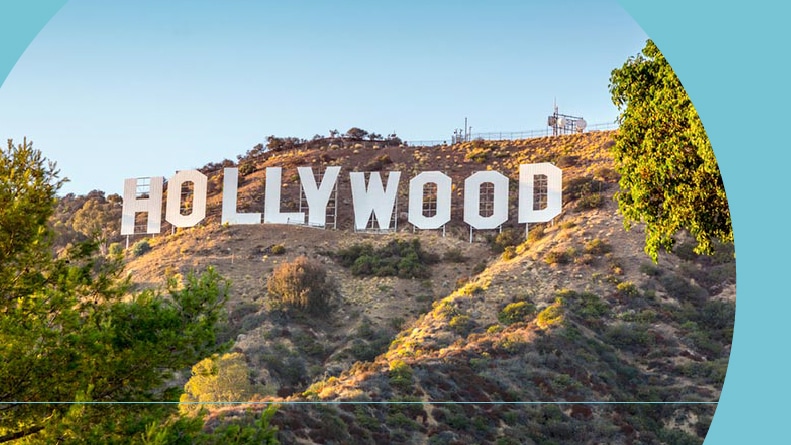
Los Angeles
Los Angeles is known for its sprawl. While the city does offer public transportation and pockets of walkable neighborhoods, its roughly 500 square miles often make a car essential for getting around. The city’s size can also make it more challenging to get beyond its limits and explore surrounding areas. With a population of about 3.8 million, Los Angeles is an expansive metropolis.
The downtown is relatively light on skyscrapers but high on dramatic backdrops. And you can also consider several other Southern California cities within striking distance, like Long Beach, Beverly Hills, and West Hollywood, for example.
San Francisco
San Francisco, on the other hand, is compact and has a much better public transportation network, including the iconic cable cars. However, it’s also famous for not being flat. Walking around San Francisco involves a lot of climbing and descending, which can be hard on knees that may not be what they used to be. The city of over 800,000 people has its own iconic sights, especially Alcatraz Island and the Golden Gate Bridge.
Being much more compact, San Francisco is both more walkable and easier to “escape.” Cross the Golden Gate, and you are almost immediately out of the city. It’s also near other major cities, such as Oakland, Berkley, and San Jose, as well as iconic state parks and Silicon Valley.
Climate
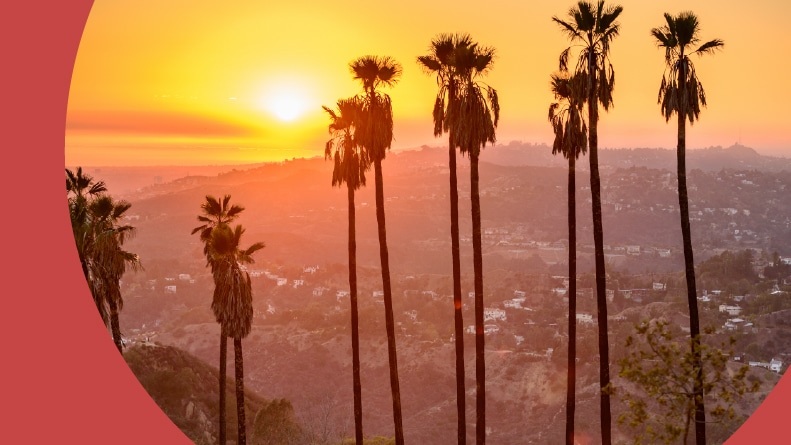
California is, as mentioned, a big state. Northern California and Southern California have very different climates. If your vision of California is palm trees and hot sunny days, then you want Southern California. If you prefer milder summers, you want Northern California.
The climate in San Francisco is generally mild. Summers seldom go above 70 degrees and often hover in the 60s, while winters rarely drop below freezing. Most of the rain hits in the winter, resulting in pleasant, dry summers ideal for outdoor activities.
Los Angeles, on the other hand, has a much warmer climate. Rainfall is still higher in the winter, but summer temperatures often soar into the 80s, higher during a heatwave. The winter temperatures, on the other hand, are very similar.
San Francisco is great if you enjoy the outdoors, with its mild climate and easy access to amazing places such as Angel Island State Park or Big Basin State Park (the oldest in California). You also have the option of spending time on the water by sailing, kayaking, or taking a cruise.
If relaxing on the beach is more your thing, Los Angeles might be a better choice, with great places to walk, swim, and surf. Head up to Griffith Observatory for spectacular views (and free public telescopes). Or take your blanket and a picnic to Venice Beach, which has both amazing sands and a fun boardwalk.
Cost of Living
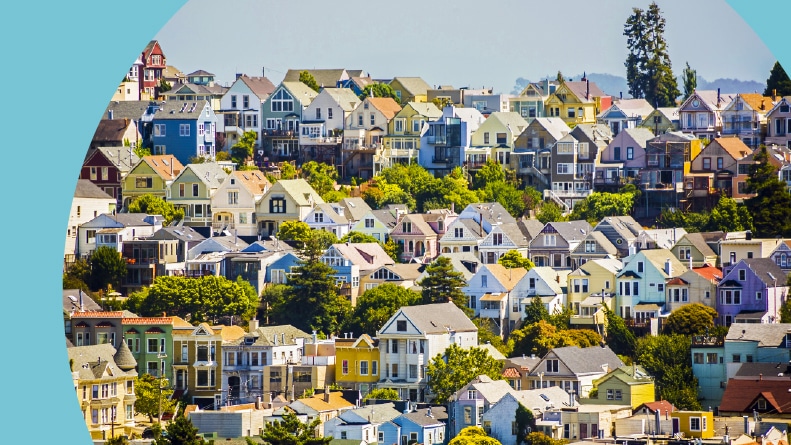
Unfortunately, the downside to retiring in California is the cost of living. The state has a reputation for being pricey, and while there are cheaper parts, they tend to be smaller towns east of the mountains.
Both San Francisco and Los Angeles are expensive. San Francisco tends to be worse due to the growth constraints of being on a peninsula. The same forces that keep San Francisco walkable and easy to navigate put upward pressure on land prices. Los Angeles is a bit cheaper, but the average home price, including condos, is about $987,000. Rents are similarly high. And in San Francisco, the average home costs $1,195,000. Doing a bit of hunting may net you a deal, but you have to be ready for the high costs of not just housing but groceries and other essentials.
Taxes also trend high. Expect to pay a total sales tax of 8.625% in San Francisco and as much as 11.25% in parts of Los Angeles.
Culture and Entertainment
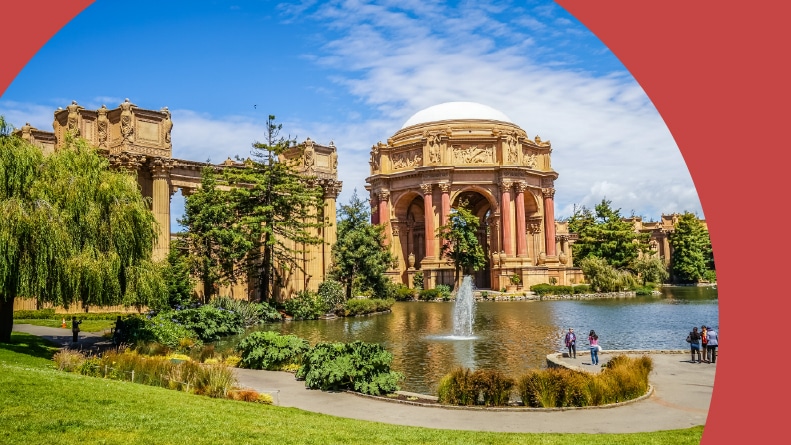
Things to Do in San Francisco
San Francisco has its own feel. It has no shortage of shopping districts, with plenty of boutique stores, especially in Noe Valley. And it has an excellent Chinatown and a wide variety of restaurants.
Head down to Fisherman’s Wharf, which offers fun dining options and from where a lot of bay cruises leave. It’s also a great place to catch a glimpse of the Bay’s watery residents—the local sea lions. Ride the cable cars for the sake of riding the cable cars. And check out the cultural institutions, including the Fine Arts Museums of San Francisco and the science-based Exploratorium. The latter is a great place to take the grandkids.
The city has a wide variety of entertainment venues too, ranging from Chase Center (also home to the Golden State Warriors basketball team) to the intimate Fillmore. And you can always find a local band playing at a trendy club.
In the city, you can go to Golden Gate Park for the great view, or picnic in Washington Square Park (when it’s not hosting a fun festival). But don’t forget the surrounding area too. Active adults will find plenty of places to go hiking.
Things to Do in Los Angeles
Los Angeles has everything a big city offers, with a touch of pizazz. The iconic sign is visible from many parts of the city, and the Santa Monica Pier offers shopping, rides, fishing, cafes… You name it.
The shopping districts buzz, including the famous Sunset Strip and Rodeo Drive, but check out smaller neighborhoods too. Or head to the La Brea Tar Pits and Museum, which is another great place to take the grandkids, especially if they are dinosaur age (but who isn’t?). There’s also the Museum of Contemporary Art and the Getty.
There’s great dining too, especially in suburbs like Pasadena. But what Los Angeles is really about is entertainment. There’s always something happening, whether it’s at the giant Hollywood Bowl, the legendary Troubadour club, the classic Greek Theatre, or hundreds of other venues throughout the city.
Speaking of those grandkids, Anaheim is an easy drive, making Disneyland and other theme parks in the Anaheim resort area very accessible.
Lastly, you can go to the beach or hike in Griffith Park by the observatory or at Runyon Canyon Park. Or drive further out to explore the Southern California desert.
Health Care and Education
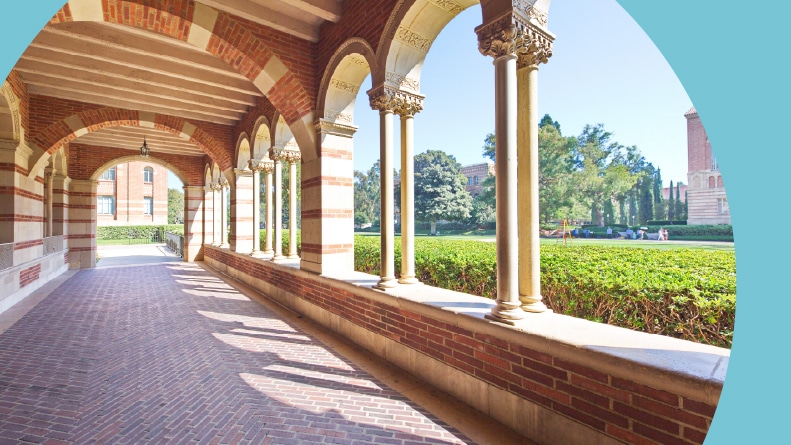
We don’t want to think about health care, but it becomes even more important as we age. In San Francisco, UCSF Health-UCSF Medical Center consistently ranks among the top 20 hospitals nationwide, according to U.S. News. It performs particularly well for spinal fusion and heart surgery.
Meanwhile, in Los Angeles, the same rankings pick out Cedars-Sinai Medical Center and UCLA Medical Center. All three of these hospitals are highly ranked teaching hospitals, so whichever city you choose, you will have access to top-notch medical care. And if your grandkids decide to come to California for their education, the University of California has campuses in both cities.
San Francisco also has the University of San Francisco and Los Angeles has the University of Southern California. So, as far as education, you’re in great hands in either area.
55+ Communities in the San Francisco Area
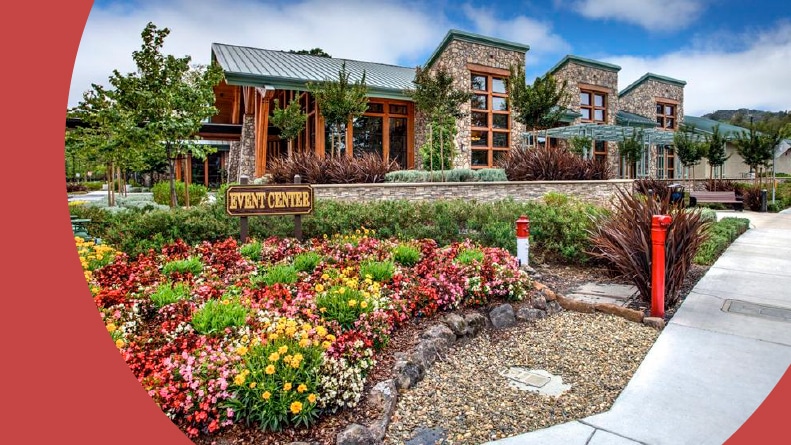
The San Francisco Bay Area offers one of the most diverse retirement landscapes in the country, with 55+ communities spread across wine country, the East Bay, Silicon Valley, the Peninsula, and the North Bay. Retirees here enjoy mild Mediterranean weather, world-class dining and arts, and easy access to coastal parks and mountain trails. Home prices run higher than the national average, but the range of locations means buyers can find a lifestyle that fits their priorities.
Brentwood, CA
Cloverdale, CA
Foster City, CA
Fremont, CA
Gilroy, CA
Healdsburg, CA
Hollister, CA
Los Altos, CA
Los Gatos, CA
Menlo Park, CA
Morgan Hill, CA
Napa, CA
Pleasanton, CA
Rio Vista, CA
San Jose, CA
San Mateo, CA
San Rafael, CA
San Ramon, CA
Santa Rosa, CA
Sonoma, CA
Vacaville, CA
Walnut Creek, CA
Watsonville, CA
Windsor, CA
Yountville, CA
55+ Communities in the Los Angeles Area
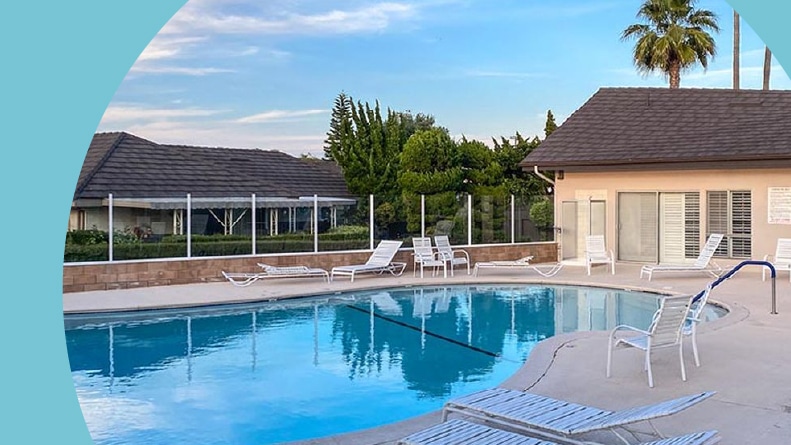
Greater Los Angeles encompasses one of the most sprawling and varied retirement landscapes in the country, from urban neighborhoods with walkable amenities to coastal bluffs, inland valleys, and South Bay beach communities. The region offers world-class health care along with a year-round outdoor lifestyle anchored by beaches, mountains, and more than 300 days of sunshine. Home prices vary significantly across the metro, giving buyers options ranging from affordable inland locations to premium coastal addresses.
Los Angeles, CA
Montebello, CA
Rancho Palos Verdes, CA
Redondo Beach, CA
Torrance, CA
Westlake Village, CA
FAQ: Retiring in San Francisco vs Los Angeles
Is it cheaper to retire in San Francisco or Los Angeles?
Los Angeles is cheaper. The average home price in Los Angeles is about $969,000, compared to $1,195,000 in San Francisco. San Francisco’s geography constrains supply and pushes prices higher. Sales tax is also a factor; expect 8.625% in San Francisco and up to 11.25% in parts of Los Angeles. Both cities are expensive by national standards, but Los Angeles offers a lower housing entry point.
Is San Francisco or Los Angeles better for retirement?
It depends on your lifestyle. San Francisco is compact and walkable, with excellent public transit, a milder climate (summers in the 60s), and easy access to nature just beyond the city limits. Los Angeles offers warmer weather, beaches, world-class entertainment, and a wider variety of neighborhoods, but it is car-dependent and sprawling. Both cities have top-ranked hospitals and strong cultural scenes.
What is the weather like in San Francisco vs Los Angeles?
San Francisco has mild, consistent weather. Summers rarely exceed 70 degrees and often sit in the 60s, with dry conditions ideal for outdoor activities. Winters seldom drop below freezing. Los Angeles is significantly warmer; summer temperatures regularly reach the 80s and higher during heat waves. Winter temperatures are similar between the two cities.
Which city is more walkable: San Francisco or Los Angeles?
San Francisco is significantly more walkable. The city is compact with a strong public transit network, including BART, Muni, and the iconic cable cars. Los Angeles covers roughly 500 square miles and is fundamentally car-dependent, with only pockets of walkable neighborhoods. However, San Francisco’s hilly terrain can be challenging for retirees with mobility concerns. For retirees who want to live without a car, San Francisco is the stronger choice.
Which city has better health care: San Francisco or Los Angeles?
Both cities offer top-tier health care. In San Francisco, UCSF Health–UCSF Medical Center consistently ranks in the top 20 hospitals nationwide, performing particularly well for spinal fusion and heart surgery. In Los Angeles, Cedars-Sinai Medical Center and UCLA Medical Center are both highly ranked. Retirees in either city will have access to excellent medical care, so health care alone shouldn’t determine the decision between the two.
Are there 55+ communities in San Francisco and Los Angeles?
Yes, both metro areas have 55+ communities. The San Francisco Bay Area has a large selection spread across cities like Walnut Creek, Brentwood, Santa Rosa, Fremont, Foster City, and many others in Sonoma and Napa wine country. The Los Angeles area has communities in Rancho Palos Verdes, Torrance, Redondo Beach, Westlake Village, and Montebello, among others. The Bay Area offers more 55+ community options overall.
What is there to do in San Francisco for retirees?
San Francisco offers Fisherman’s Wharf, bay cruises, cable car rides, Golden Gate Park, and Washington Square Park. Cultural highlights include the Fine Arts Museums of San Francisco and the Exploratorium. Shopping districts like Noe Valley feature boutique stores, and the city has excellent Chinatown dining and a diverse array of restaurants throughout. The Golden State Warriors play at Chase Center, and intimate music venues like the Fillmore round out the entertainment scene. Nature is easily also accessible; cross the Golden Gate Bridge, and you’re immediately outside the city.
What is there to do in Los Angeles for retirees?
Los Angeles offers the Santa Monica Pier, beaches for swimming and surfing, Griffith Observatory with free public telescopes, and hiking in Griffith Park and Runyon Canyon. Cultural attractions include the La Brea Tar Pits and Museum, the Museum of Contemporary Art, and the Getty. Entertainment venues include the Hollywood Bowl, Greek Theatre, and the legendary Troubadour. Shopping spans from the Sunset Strip and Rodeo Drive to charming neighborhoods like Pasadena. Disneyland in Anaheim is an easy drive for grandchildren’s visits.
Is San Francisco or Los Angeles better for outdoor activities?
Both cities offer strong outdoor recreation, but the type differs. San Francisco’s mild climate and compact size offer easy access to hiking at Angel Island State Park and Big Basin State Park, as well as sailing, kayaking, and bay cruises. Los Angeles offers beach activities plus hiking at Griffith Park and Runyon Canyon, and access to the Southern California desert. Beach lovers will prefer Los Angeles; hikers and nature enthusiasts who want cooler weather may lean toward San Francisco.
How big is Los Angeles compared to San Francisco?
Los Angeles is far larger. The city covers roughly 500 square miles with a population of about 3.8 million. San Francisco covers just 47 square miles with over 800,000 residents. Los Angeles feels sprawling and car-dependent, while San Francisco feels dense and navigable. For retirees, San Francisco is easier to get around without a car, but Los Angeles offers more space and a wider variety of neighborhoods.
Should I retire in San Francisco or Los Angeles?
Choose San Francisco if you want a walkable, compact city with mild summers, excellent public transit, easy access to nature, and quirky neighborhoods. Choose Los Angeles if you want warm weather, gorgeous beaches, world-class entertainment, and a wide variety of neighborhoods. Both cities have top-ranked hospitals, strong cultural scenes, and 55+ communities in the surrounding areas. The right choice comes down to whether you value walkability and mild weather (San Francisco) or warmth, space, and big-city entertainment (Los Angeles).
- Insights and market stats
- Instant new home alerts
- Answers from local 55+ experts