OVERVIEW
Sacramento and Stockton, California, are both strong Central Valley retirement destinations about 50 miles apart, sharing a Mediterranean climate with summer highs in the low 90s and proximity to Yosemite, Lake Tahoe, and wine country. Stockton is more affordable, averaging $2,280 per month for a single person versus Sacramento’s $2,846, while Sacramento offers a larger health care network anchored by UC Davis Medical Center and a broader cultural scene.
Sacramento and Stockton, located about 50 miles apart, are both top retirement destinations in California’s Central Valley. The region has a warm climate and access to outdoor recreation that attracts active adults, while the proximity to California’s wine country adds an additional benefit.
These cities are pretty evenly matched, but this guide will help you break the tie.
Geography and Population
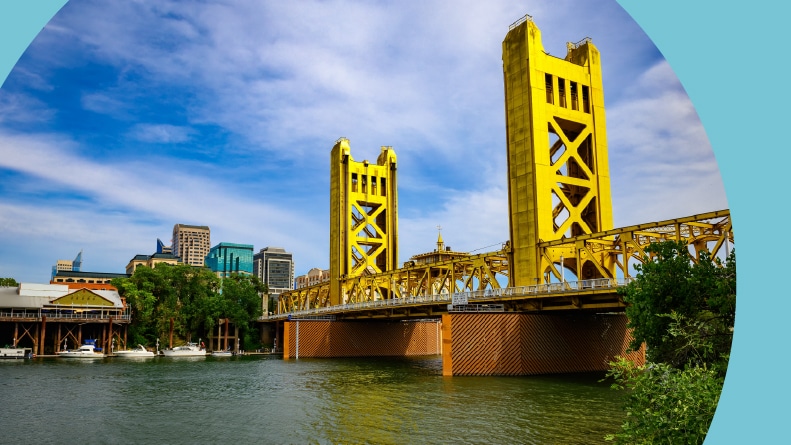
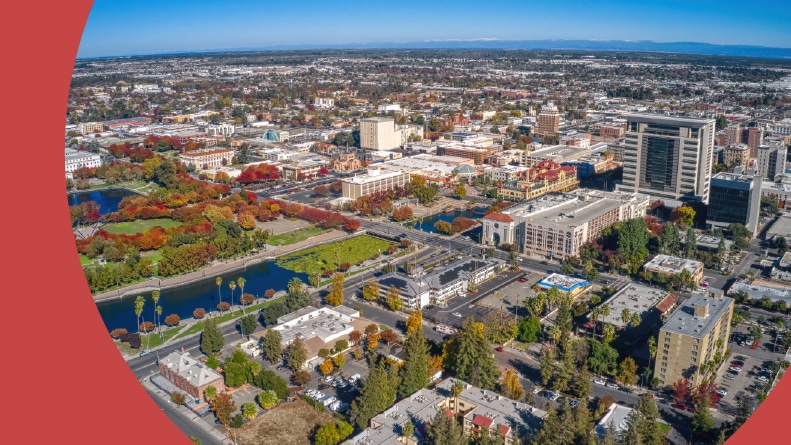
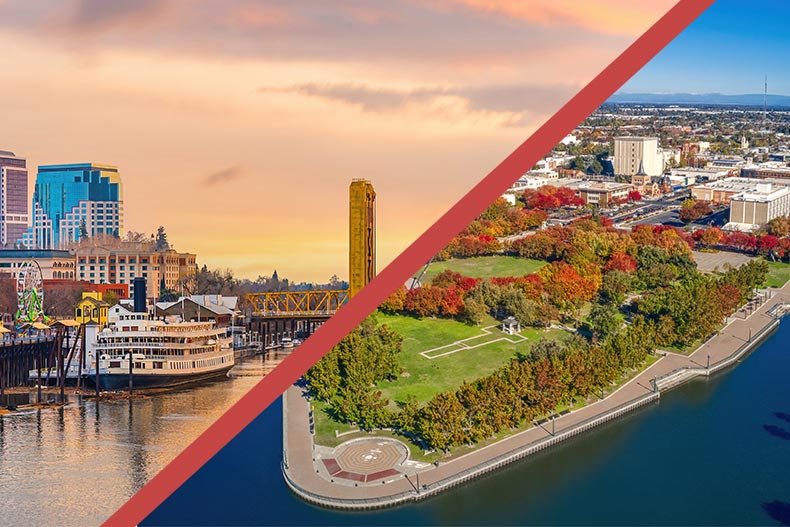
Sacramento is the state capital and sits where the Sacramento and American rivers meet. It’s the sixth most populated city in the state, with nearly 541,000 residents calling it home. Including the broader metro area, the population increases to over 2 million residents, making the location a prime economic and political hub of the region.
Stockton is about 50 miles south, located along the San Joaquin River in the northern part of the San Joaquin Valley. It serves as the county seat of San Joaquin County and is the 11th most populated city in the state, with roughly 327,000 residents. Stockton sits on the California Delta, a large network of waterways that gives the area its distinctive charm.
Climate and Weather

Sacramento and Stockton offer very similar weather, both sharing a Mediterranean climate. In either city, residents can expect dry, hot summers and mild winters. The yearly average rainfall is only 16 to 20 inches, making it easy to live a low-maintenance lifestyle, especially with regard to exterior home upkeep.
During the summer, the average high is in the low 90s, while the average low in the winter is in the upper 30s. With the limited rainfall, both cities enjoy plenty of sunshine year-round. Although temperatures can rise into triple digits during the summer, these temperatures aren’t common, making the area a great destination for retirees seeking a warm location without extreme temperatures.
Cost of Living

Sacramento’s average cost of living for one person is $2,846, and for a family of four it’s $6,548. Stockton’s cost of living is a bit lower, with average costs of $2,280 for a single person and $4,831 for a family of four. Due to California’s high energy costs, utilities in both cities are notably higher than the national average.
For retirees on a fixed income, Stockton’s cost advantage might be the tie-breaker. However, Sacramento offers a wider range of amenities that some retirees may find justify the higher price tag.
Culture and Entertainment

While both cities have plenty to see and do, Sacramento’s larger size offers a broader range of cultural offerings. Here’s a quick guide to what each city offers:
Sacramento
- Art and performing arts: Impressive galleries, symphony performances, concerts, ballet, and opera.
- Public art: Murals line the downtown area, and an annual mural festival lets visitors watch artists at work.
- Old Sacramento Waterfront: A 28-acre historic district with museums, historic attractions, and charming shops and eateries.
- Dining scene: Often considered the Farm-to-Fork Capital of America, Sacramento also has a cosmopolitan restaurant scene.
- State capital perks: Capital cities bring a host of cultural events, festivals, and political happenings year-round.
Stockton
- Downtown Stockton: A packed downtown area featuring museums, farmers’ markets, live music venues, and a growing arts scene.
- Miracle Mile: A vibrant district that’s a local favorite for shopping, dining, and exploring eclectic cafes and bistros.
- Cultural diversity: Several festivals and community events showcase the city’s rich multicultural heritage.
- Downtown renaissance: Ongoing revitalization efforts are bringing new restaurants, arts spaces, and public gathering areas.
Outdoor Recreation
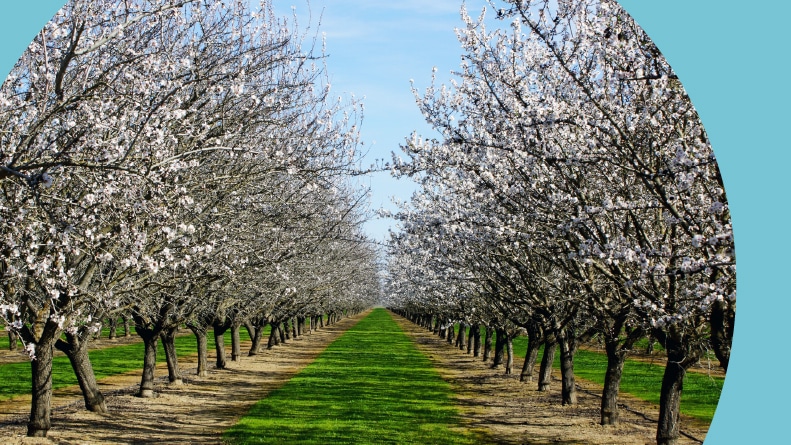
The proximity of Sacramento and Stockton to one another also puts them within a similar distance to California’s best outdoor activities. The legendary Yosemite National Park is one of California’s most visited outdoor destinations. Stockton residents can reach the park in about two hours, while the drive will take around three hours for Sacramento residents. Once there, visitors are greeted with 1,200 miles of wilderness, with meadows, glaciated landscapes, and giant sequoia trees.
Also located around the same distance from each city is the Stanislaus National Forest, a massive 900,000-acre forest featuring 78 lakes, 811 miles of streams and rivers, and more than 1,000 miles of hiking trails. With all that land, visitors to the park have plentiful opportunities to enjoy hiking, biking, fishing, or camping. Stockton residents can get those activities right in their own backyard with the Stockton Delta.
There are also seasonal activities in the area. During winter, many locals head to the world-class ski resorts in Tahoe. Summertime is when the California coast shines, with its pristine beaches beckoning Sacramento and Stockton residents to make the roughly two-hour drive to the Bay Area.
Health Care
Sacramento has the UC Davis Medical Center, which is the only academic health center in the region. The medical center is consistently ranked among the best hospitals in California by U.S. News & World Report. Rounding out the health care options in the city are Dignity Health, Sutter Health, and a forthcoming 350-bed teaching hospital by California Northstate University.
Stockton has fewer large medical centers than Sacramento, offering residents their choice of St. Joseph’s Medical Center, Dameron Hospital, and San Joaquin General Hospital. However, Sacramento is only an hour away, giving relatively easy access to its larger pool of specialty care services.
FAQ: Retiring in Sacramento vs. Stockton
Is it cheaper to retire in Sacramento or Stockton?
Stockton is cheaper. The average cost of living for a single person in Stockton is $2,280 per month, compared to $2,846 in Sacramento. For a family of four, Stockton averages $4,831, compared with Sacramento’s $6,548. Both cities have high utility costs due to California’s energy prices.
Is Sacramento or Stockton better for retirement?
It depends on your priorities. Sacramento is the larger city, offering deeper cultural programs, a bigger health care network anchored by UC Davis Medical Center, a renowned dining scene, and the energy of a state capital. Stockton offers a lower cost of living, unique access to the California Delta, a growing downtown, and a quieter, more community-oriented pace. Both cities share the same Mediterranean climate, proximity to wine country, and access to outdoor recreation, including Yosemite and Lake Tahoe.
What is the weather like in Sacramento and Stockton?
Both cities share a Mediterranean climate with dry, hot summers and mild winters. Summer highs average in the low 90s, with occasional triple-digit days. Winter lows average in the upper 30s. Annual rainfall is only 16 to 20 inches, and both cities enjoy abundant sunshine year-round.
How far apart are Sacramento and Stockton?
Sacramento and Stockton are approximately 50 miles apart, a roughly hour-long drive. This proximity means residents of either city can access the other’s amenities relatively easily.
Which city has better health care—Sacramento or Stockton?
Sacramento has a stronger health care infrastructure. UC Davis Medical Center is the only academic health center in the region and is consistently ranked among the best hospitals in California by U.S. News & World Report. Additional systems include Dignity Health and Sutter Health, with a new 350-bed teaching hospital by California Northstate University forthcoming. Stockton offers St. Joseph’s Medical Center, Dameron Hospital, and San Joaquin General Hospital. For specialty care, Stockton residents can reach Sacramento’s larger network in about an hour.
How close are Sacramento and Stockton to Yosemite?
Stockton is closer, at approximately a two-hour drive to Yosemite National Park. Sacramento residents can reach the park in about three hours. Yosemite offers 1,200 miles of wilderness with meadows, glaciated landscapes, and giant sequoia trees. The relatively short drive from either city makes Yosemite a practical day trip or weekend destination for active retirees who enjoy hiking, camping, and scenic nature.
Can you ski near Sacramento or Stockton?
Yes, world-class ski resorts in the Lake Tahoe area are accessible from both cities during winter. Sacramento residents have a slightly shorter drive to Tahoe. The proximity to both mountain skiing and California’s coast (roughly two hours to the Bay Area) gives residents of either city seasonal variety.
How big is Sacramento compared to Stockton?
Sacramento has nearly 541,000 residents within city limits and over 2 million in the metro area, making it the sixth most populous city in California. Stockton has roughly 327,000 residents and is the 11th most populous city in the state. Sacramento feels like a larger metro with broader amenities, while Stockton has a smaller-city atmosphere with a stronger sense of community and a quieter pace.
What is the Stockton Delta?
The Stockton Delta, part of the larger California Delta, is a network of waterways that defines much of Stockton’s character. It provides residents with direct access to boating, fishing, kayaking, and scenic waterfront activities right in their backyard. The Delta is one of Stockton’s most distinctive features and a major draw for retirees who enjoy water-based recreation. Sacramento, while located at the confluence of two rivers, doesn’t offer the same extensive delta waterway system.
Is Sacramento a good food city?
Yes, Sacramento is often called the Farm-to-Fork Capital of America thanks to its proximity to California’s agricultural heartland. The city has a cosmopolitan restaurant scene featuring locally sourced, seasonal cuisine. Dining options range from upscale farm-to-table restaurants to a diverse array of international cuisines. The Old Sacramento Waterfront adds charming eateries in a historic setting. For retirees who value dining as part of their lifestyle, Sacramento’s culinary scene is a significant advantage over Stockton.
Are Sacramento and Stockton close to wine country?
Yes, both cities are within easy driving distance of Northern California’s wine country, including Napa Valley, Sonoma County, and the Lodi wine region (which is particularly close to Stockton). Access to wine country is a shared benefit of living in the Central Valley and adds a popular leisure activity for retirees—wine tastings, vineyard tours, and scenic drives are all practical day trips from either city.
The Bottom Line
Although very similar in many ways, Sacramento and Stockton each bring their own strengths to the table for anyone considering California’s Central Valley as a retirement destination. Sacramento is the larger city, offering everything that comes with that, such as deeper cultural programs, larger health care networks, and all the energy of a state capital. Stockton has its own advantages, including a lower cost of living, unique access to the Delta, and a stronger sense of community that smaller cities offer.
Both cities have the same excellent climate, access to outdoor recreation, and proximity to Northern California’s wine country. Ultimately, the choice between the two will come down to your preference for the broader amenities of a larger metro or the affordability and quieter pace of a smaller city.
- Insights and market stats
- Instant new home alerts
- Answers from local 55+ experts