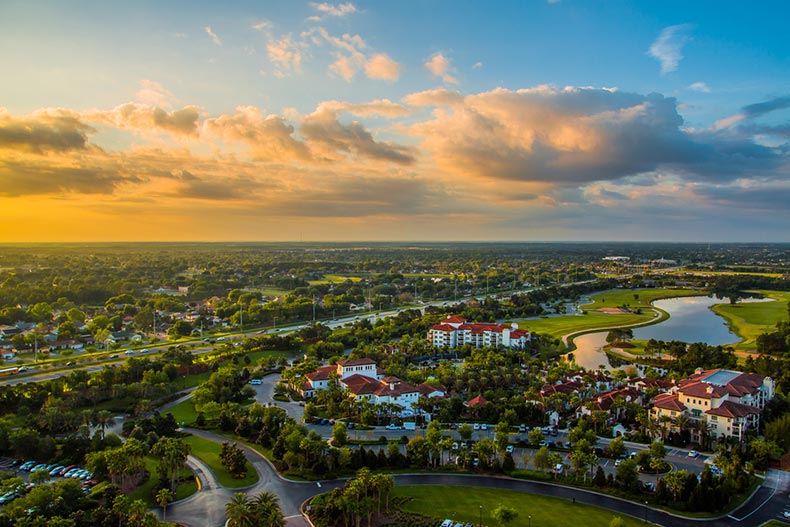
Centrally located and full of fun things to do, Orlando has traditionally drawn more than 75 million visitors annually. It’s also becoming a permanent home to a growing number of active adults.
What’s so special about living in Orlando? People retire here because of the warm weather, abundance of entertainment and recreational opportunities, and relatively low cost of living compared to other East Coast cities.
If you’ve been wondering, “Is Orlando a good place to retire?” We’ve got all the answers you need to make an informed decision.
Retiring in Orlando: Pros and Cons

Comparing the pros and cons of retiring in Orlando is one of the best ways to determine if this city is for you. While you’ll experience some great advantages like year-round warm weather and tax breaks, there are some disadvantages to consider as well.
Pros
- Shorts in January: Warm weather means year-round golf, hiking, boating, and outdoor recreation.
- It won’t break the bank: Orlando provides a reasonable cost of living (around 4.5% lower than the national average), especially when it comes to housing, utilities, food, and general necessities. Plus, there’s no state income tax in Florida.
- You’ll always have visitors: Friends and family will make plans to see you, thanks to your location. Grandkids will want to visit the theme parks.
- It’s easy to see the rest of Florida: From Orlando, you can be in Miami in less than a day. Tampa is about an hour and a half away, and the beaches in Jacksonville and Daytona are also close. Orlando has two international airports and sits right off Interstate 4 and the Florida Turnpike.
Cons
- It’s hotter than hot. Not shoveling snow is a huge perk, but in the middle of August, when you’ve sweat through your fifth outfit of the day, you may rethink the joys of Florida weather.
- Orlando is a pretty big city. With city life comes traffic, crowds, and of course, the ongoing arrival of tourists. Plenty of quieter spots exist right outside of the city if you can’t imagine yourself in the thick of it.
- Tropical weather is possible. You wouldn’t think Orlando would have to worry about hurricanes since it’s inland, but at least two recent tropical storms have covered almost the whole state. The weather can be intense, and you’ll need to prepare yourself and your home accordingly.
Orlando Climate
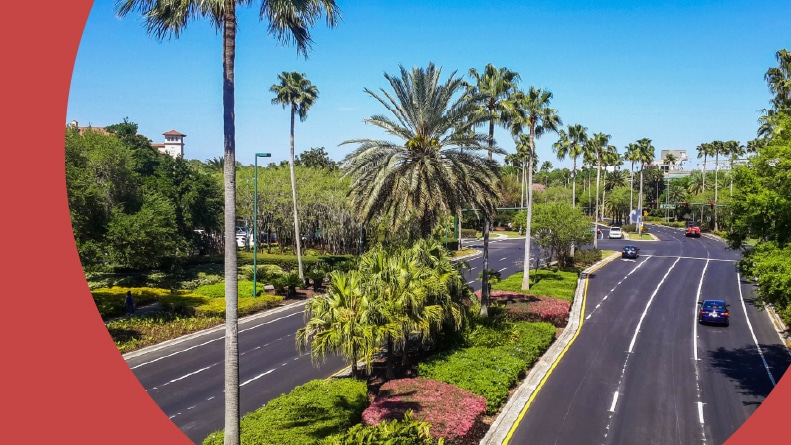
If your climate expectations for living in Orlando include plenty of sunshine, you can rest easy knowing they will be met. Orlando averages 236 sunny days per year. However, it’s important to prepare for issues that come with hot sunny days, like those mid-afternoon thunderstorms that show up reliably on most days during the summer months. There’s high humidity during the summer as well, which can lead to excessive indoor air conditioning. Always have a sweater or an extra layer available, even if you don’t anticipate needing it.
November through March, average daytime temperatures are typically in the 70s. Lows at night are often in the 50s or 60s. Temperatures rise in April and May, usually into the 80s. Things get hot by June and stay hot into October. Most days will see temperatures above 90 degrees, and even at night, it doesn’t get any cooler than 70 to 75 degrees.
Trips to lakes, pools, and beaches are common from April to October. Golf courses are open all year long, and some of the best months for hiking, biking, and wildlife watching are in the winter. Trails are cooler in January and February, with no humidity. You’ll find that most farmers’ markets and outdoor festivals also occur during the winter months to prevent attendees from overheating.
Orlando Taxes
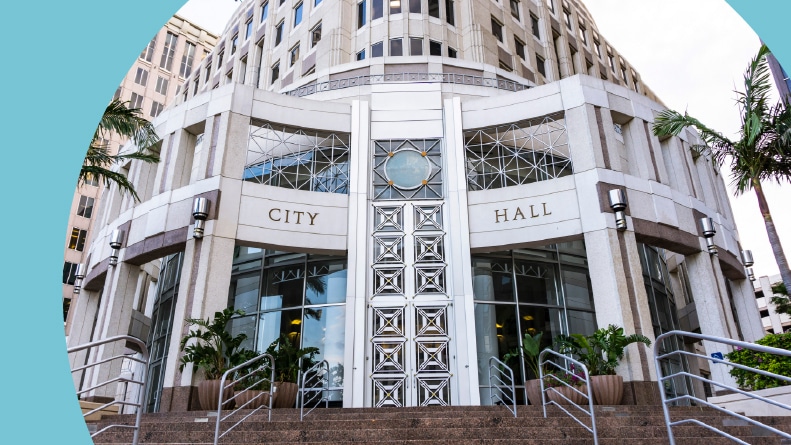
Florida doesn’t have a state income tax, so moving to Orlando will relieve you of any obligation to pay state taxes on Social Security benefits, pensions, IRAs, 401(k)s, and other retirement income. There is no state inheritance or estate tax either.
The sales tax in Orlando is 6.5%. That includes the 6% state sales tax and the 0.5% Orange County sales tax. There’s no city sales tax in Orlando, nor are there special city rates.
Orlando Property Taxes
On average, homeowners in Florida pay 0.739% of the home value in property taxes, which is typically less than $3,700 each year. Property tax breaks are available to Orlando residents 65 years of age or older. There are income limits and other requirements that must be met, and the Florida Department of Revenue is continually updating them.
The Orange County Property Appraiser’s Office will assess all property taxes by multiplying the owner’s property value, less exemptions, by the millage rate and any homestead, veteran, or widow exemptions.
Orlando Retirement Income Taxes
Moving to Orlando doesn’t exempt you from all your income taxes. You’ll still have to pay those federal taxes every year. However, you won’t have to file a state income tax return, and there won’t be any local income taxes to pay.
Orlando Tax Exemptions for Seniors
There are some exemptions for seniors for local and state taxes, but only if 25 years of residency can be proven and income requirements are met.
The Homestead Exemption will be your best tool for saving money on property taxes. In the state of Florida, that’s a $25,000 deduction from the first $50,000 of your property’s assessed value. The requirements are fairly simple: You must use that property as your permanent residence, and you must have owned the property on January 1 of the tax year. This exemption applies to all taxes, including school district taxes.
Orlando Health Care
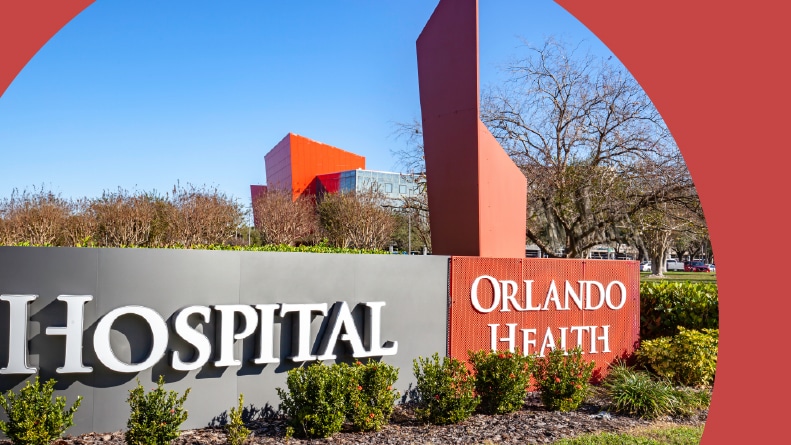
Orlando has an impressive network of hospitals and health care facilities. Orlando Health is the most well-known and respected collection of providers, hospitals, labs, image centers, and specialty services.
Specializations include emergency rooms and urgent care centers, digestive health, vascular health, primary care, and wound care. There’s also a cancer institute with nine locations around the Orlando area.
AdventHealth Orlando has also been routinely named as a top hospital in Florida. It has 1,195 beds and, in addition to a cancer center and a cardiovascular institute, specializes in diabetes care, women’s health care, and transplantation. They also focus on senior care, providing personalized and preventative services.
Where to Live in Orlando
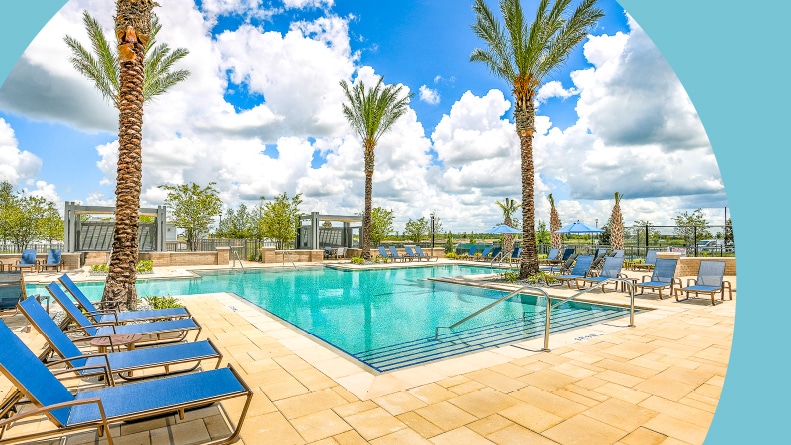
For many, answering the question, “Is Orlando a good place to retire?” will depend on where you live. Orlando covers over 119 miles of Central Florida. Living downtown is always an option, and there are also some great suburban neighborhoods right outside the city.
Walt Disney World and its associated theme parks are on the western edge of the region, and east of the city are areas such as Avalon Park and Cypress Springs. If you prefer a walkable area with high energy and large crowds, consider avoiding Downtown Orlando and the theme park areas. Most active adults choose quieter suburban areas that still provide easy access to the city’s shopping, dining, and entertainment.
Orlando
It’s easy to live inside the Orlando city limits without being confined to a downtown high-rise. Pocket neighborhoods and master-planned communities, including Lake Nona, are especially popular among active adults. Living in Orlando puts you minutes from great restaurants and attractions, including CityArts, which is part of downtown Orlando’s art district. There’s also a Museum of Illusions, as well as music and theater venues such as The Beacham and Camping World Stadium.
55+ Communities in Orlando
- Album Monterey Pointe
- Mariblu at Hunters Creek
- Enclave at VillageWalk
- Gatherings of Lake Nona
- VillageWalk at Lake Nona
St. Cloud
About half an hour from Orlando is St. Cloud, an emerging suburban area that feels local and extremely community-oriented. Part of Osceola County, it’s found on the southern shores of East Lake Tohopekaliga.
Residents of St. Cloud enjoy outdoor activities such as fishing, boating, and attending the local rodeo. You’ll also find some great shops, good restaurants, and many festivals, art shows, and farmers’ markets. St. Cloud is home to great bass fishing. The St. Cloud Twin Theater is a throwback to what going to the movies used to be like, and paddling and kayaking are popular pastimes at Rock Springs and Shingle Creek.
55+ Communities in St. Cloud
Kissimmee
The city of Kissimmee is often mentioned with Orlando, and that’s not only because of geographic proximity. They’re also similar, with theme parks, shops, hotels, and large restaurants that can accommodate large crowds. There’s more to Kissimmee than vacationers, however. There’s a lot of nature, some unique shops and art galleries, and a pace that’s turned down a notch or two from the frenzy of Orlando.
The Kissimmee Lakefront Park includes playgrounds, walking paths, and a fishing pier. There’s golf and the Museum of Military History. Also, Old Town is a fun place to visit, with an arcade, old-fashioned ice cream shops, many restaurants, and an old car show every Saturday night.
55+ Communities in Kissimmee
Davenport, FL
Located southwest of Orlando, Davenport offers a quieter residential feel while remaining close to major highways and attractions. The city has grown steadily in recent years, attracting residents seeking more space and a slower pace without feeling disconnected from Central Florida conveniences.
Davenport is near several golf courses, local parks, and everyday shopping and dining options. Its proximity to Interstate 4 makes it easy to reach Orlando, Lakeland, and Tampa, making the area appealing to those who value flexibility and easy travel throughout the region.
55+ Communities in Davenport
Harmony
Harmony is a planned community southeast of Orlando that emphasizes greenspace, lakes, and a close connection to nature. Surrounded by conservation areas, the town has a peaceful, residential atmosphere that feels removed from the busier tourist corridors.
Residents enjoy walking trails, lakeside views, and community spaces designed for gathering and recreation. While Harmony maintains a small-town feel, it is still within a manageable drive of Orlando’s shopping, health care, and cultural attractions.
55+ Communities in Harmony
Winter Garden
Just west of Orlando, Winter Garden blends historic charm with modern development. The city is known for its lively downtown area, which features local shops, restaurants, and a popular year-round farmers’ market.
Outdoor recreation is a major draw, with access to the West Orange Trail for walking and biking, as well as nearby parks and golf courses. Winter Garden’s walkable core and strong sense of community make it a favorite among those seeking both activity and connection.
55+ Communities in Winter Garden
Winter Park
Winter Park, just north of Downtown Orlando, is known for its tree-lined streets, brick roads, and established neighborhoods. The city has a refined, residential feel while offering a vibrant cultural scene.
Residents enjoy museums, scenic boat tours along the city’s lakes and canals, and shopping and dining along Park Avenue. With its mix of arts, education, and outdoor spaces, Winter Park offers a polished yet welcoming environment close to the heart of Orlando.
55+ Communities in Winter Park
FAQ: Retiring in Orlando
What are the pros and cons of retiring in Orlando?
The biggest advantages include year-round sunshine, tax benefits, and abundant activities. Potential drawbacks include summer heat, humidity, traffic, and seasonal tourism.
How much money do you need to retire comfortably in Orlando?
The amount varies based on lifestyle and housing choices, but Orlando’s cost of living is slightly below the national average. Housing, property taxes, and everyday expenses are generally more manageable than in many East Coast cities.
Does Florida tax retirement income?
No. Florida does not have a state income tax, so Social Security benefits, pensions, IRAs, and 401(k) withdrawals are not taxed at the state level.
What are property taxes like in Orlando for retirees?
Property taxes in Orlando are generally lower than the national average. Florida also offers a Homestead Exemption and additional senior exemptions for qualifying homeowners.
Is Orlando expensive to live in during retirement?
Compared with other major Florida cities, such as Miami, and with coastal markets, Orlando is considered relatively affordable, especially in suburban areas outside downtown.
Are there good 55+ communities in Orlando?
Yes. The Orlando area has a wide range of 55+ communities offering amenities such as clubhouses, pools, fitness centers, walking trails, and social clubs.
What is the weather like year-round in Orlando?
Orlando has hot, humid summers and mild winters. Winter temperatures typically stay in the 60s and 70s during the day, making outdoor activities comfortable for much of the year.
How is health care in Orlando?
Orlando has a strong health care system with nationally ranked hospitals such as Orlando Health and AdventHealth, along with numerous specialists and senior-focused services.
Are there beaches near Orlando?
While Orlando is inland, Atlantic Coast beaches like Daytona and Cocoa Beach are about an hour away, and Gulf Coast beaches can be reached in roughly two hours.
What are the best areas near Orlando for retirees?
Popular areas include Winter Garden, Lake Nona, Kissimmee, St. Cloud, Davenport, Winter Park, and Harmony, each offering a different pace and lifestyle.
Does Orlando get hurricanes?
Orlando can experience tropical storms and heavy rainfall during hurricane season, but being inland generally reduces direct storm surge impacts compared to coastal cities.
Is Orlando good for active retirees?
Yes. Golf courses, lakes, walking trails, cultural venues, theme parks, and community events provide year-round opportunities to stay active and socially engaged.
Should I rent or buy when retiring in Orlando?
Both options are available. Many retirees choose to buy in a 55+ community for long-term stability, while others rent first to explore different neighborhoods before making a decision.
Ready to Make the Move? 55places Can Help
To discover more exciting 55+ communities in Orlando, contact us today! Our experienced team of real estate experts will guide you through the top options in your area and help you make a seamless transition from your current home to a 55+ community. We look forward to helping you make your next move the best one yet.

- Insights and market stats
- Instant new home alerts
- Answers from local 55+ experts