OVERVIEW
San Francisco, California, is a compelling retirement destination for 55+ adults who can manage its high cost of living, offering world-class dining, UCSF Medical Center (ranked No. 1 in California), and mild coastal weather year-round. The median home price in San Francisco is $1.5 million, but the broader Bay Area includes active adult and age-restricted communities across more than 20 cities, with prices ranging from the low $400s in Watsonville to over $3 million in Marin County.
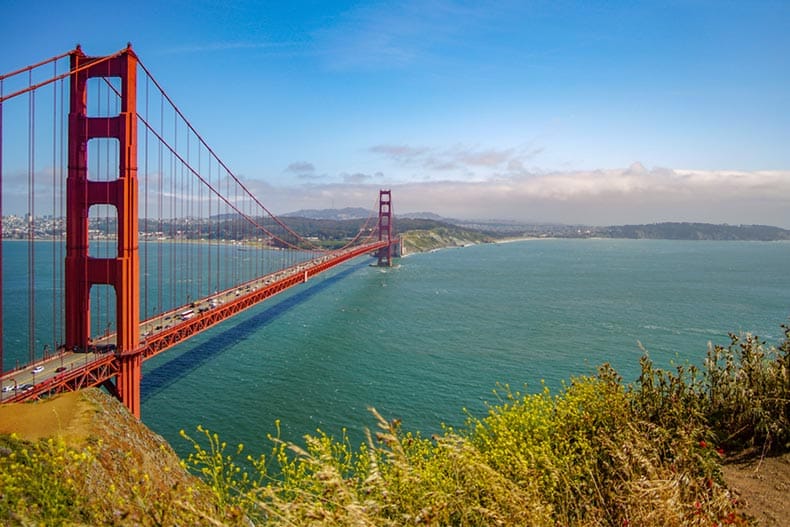
The “City by the Bay” offers plenty of attractions for retirees. Those moving to San Francisco can look forward to world-class dining, iconic landmarks, mild weather, and some of the best hospitals in the country. Before making any move, however, it’s best to get the full picture.
Here’s what retirees need to know about moving to San Francisco.
Retiring in San Francisco: Pros and Cons

Pros
- World-class dining and culture: San Francisco is one of the nation’s premier food cities. The city features Michelin-starred restaurants like Atelier Crenn and countless neighborhood gems whose food will keep you coming back. Cultural offerings are diverse, offering everything from a visit to the California Academy of Sciences to biking across the Golden Gate Bridge or stopping by the piers to catch the Sea Lions.
- Excellent public transit: Retirees who need to get around without a car will find two excellent options in BART and Muni. The combined transit network connects the city’s neighborhoods and extends into the broader Bay Area, making day trips and errands easy to manage.
- Mild, comfortable weather: The city experiences a coastal fog layer so persistent that residents have given it a nickname: Karl the Fog. On many days, the afternoon brings a reprieve from the fog as it burns off, leaving residents with sunny weather that is almost always the perfect temperature. The idyllic weather makes San Francisco a great place for those who love hiking, biking, or dining outdoors.
- Diversity and innovation: San Francisco has a well-earned reputation as an inclusive, forward-looking city. The city has deep cultural diversity, with hundreds of ethnicities and one of the largest LGBTQ communities in the country, giving retirees access to a range of food, art, music, and perspectives. Also, giant tech companies like Salesforce and Uber, along with a growing AI sector, are headquartered in the area, driving innovation.
Cons
- The cost of living: The biggest hurdle for retirees considering San Francisco is the high cost of living. The median sale price of a single-family home in the city is around $1.5 million. The high prices are driven by severely constrained inventory. When homes go on the market, they sell quickly, often for much more than the asking price.
- Homelessness: Homelessness is a major problem in the city. The last count, taken in 2024, estimates the homeless population to be over 8,000. The highest concentrations of those unsheltered residents are in the Tenderloin, mid-Market Street, and areas near overpasses in Mission and Potrero. Popular areas, such as Fisherman’s Wharf, the Embarcadero, North Beach, and Presidio, are less affected.
San Francisco Taxes for Retirees

The California base sales tax rate is 7.25%, but local district taxes bring the total tax rate to 8.625% in the city. This puts them slightly above the national average.
Retirement income brings mixed news for retirees considering San Francisco. The good news is that Social Security benefits are not taxed anywhere in California. This provides a meaningful advantage to those living primarily on Social Security benefits. The bad news is that public and private pension income is fully taxed at state income tax rates, which are among the highest in the nation.
Thanks to Proposition 13, the news on property taxes is a little better if you already live in the state. The proposition, passed in November 2020, allows homeowners aged 55 and older to transfer their property tax assessment from a sold home to a newly purchased home anywhere in the state. For retirees looking to move to San Francisco from somewhere else in California, this can be a significant source of savings.
Health Care: A Genuine Bright Spot

San Francisco’s health infrastructure provides a major bright spot for retirees. It consistently ranks among the best in the country. UCSF Medical Center was ranked No. 1 in California for adult care by the U.S. News & World Report. The center is also among the nation’s leaders in 13 specialist categories.
Further strengthening the region’s medical options are Kaiser Permanente’s San Francisco Medical Center and Stanford Hospital, located in nearby Palo Alto. For retirees who need to prioritize access to top-tier health, it’s hard to beat San Francisco.
Where to Live In and Around San Francisco

The San Francisco Bay Area is one of the most diverse regions in the country, and for active adults considering retirement here, choosing the right city or neighborhood can shape everything from daily lifestyle to cost of living. The Bay Area spans nine counties, offering everything from coastal wine-country towns to walkable suburban hubs near world-class urban amenities.
according to data from 55places, the median list price of a home in a 55+ community in the Bay Area is $729,500. Below is a guide to some of the most appealing areas for 55+ homebuyers, along with the age-restricted communities available in each.
Brentwood
Located roughly 50 miles east of San Francisco in Contra Costa County, Brentwood is one of the Bay Area’s most popular destinations for active adults. The East Bay city sits in the shadow of Mount Diablo and offers a warm climate, access to vineyards and orchards, and proximity to major shopping corridors while remaining significantly more affordable than communities closer to the coast. Brentwood is also within an hour of both San Francisco and Sacramento, giving residents easy access to urban amenities without big-city prices.
55+ Communities in Brentwood
Walnut Creek
Situated 26 miles from San Francisco in the East Bay’s Contra Costa County, Walnut Creek is a well-established city with an active downtown, strong healthcare infrastructure, and excellent transit access via BART. It’s a natural fit for retirees who want Bay Area convenience without San Francisco’s density or cost. The city features a thriving arts scene, upscale dining along Broadway Plaza, and miles of trails through the surrounding hills.
55+ Communities in Walnut Creek
San Mateo
About 25 miles south of San Francisco along the Peninsula, San Mateo sits between the city and Silicon Valley, offering suburban comfort with strong transit connections. Residents enjoy easy Caltrain access, solid dining and retail options, and proximity to San Francisco International Airport, just 10 minutes away. While San Mateo carries a higher price tag than more inland Bay Area cities, buyers looking to downsize to a condo can still find viable options here.
55+ Communities in San Mateo
San Rafael
Just north of the Golden Gate Bridge in Marin County, San Rafael is the county seat and the most accessible city in an area known for natural beauty and high quality of life. With ferry service into San Francisco, easy highway access, and a charming downtown along Fourth Street, San Rafael offers retirees a balance of small-town feel and metropolitan reach. The surrounding landscape includes China Camp State Park and miles of open-space preserves.
55+ Communities in San Rafael
Pleasanton
In the Tri-Valley region of Alameda County, Pleasanton is known for its quaint historic downtown, highly rated schools, and access to Interstate 580 and 680, making it a practical base for exploring everything from Yosemite to the coast. The city balances a small-town aesthetic with suburban amenities and is roughly 30 minutes from both San Francisco and Silicon Valley.
55+ Communities in Pleasanton
San Ramon
Just south of Pleasanton in the San Ramon Valley, San Ramon offers expansive trail systems, the 40-mile Iron Horse Trail, vibrant arts programming, and easy freeway access. At 34 miles from San Francisco, it’s a practical choice for active adults who want nature close at hand and the city within reach.
55+ Communities in San Ramon
Fremont
Located near BART stations and centrally positioned between San Jose, Oakland, and San Francisco, Fremont is one of the East Bay’s most accessible cities. The Warm Springs district offers walkability to shops, dining, and transit—a rare combination in the suburbs.
55+ Communities in Fremont
Foster City
This planned community on the San Francisco Peninsula sits along San Francisco Bay, roughly 30 miles south of the city. It’s a tightly developed, walkable area with lagoon trails, water recreation at Leo Ryan Park, and easy access to Highway 92 and 101. Foster City is a practical choice for active adults seeking low-maintenance, urban-adjacent living.
55+ Communities in Foster City
Menlo Park
Adjacent to Stanford University and Palo Alto, Menlo Park is one of the most desirable addresses on the San Francisco Peninsula. It’s about 30 minutes from both San Francisco and San Jose, with access to Stanford Hospital, excellent dining along Sand Hill Road, and cultural institutions including the Iris & B. Gerald Cantor Center for Visual Arts.
55+ Communities in Menlo Park
Los Altos and Los Gatos
Los Altos sits just minutes from Stanford and offers a charming walkable downtown with boutique shops, a farmers market, and a community library. Further south, near Santa Cruz County, Los Gatos has its own distinct downtown and convenient highway access, and is only 15 to 20 minutes from San Jose. Both cities have vibrant local identities and strong access to health care and outdoor recreation.
55+ Communities in Los Altos
55+ Communities in Los Gatos
Santa Rosa
The largest city in Sonoma County, Santa Rosa serves as the commercial and cultural hub for the Bay Area’s North Bay wine country. Oakmont Village, one of Northern California’s largest and most established 55+ communities, is located here, offering residents access to 36 holes of golf, multiple clubhouses, and a robust roster of over 100 social clubs, all set just seven miles from downtown and one hour from San Francisco.
55+ Communities in Santa Rosa
Sonoma
The town of Sonoma sits at the heart of one of California’s premier wine regions. Surrounded by vineyards and the Sonoma Mountains, it’s known for its historic plaza, culinary scene, and world-class wineries. For active adults who want wine country living at a more moderate pace, Sonoma delivers.
55+ Communities in Sonoma
Healdsburg
Set along the Russian River in Sonoma County’s wine country, Healdsburg is one of Northern California’s most charming small cities. The Healdsburg Plaza is lined with acclaimed restaurants and boutiques, and the town’s proximity to the river and Fitch Mountain makes it a natural choice for active adults who want outdoor recreation paired with sophisticated amenities.
55+ Communities in Healdsburg
Windsor and Cloverdale
Windsor, 10 miles north of Santa Rosa, is a more affordable option in Sonoma County with quick access to the city’s shopping and health care. Cloverdale, further north at the edge of wine country, offers a quieter setting along Redwood Highway. Also, the coast just 30 miles away.
55+ Communities in Windsor
55+ Communities in Cloverdale
Napa and Yountville
The Napa Valley is synonymous with world-class wine, fine dining, and a lifestyle built around culinary excellence and natural beauty. Napa, the valley’s largest city, offers everyday conveniences alongside proximity to downtown tasting rooms and wine bars. Yountville, a village of just 3,000 residents, is within walking distance of Michelin-starred restaurants and world-renowned wineries, making it one of the most distinctive settings for retirement living in the country.
55+ Communities in Napa
55+ Communities in Yountville
Vacaville
Midway between San Francisco and Sacramento along Interstate 80, Vacaville is one of the Bay Area’s most affordable options for active adults. Residents have easy access to Napa Valley wine country, the Nut Tree Plaza, and Vacaville Premium Outlets. Also, the city’s central location makes it a practical launching point for day trips in any direction.
55+ Communities in Vacaville
Rio Vista
Located on the Sacramento River Delta, Rio Vista is a small city with a big outdoors appeal. Fishing, boating, and windsurfing on the Delta are local pastimes. Also, the town’s rural character is balanced by communities large enough to support full resort-style amenities. Sacramento is accessible in under an hour, and the East Bay is within easy driving distance.
55+ Communities in Rio Vista
San Jose
California’s third-largest city sits at the southern end of San Francisco Bay, 10 miles from Silicon Valley’s corporate campuses and surrounded by foothills. San Jose offers a full range of cultural institutions, professional sports teams, major shopping centers, and easy freeway and airport access.
55+ Communities in San Jose
Morgan Hill and Gilroy
Located in Santa Clara County’s southern Santa Clara Valley, Morgan Hill and Gilroy offer a slower pace than Silicon Valley’s core while remaining 20 to 40 minutes from San Jose. Both cities have warm climates, access to wineries along the area’s wine trail, and a range of outdoor recreation options in the surrounding hills. Gilroy, known as the “Garlic Capital of the World,” also serves as a gateway to Henry W. Coe State Park and the Central Coast.
55+ Communities in Morgan Hill
55+ Communities in Gilroy
Hollister and Watsonville
Hollister and Watsonville sit at the edge of the Bay Area’s geographic footprint in San Benito and Santa Cruz counties, respectively. Both offer proximity to Monterey Bay and the scenic Central Coast lifestyle that comes with it. Watsonville is 30 minutes from Santa Cruz; Hollister is roughly an hour from San Jose. Both cities offer affordability compared with much of the Bay Area, along with new development in the 55+ space.
55+ Communities in Hollister
55+ Communities in Watsonville
FAQ: Retiring in San Francisco
Is San Francisco a good place to retire?
San Francisco is a strong retirement destination for active adults. The city offers world-class dining, top-tier health care, excellent public transit, mild year-round weather, and deep cultural diversity. The main drawback is cost. The median single-family home price is around $1.5 million, and the overall cost of living is well above the national average.
How much does it cost to live in San Francisco?
San Francisco is one of the most expensive cities in the country. The median sale price of a single-family home is around $1.5 million, driven by constrained inventory. Homes sell quickly and often above asking price. For retirees who prefer the broader Bay Area, more affordable options exist. Communities in Vacaville, Rio Vista, Hollister, and Watsonville offer significantly lower price points while keeping San Francisco within driving distance.
Are there 55+ communities in the San Francisco Bay Area?
Yes, the Bay Area has dozens of 55+ communities spread across multiple counties. Options range from Rossmoor and Oakmont Village to newer communities like Enclave at Mission Falls and Foster Square. Locations span from Marin County and Sonoma wine country in the north to Morgan Hill, Gilroy, and Watsonville in the south. Price points vary widely, from the low $400ks to the low $3Ms.
What are the most affordable 55+ communities near San Francisco?
The most affordable 55+ communities in the broader Bay Area include Pajaro Village (Low $400ks – Low $700ks), Bay Village (Mid $400ks – Low $700ks), Leisure Town (Mid $300ks – Low $600ks), Diamond Grove (High $400ks – Mid $600ks), Liberty (Mid $400ks – Low $500ks), Trilogy at Rio Vista (Low $400ks – Mid $700ks), and communities in Morgan Hill and Gilroy. These areas are farther from San Francisco but offer significantly lower home prices while still within an hour’s drive of Bay Area amenities.
What is the weather like in San Francisco?
San Francisco has a mild, comfortable climate year-round. The city is known for its coastal fog layer, which often burns off by afternoon, leaving sunny, temperate weather. Extreme heat and cold are rare. The mild conditions are ideal for retirees who enjoy hiking, biking, and outdoor dining. The weather is a consistent draw for active adults who want to spend time outdoors without harsh winters or intense summer heat.
What are the best hospitals in San Francisco?
UCSF Medical Center is ranked No. 1 in California for adult care by U.S. News & World Report and is among the nation’s leaders in 13 specialist categories. Kaiser Permanente’s San Francisco Medical Center offers additional comprehensive care. Stanford Hospital in nearby Palo Alto further strengthens the region’s medical options. For retirees who prioritize access to top-tier health care, the Bay Area is one of the strongest regions in the country.
What are San Francisco’s taxes like for retirees?
San Francisco’s total sales tax rate is 8.625%, slightly above the national average. Social Security benefits are not taxed in California, which is an advantage. However, public and private pension income is fully taxed at California’s state income tax rates, which are among the highest in the nation. On property taxes, Proposition 13 allows homeowners 55 and older to transfer their property tax assessment from a sold home to a new home anywhere in California—a significant benefit for in-state movers.
Does San Francisco have good public transit?
Yes. San Francisco’s BART and Muni systems combine to form one of the best public transit networks in the western U.S. The system connects the city’s neighborhoods and extends into the broader Bay Area, making errands and day trips manageable without a car. For retirees who prefer not to drive, this is a major advantage over most California cities.
Are there 55+ communities in wine country near San Francisco?
Yes, several 55+ communities are located in Sonoma and Napa counties. Oakmont Village is one of Northern California’s largest, with 36 holes of golf, multiple clubhouses, and over 100 social clubs. Chantarelle, Creekside Village, and Temelec are in the town of Sonoma. River’s Bend and RiverView are in Healdsburg. In Napa Valley, options include Willowbrook, Bella Vista Park, and Rancho de Napa in Yountville. Wine country communities offer vineyard scenery, fine dining, and a relaxed pace within an hour of San Francisco.
Is San Francisco walkable for retirees?
San Francisco is one of the most walkable cities in the country, and it was ranked No. 1 on AARP’s Top 100 Places to Live for Older Adults in December 2025. The city’s Better Streets Plan prioritizes walkability in development projects. BART and Muni provide additional coverage for longer trips. However, the city’s hills can be challenging for some residents. For retirees seeking walkability in a flatter setting, nearby cities like Foster City, Walnut Creek, and Fremont offer pedestrian-friendly neighborhoods with easier terrain.
What is there to do in San Francisco for retirees?
San Francisco offers world-class dining from Michelin-starred restaurants to neighborhood gems, cultural institutions like the California Academy of Sciences, iconic landmarks including the Golden Gate Bridge, and waterfront attractions along the piers. The mild climate supports year-round outdoor activities like hiking and biking. The city’s diverse neighborhoods provide a wide range of food, art, music, and community events. Day trips to wine country, Monterey Bay, and the surrounding mountains add even more variety.
Is it worth retiring in San Francisco despite the high cost?
For retirees who can afford it, San Francisco offers a quality of life that’s hard to match: top-ranked hospitals, excellent transit, year-round mild weather, world-class dining, and deep cultural diversity. For those priced out of the city itself, the broader Bay Area provides dozens of 55+ communities at a wide range of price points, from the low $400ks to the low $3Ms. Many retirees find the best balance by living in a more affordable Bay Area city while keeping San Francisco within easy reach for dining, culture, and medical care.
The Bottom Line
San Francisco offers unrivaled access to cultural diversity, excellent health care, and a climate that’s pretty much always comfortable. For those who can afford it, the city and its surrounding areas provide a quality of life that’s hard for other areas to match.
- Insights and market stats
- Instant new home alerts
- Answers from local 55+ experts