
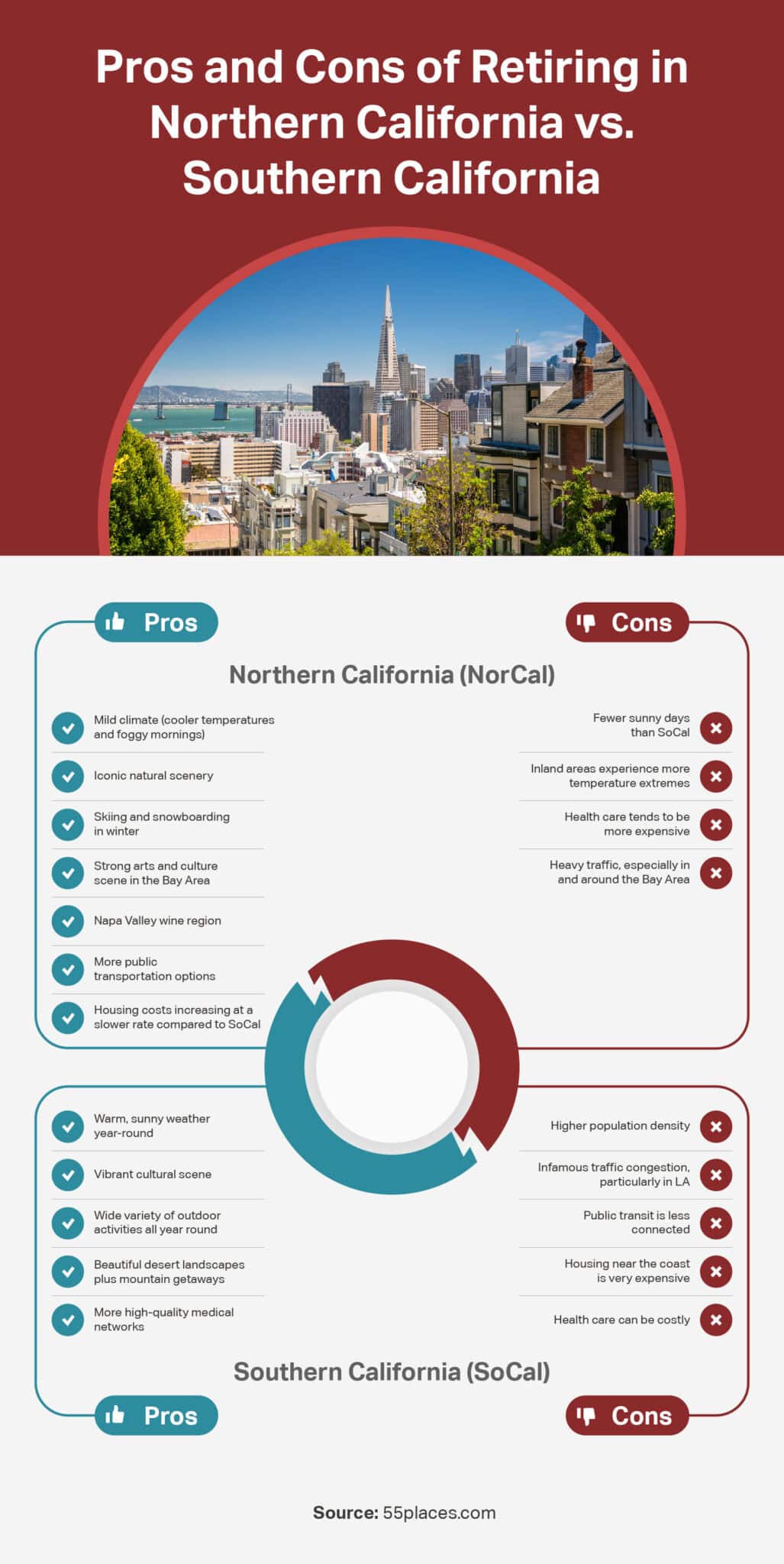
Reaching the retirement stage of your life is an achievement worth celebrating, but the beginning of a new era brings a list of new decisions to make. Retiring to California is a great idea, but the realities of living in the Golden State are much more varied than the stereotypes suggest. Northern California and Southern California are both beautiful places to live, but each region has its own climate, economy, and activities that cater to different lifestyles.
Read on for a general overview of the differences between NorCal and SoCal so you can make a more informed decision on where you want to retire.
Climate & Sunshine

The idyllic sunshine and endless summer vibes that characterize California are a little more common in Southern California. The brightest parts of SoCal get close to 300 sunny days a year, with average temperatures remaining in the 70s and 80s for most of the year and rarely dipping below the 50s during the winter. Los Angeles, San Diego, and other coastal cities are reliably warm year-round, with gentle ocean breezes keeping temperatures lower than in inland locales.
The cool, foggy mornings common in San Francisco and Monterey lead to slightly fewer sunny days and a milder climate overall, though Redding is known as the sunniest city in the state and the second sunniest in America. In inland regions, you can expect hot summers and colder winters.
55+ Housing Prices Across the Golden State

The cost of housing in California has been higher than the national average for a long time. The last few years, in particular, have seen substantial increases in rent and home prices. This is true whether you live in the southern or northern part of the state, although California’s Legislative Analyst Office did report that housing costs did not grow as quickly in NorCal.
A general guide for housing prices is that the closer you get to the coast, the more expensive the property gets. If money is an object and affordability matters to you, you’re better off looking for housing further away from the ocean.
Active adults can also find pockets of affordability in 55+ communities across both Northern and Southern California. Even in higher-priced regions like the Bay Area or Orange County, some well-established 55+ communities provide some affordability for buyers seeking the lifestyle benefits of active adult living without the premium price tag.
Median List Price of a Home in a 55+ Community
| Bakersfield Area | $392,000 |
| Bay Area | $699,000 |
| Central California Coast Area | $874,500 |
| Los Angeles-Orange County Area | $569,500 |
| Palm Springs-High Desert Area | $549,900 |
| Sacramento Area | $599,000 |
| San Diego Area | $665,000 |
| Stockton-Modesto Area | $499,950 |
Landscapes, Parks & Scenic Highlights

There’s plenty of gorgeous organic scenery everywhere you look in California, but the texture of those pleasures varies depending on where you look. Northern California is teeming with national parks such as Yosemite National Park and Sequoia National Park, where visitors can hike and take in the picturesque redwood forests and waterfalls that have defined this state for centuries. NorCal also features the iconic Lake Tahoe, a gorgeous hub for a variety of solo and group activities.
SoCal does have its share of national parks as well, but since they’re born of the state’s desert ecosystem, they emit a vastly different aesthetic. But that doesn’t make the untouched landscapes of Joshua Tree National Park or Death Valley any less breathtaking. And if you want to enjoy your retirement somewhere with a bit more moisture, there’s always a local beach nearby, or you can take a trip to Big Bear Lake and relax by the water.
Lifestyle, Arts & Cultural Experiences

As one of the world’s signature cultural epicenters, Southern California offers countless ways to entertain yourself and experience a diverse array of cultures. Fans of TV and film can spend their days visiting museums, taking city tours, or attending repertory screenings that honor Hollywood’s cinematic legacy. The area is also home to incredible restaurants and boutique fashion shops that reflect its history as a societal melting pot.
NorCal doesn’t have the same artistic footprint, but it still has plenty of incredible things for locals to visit. The Bay Area has many theaters where you can take in various forms of art, from movies to opera to plays. Also, Napa Valley is home to perhaps the most well-known wine industry in the world, and there are many museums to experience local and global art.
Recreation & Year-Round Activities
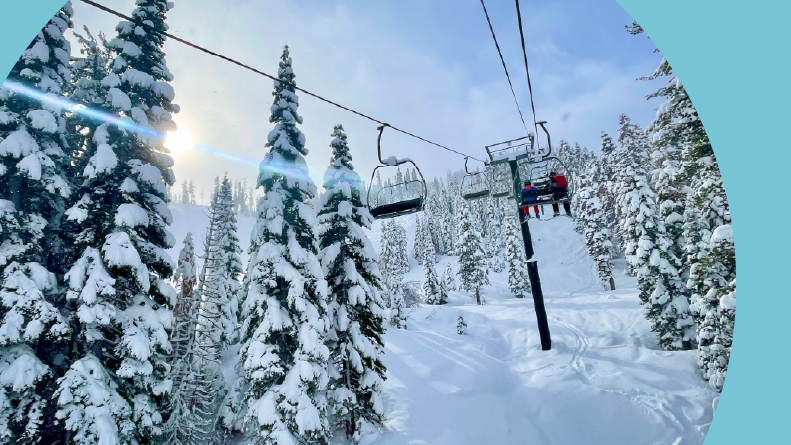
The year-round Mediterranean climate of Southern California allows anyone to enjoy outdoor activities such as sports, sunbathing, and hiking year-round without being overly concerned about the weather. Meanwhile, retirees in NorCal can head up to Lake Tahoe for the best ski and snowboarding spots in the state during the winter. During warmer months, you can get your steps in at one of the lush national parks or get in some rounds of golf.
Access to Medical Care

Health care tends to be more expensive in NorCal due to the amount of consolidation of hospital systems by major corporations like Sutter Health and Kaiser. This leads to less competition and higher prices for retirees living in the area. There are more high-quality medical networks in Southern California, but it can still be expensive depending on your needs and location. Health care costs are typically higher in major cities.
California does provide a Medi-Cal program for low-income individuals, families, and seniors who qualify. The state also provides other senior services such as home care and long-term assistance. You can explore these options on the California Department of Aging’s website, which has many great resources on senior services and programs across the state.
Crowds, Commutes & Public Transit

Southern California is a denser urban center than Northern California. According to World Population Review, about 24 million people live in SoCal, while about 15 million live in NorCal. It’s become cliché to talk about how long many people have to wait in traffic just to move a few miles during rush hour, but that doesn’t make it any less true that LA is infamous for its heavily populated freeways. SoCal does have the LA Metro train to help residents get around without driving, but the system is less entrenched and connected to the rest of the city.
There’s every chance that you’ll get stuck in heavy traffic on any given day if you live in the Bay Area, but NorCal does have more public transport options to ease some of the strain on the roads. BART (the Bay Area Rapid Transit system) enables hundreds of thousands of people to traverse San Francisco without getting behind the wheel.
FAQ: NorCal vs. SoCal for Retirement
1. Is Northern California or Southern California better for retirement?
Both regions are excellent for retirees, but they offer different lifestyles. NorCal is ideal for those who prefer cooler weather, natural scenery, and quieter communities. At the same time, SoCal is perfect for retirees who want warm beaches, year-round sunshine, and vibrant cultural attractions.
2. Which is more affordable—NorCal or SoCal?
Both areas are expensive compared to the national average, but SoCal generally offers slightly more affordable housing in inland suburbs. NorCal coastal and Bay Area cities tend to be the most expensive in the state.
3. Is the climate better in Northern California or Southern California?
SoCal offers warm, sunny weather year-round with mild winters. NorCal has more climate variation with cool coastal fog in cities like San Francisco, hot summers inland, and snowy mountain regions.
4. Does NorCal or SoCal have better outdoor recreation?
NorCal excels in hiking, redwood forests, national parks, and skiing at Lake Tahoe. SoCal shines in beach activities, surfing, desert parks like Joshua Tree, and year-round outdoor sports.
5. Which region has less traffic—NorCal or SoCal?
Both have congestion, but SoCal (especially Los Angeles) is known for some of the worst traffic in the country. NorCal has congestion around the Bay Area, but the region typically offers better public transit options.
6. Which region offers better access to health care?
Both have world-class medical facilities. NorCal has top-tier systems like Stanford Health and UCSF, but at high costs. SoCal offers broader provider networks and more hospital systems, though affordability varies by city.
7. Is the cost of living higher in NorCal or SoCal?
Generally, NorCal (especially the Bay Area) has the highest cost of living in California. SoCal coastal areas can also be pricey, but inland communities may offer more budget-friendly options.
8. Which area has better cultural and entertainment options?
SoCal offers Hollywood, major theme parks, museums, concerts, and performing arts. NorCal focuses more on tech-driven culture, wine country, historic districts, and a rich arts scene in the Bay Area.
9. Where are housing prices cheaper—Northern California or Southern California?
Housing is typically cheaper in SoCal, particularly in Riverside, Inland Empire, or North County areas. NorCal has lower-cost options inland, but the Bay Area remains one of the most expensive regions in the U.S.
10. Which area is less crowded—NorCal or SoCal?
NorCal is generally less populated than SoCal. Los Angeles County alone has more people than many U.S. states. NorCal cities are dense in certain areas but more spread out overall.
Finding the California Retirement That Fits You
Choosing where to spend your retirement years is a deeply personal decision, and California’s two major regions each offer their own compelling advantages. Whether you’re drawn to SoCal’s warm beaches and vibrant cultural scene or NorCal’s majestic landscapes and milder climate, understanding these distinctions can help you find the perfect place to match your lifestyle.
When you’re ready to take the next step, a knowledgeable real estate expert can help guide you toward a community that feels like home. Contact 55places today to explore your options with confidence!

- Insights and market stats
- Instant new home alerts
- Answers from local 55+ experts