OVERVIEW
Retiring near Washington, D.C. requires choosing between Virginia, Maryland, and the District itself, each with distinct tax structures, costs, and lifestyles. Virginia exempts Social Security income, has no estate or inheritance tax, and offers 55+ communities in Williamsburg ($653,750 median), Richmond ($510,000), and Fredericksburg ($490,000). Maryland imposes higher income taxes but offers waterfront living and direct Metro access, with Montgomery County 55+ community homes averaging $619,250 as of June 2026.
Most people assume that retirement planning can proceed once they find the right city. But in the Washington, D.C. metro area, that’s where the real challenge begins.
Few places in America ask retirees to think as hard about where they live as this region does. You’re not just choosing between a handful of ZIP codes. There are different tax structures, cost considerations, and lifestyle identities to weigh. And depending on which side of a state line you land, the differences can reshape your retirement budget and lifestyle.
That tension is what makes retiring in the D.C. corridor so interesting, and so easy to get wrong. The region has real advantages: major cultural institutions, respected hospital systems, and an international energy that most retirement destinations can’t offer. But those advantages come at a price.
In a tri-state geography where Maryland, Virginia, and the District each play by their own rules, where you land matters as much as when you retire.
Retiring in or Near Washington, D.C.

Living within Washington, D.C., puts residents at the center of national arts, dining, and culture. For active adults, the appeal is walking to Smithsonian museums, The Kennedy Center, or Michelin-starred restaurants without needing a car. The Metro system also makes the city easy to navigate without one.
But is Washington, D.C., in Maryland or Virginia? Neither. The nation’s capital serves as its own federal district, independent of both states. Living here also requires a significant financial commitment. D.C. is among the nation’s most expensive cities, with high real estate costs and a challenging tax environment. UrbanTurf reports that the average home price in Q1 2026 was $645,000. However, the median list price in a 55+ community in the Washington, D.C.-Baltimore area is slightly lower at $612,500 in June of 2026, according to data from 55places.com. Traffic is heavy, and grocery and health care costs trend well above the national average.
That’s why many retirees treat D.C. as a place to visit rather than a place to live. For most, the real choice is Virginia vs. Maryland. Living in the nearby suburbs means access to District amenities along with quieter neighborhoods, more greenspace, and a lower cost of living.
Retirement in Virginia
Is Virginia good for retirees? We think so. The state’s colonial history, diverse geography, and favorable tax laws attract many active adults. Beyond the Northern Virginia suburbs, popular destinations include Fredericksburg, Williamsburg, the Shenandoah Valley, and Virginia Beach. Whether you prefer mountain hiking or exploring the coastal plain, you can find a city that fits your lifestyle.
Financially, Virginia is highly attractive. The state exempts Social Security income from taxation and maintains a modest income tax structure. With generally lower property taxes than Maryland, it’s a premier tax-friendly choice. Furthermore, qualifying residents can claim significant deductions on other retirement income.
In their free time, Virginia retirees explore the state’s historic sites, the Blue Ridge Mountains, and its wine country. The climate is relatively mild, typically sparing residents the harsher winters found in the higher elevations to the west. Residents also enjoy Shenandoah National Park, Colonial Williamsburg, and the Chesapeake Bay. The state’s infrastructure keeps even rural areas connected to major medical and commercial hubs.
Williamsburg Area, VA
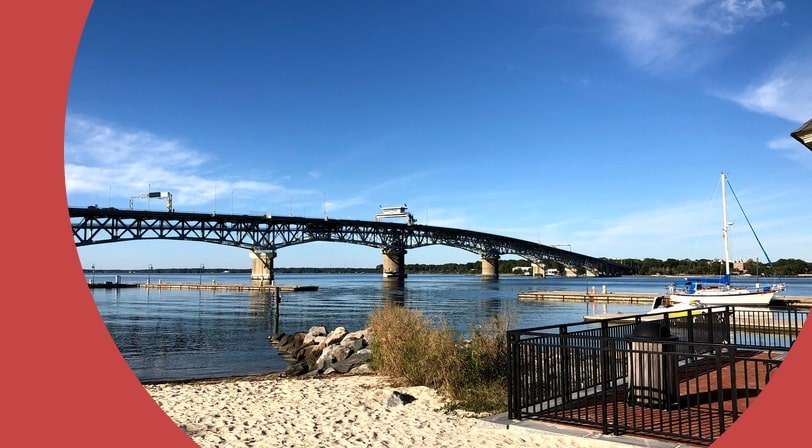
Williamsburg offers a slower pace of life steeped in American history. Home to the Revolutionary City and the College of William & Mary, the area provides lifelong learning through audit programs and lectures. The Historic Triangle, which includes Jamestown and Yorktown, offers museums and sites to explore year-round.
The lifestyle also centers on golf and the outdoors. Residents enjoy boating on the York and James rivers, a deep roster of golf courses, and a walkable historic district filled with dining and boutiques.
According to the Williamsburg Area Association of Realtors, the Q4 2025 median Williamsburg home sales price was $480,000, up 16% year over year. Housing ranges from low-maintenance townhomes to 55+ master-planned developments, offering more square footage for the price than D.C. The median list price in a 55+ community in the Williamsburg area is $653,750 as of June 2026, according to data from 55places.com. Also, Riverside Doctors’ Hospital and Sentara Williamsburg Regional Medical Center keep quality health care close to home.
The Williamsburg area is a strong fit for history buffs and golfers seeking a refined atmosphere with colonial charm.
Richmond Area, VA

As the state capital, Richmond has a sophisticated urban profile without D.C.’s cost of living. Known for its active arts scene, James River recreation, and respected food culture, the city blends Southern hospitality with cosmopolitan energy.
In this part of the state, retirees enjoy historic character in neighborhoods like The Fan and modern amenities in suburbs like Chesterfield and Henrico. The James River Park System provides miles of trails for hiking and birdwatching, while the Virginia Museum of Fine Arts serves as a central hub for social events.
The housing market remains more affordable than the D.C. suburbs: Data from the Federal Reserve Bank of St. Louis shows a median listing price of $450,00 for June 2026. The median list price in a 55+ community in the Richmond area is $510,000 as of June 2026, according to data from 55places.com. Options include renovated historic lofts and new construction, with many active adult communities featuring clubhouses, pools, and fitness centers. VCU Medical Center and several Bon Secours facilities anchor the region’s health care, giving retirees access to specialists and current treatments.
Richmond is ideal for those seeking urban culture, riverfront access, and mid-range affordability in a manageable city.
Fredericksburg Area, VA

Located between Washington, D.C., and Richmond, Fredericksburg serves as a gateway for those who enjoy the capital but prefer a small-town atmosphere. The city is known for its Civil War battlefields and a 40-block National Historic District featuring 18th- and 19th-century architecture.
The lifestyle centers on a pedestrian-friendly downtown and outdoor activities along the Rappahannock River. While offering that quieter pace, Fredericksburg stays connected to major hubs via the Virginia Railway Express (VRE) commuter rail. Also, the University of Mary Washington adds youthful energy and diverse cultural programming.
Housing prices remain competitive, and many retirees find value in large-scale 55+ communities. U.S. News reported a 2025 median home value of $462,657. The median list price in a 55+ community in the Fredericksburg area is $490,000 as of June 2026, according to data from 55places.com. These developments often feature on-site walking trails and proximity to regional parks. Mary Washington Healthcare supports the area with a network of specialists and a central hospital, and the system recently expanded its cardiac and cancer care centers to serve the growing retiree population.
Fredericksburg is ideal for those seeking historic surroundings, a manageable commute to D.C., and a strong local community.
Winchester Area, VA

Winchester sits in the northern Shenandoah Valley, roughly 75 miles from Washington, D.C. The community’s social heart centers on the annual Shenandoah Apple Blossom Festival and the historic Old Town, all set against a mountain backdrop. The area suits outdoor enthusiasts, with easy access to the Appalachian Trail and state parks like Sky Meadows. The region also features a growing selection of local breweries, orchards, and farm-to-table dining that highlights the valley’s agricultural roots.
Winchester is one of Virginia’s more affordable markets. Recent U.S. News data shows a 2025 median home price of $338,269, significantly lower than in other parts of the state. Local 55+ communities often emphasize nature, with many developments offering valley views. Advanced medical services are provided by the Valley Health system, anchored by Winchester Medical Center. As a regional referral center, the hospital offers a level of care typically found in much larger metropolitan areas.
Winchester is well-suited for nature lovers and budget-conscious retirees seeking a mountain setting.
Retirement in Maryland
Is Maryland a good state to retire in? For many, yes. The state offers retirement experiences shaped by its waterways and its proximity to Baltimore and D.C. Montgomery and Prince George’s counties provide affluent, culturally diverse suburbs bordering the District, while the Eastern Shore caters to active adults seeking a relaxed, waterfront lifestyle.
Financially, Maryland differs from Virginia. While the state exempts Social Security income from taxation, it applies higher income tax rates, and many counties levy local taxes. Property taxes vary significantly by location, though many residents find that high-quality public services and infrastructure support long-term real estate value.
Active adults are drawn to sailing on the Chesapeake Bay, upscale communities, and the state’s famous blue crab. Popular pastimes include exploring Assateague Island, catching shows at The Fillmore Silver Spring, and touring Antietam National Battlefield. Maryland’s varied geography offers everything from beaches to rolling western hills.
Montgomery County, MD

Montgomery County attracts retirees who value an upscale, suburban-meets-urban environment bordering Washington, D.C. The region pairs high-end amenities with abundant greenspace in a cosmopolitan setting.
The lifestyle centers on the arts, dining, and walkable hubs like Bethesda and Silver Spring. Residents enjoy access to more than 400 parks and extensive trail systems, including the Capital Crescent Trail, pairing metropolitan convenience with natural beauty.
Housing costs trend higher here because of the county’s proximity to D.C., and the inventory features upscale condos and high-end 55+ developments. Federal Reserve Bank of St. Louis data shows a June 2026 median listing price of $619,250, significantly exceeding regional and national averages.
Health care is a major draw, with the National Institutes of Health (NIH) and Walter Reed National Military Medical Center in Bethesda. Supported by Johns Hopkins and MedStar Health, residents have immediate access to top specialists and medical research.
This market is well-suited for those seeking a culturally rich lifestyle and access to major medical institutions.
Prince George’s County, MD

Prince George’s County offers a mix of historical significance, suburban comfort, and modern development. It serves as a viable alternative for retirees who want proximity to the capital without the Montgomery County price tag. This growing region also prioritizes heritage and community.
Leisure opportunities range from the National Harbor waterfront in Oxon Hill to the wooded trails of Watkins Regional Park. The University of Maryland hosts a lively calendar of collegiate sports and campus events, while the county’s historic sites and local festivals add to the community’s character.
The county’s housing market is generally more accessible than neighboring areas, with options ranging from historic colonials to modern townhomes and active adult communities. Niche.com indicates a median home value of approximately $426,000, offering a balanced entry point for retirees.
The main medical campus here is the University of Maryland Capital Region Medical Center in Largo, which provides comprehensive services and specialized health programs. Kaiser Permanente Largo Medical Center supports routine and outpatient needs.
This market is ideal for those seeking a lower housing price point and a diverse, community-focused environment near Washington, D.C.
The Eastern Shore, MD

The Eastern Shore offers a peaceful departure from the I-95 corridor, defined by its “land of pleasant living” ethos and deep connection to the Chesapeake Bay. Active adults enjoy waterfront views, a slower pace of life, and historic maritime villages. Boating, crabbing, and fishing are primary pastimes. Towns like St. Michaels feature laid-back cultural scenes with boutiques, antique shops, and “sea-to-table” dining, and nature lovers can spend whole days at the Blackwater National Wildlife Refuge, which offers cycling trails and birdwatching.
Housing costs on the Eastern Shore depend heavily on proximity to water. While inland properties remain affordable, waterfront estates command a premium. Square Feet Appraisals, Inc. reports a 2025 median home price of $395,000 for the region, though coastal locations trend significantly higher.
Shore Regional Health, part of the University of Maryland Medical System, provides specialized care through its Easton hospital and satellite facilities. The network is tailored to the local population, with strengths in oncology and orthopedics.
This market is a strong fit for retirees prioritizing a quiet waterfront lifestyle and small-town maritime charm.
Virginia vs. Maryland Side-by-Side: Key Factors for Retirees

Now that we’ve laid out the facts, it’s time to compare the pros and cons of living in Maryland vs. Virginia.
Cost of Living
Virginia generally wins on affordability, particularly on taxes. Lower income tax rates and the absence of local income taxes help keep budgets in check. Maryland is often more expensive due to higher local taxes and waterfront premiums, though proximity to federal hubs can drive property appreciation.
Estate and Inheritance Taxes
A critical differentiator is how each state treats wealth transfer. Virginia has no state estate or inheritance tax, an advantage for those looking to pass down assets. Maryland is the only state in the nation to impose both an estate tax (with a $5 million exemption in 2026) and a flat 10% inheritance tax on non-lineal heirs.
Community Inventory
Both states offer numerous active adult communities. Virginia features growing master-planned 55+ developments near Richmond and Fredericksburg. Maryland emphasizes waterfront communities and walkable, environmentally conscious suburbs.
Climate
Both states experience humid summers and mild winters. Virginia’s western elevations see more snow, while Maryland’s coastal areas stay slightly warmer in winter thanks to the Chesapeake Bay and the Atlantic.
Access to D.C.
Maryland’s Montgomery and Prince George’s counties offer direct Metro access. Virginia’s broader retirement corridor, spanning Williamsburg, Richmond, Fredericksburg, and the Winchester area, trades Metro convenience for more breathing room, with I-95 and I-66 serving those traveling to D.C. Maryland wins on rail connectivity.
Health Care Quality
Access to quality care is strong in both regions, but the concentration differs. Maryland benefits from the Johns Hopkins and NIH networks near the D.C. line. Virginia’s health care system is highly ranked for access, with major expansions in cardiac and oncology centers throughout its growing suburban corridors.
Outdoor Lifestyle
Virginia is ideal for mountain lovers and hikers; Maryland leads for boating, fishing, and maritime culture. Both states offer strong park systems and historic trails.
FAQ: Washington D.C., Virginia, or Maryland
Is Washington, D.C. in Maryland or Virginia?
Neither. Washington, D.C. serves as its own federal district, independent of both Maryland and Virginia. It sits between the two states, with Maryland to its north and east and Virginia to its south and west.
Is Washington, D.C. an expensive place to retire?
Yes, D.C. is among the nation’s most expensive cities. Grocery and health care costs trend well above the national average, which is why many retirees treat D.C. as a place to visit rather than live, choosing the Virginia or Maryland suburbs instead.
Is Virginia or Maryland better for retirement?
It depends on your priorities. Choose Virginia if you want to maximize a pension, stay close to the mountains, and benefit from lower taxes and no estate or inheritance tax. Choose Maryland if you want a boat at a private dock and the maritime charms of the Chesapeake Bay, and don’t mind higher local taxes.
Which is cheaper for retirees: Virginia or Maryland?
Virginia generally wins on affordability, particularly on taxes. Lower income tax rates and the absence of local income taxes help keep budgets in check, while Maryland tends to be more expensive due to higher local taxes and waterfront premiums.
Does Maryland have an estate or inheritance tax?
Yes, Maryland is the only state in the nation to impose both an estate tax and an inheritance tax. The estate tax carries a $5 million exemption in 2026, and there is a flat 10% inheritance tax on non-lineal heirs.
What is the most affordable place to retire near Washington, D.C.?
Winchester, Virginia, is one of the most affordable markets in the region, with a 2025 median home price of $338,269. Located about 75 miles from D.C. in the northern Shenandoah Valley, it suits nature lovers and budget-conscious retirees, with health care provided by Winchester Medical Center through the Valley Health system.
Does Virginia or Maryland have better access to Washington, D.C.?
Maryland wins on rail connectivity, with Montgomery and Prince George’s counties offering direct Metro access. Virginia’s retirement corridor trades Metro convenience for more breathing room, relying on I-95, I-66, and the Virginia Railway Express to reach D.C.
How do I find a 55+ community in Virginia, Maryland, or near Washington, D.C.?
Start by deciding which factors matter most to you, whether that’s Virginia’s tax advantages, Maryland’s waterfront living, or proximity to specific hospitals and Metro lines. The 55+ real estate experts at 55places.com can help you compare communities across the region and find available homes in your preferred destination.
Final Thoughts: A Virginia vs. Maryland Retirement
There is no single answer to whether Virginia or Maryland is better for retirement; the decision depends on personal priorities. If the goal is to maximize a pension and stay close to the mountains, Virginia’s tax code and geography offer a compelling path. If retirement plans involve a boat at a private dock and the maritime charms of the Chesapeake, Maryland is worth the investment.
What’s clear is that the greater D.C. region rewards those who do their homework. The tri-state geography that makes this decision complicated is also what makes it rich with possibility. Few regions in America offer this range of lifestyles, this depth of culture, and this level of health care access within such a compact corridor. The right answer isn’t the same for everyone, but for retirees willing to think carefully about where they land, this part of the country has a great deal to offer.

- Insights and market stats
- Instant new home alerts
- Answers from local 55+ experts