OVERVIEW
Renting a house in a 55+ community is possible, but rules vary significantly by community. Under the federal Housing for Older Persons Act (HOPA), at least 80% of occupied units must have a resident aged 55 or older, and most age-restricted communities require renters to meet that minimum age. Monthly rent in 55+ and active adult communities ranges from under $1,000 to over $3,000, depending on location, property type, and amenities included.
Renting a house in a 55+ community is absolutely possible, but the rules and opportunities vary from one community to another. If you’re planning an extended vacation, searching for a quiet long-term rental, or considering renting out your own home in a 55+ neighborhood, some communities welcome renters aged 55 and up with open arms, while others have strict regulations to protect the lifestyle and stability residents expect.
In this guide, we’ll explore the ins and outs of renting in 55+ communities. We’ll also cover age rules, typical costs, and how to find 55+ rentals that fit your lifestyle.
Can I Rent a Home in a 55+ Community?

If you’re interested in staying in a 55+ community for a few weeks, the answer depends on the specific community you choose. Many communities don’t like people dropping in and out, even if you wish to rent long term, and will not allow it. Others may be open to allowing renters in the community but will not offer short-term rentals, requiring a commitment to stay for a few weeks or even months.
You also need to consider that if you aren’t 55 or older, you probably won’t be allowed to rent. However, be sure to speak with someone at the 55+ community you plan to live in to confirm such restrictions.
The 80/20 Rule
Not every 55+ community enforces the same age restriction. Under the federal Housing for Older Persons Act (HOPA), a community qualifies as “55 and older” if at least 80% of its occupied units have at least one resident who is 55 or older. This is the 80/20 rule in active adult communities. In practice, this means up to 20% of units could be occupied by younger residents, so some communities have more flexibility than you might expect.
Age-Restricted and Age-Targeted Communities
It also helps to understand the difference between age-restricted and age-targeted communities. An age-restricted community enforces a strict minimum age (typically 55) and requires at least one occupant in each household to meet that threshold. An age-targeted community, on the other hand, is marketed toward adults 55 and older but doesn’t impose a legal age restriction. You’ll find a wider mix of ages in age-targeted neighborhoods, though the amenities and lifestyle still cater to an active adult audience.
One more thing worth knowing: Many age-restricted communities do allow a spouse or partner under 55 to live in the home, as long as at least one occupant meets the minimum age requirement. Rules on this vary, so always confirm with the community before signing a lease.
What types of 55+ rentals are available?
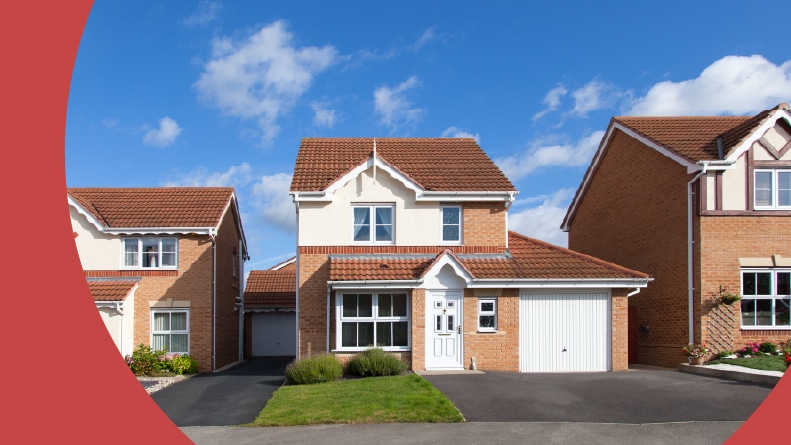
Rental options in 55+ communities come in more shapes and sizes than most people realize. Here are the most common property types you’ll find:
- Single-family homes: Standalone houses with private yards, typically offering the most space and privacy. These are common in large active adult communities in the Sun Belt.
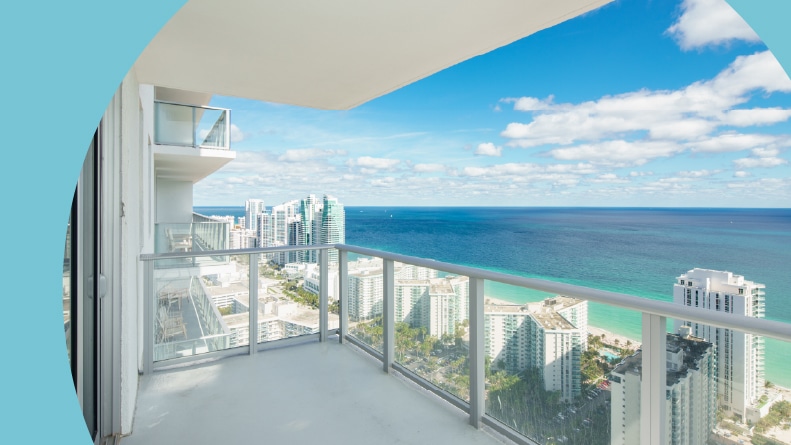
- Apartments and condos: Individual units inside a larger building or complex, often with shared amenities like a fitness center or pool. A great fit if you prefer low-maintenance living.
- Townhomes: Attached homes that share one or two walls with a neighbor, usually with multiple floors and a small outdoor area. They split the difference between an apartment and a single-family home.
- Manufactured homes: Factory-built homes placed on a rented or owned lot within a community. These tend to be the most budget-friendly option and are especially popular in Florida and Arizona.
If you’re leaning toward an apartment, the hottest markets for 55+ apartments span from Florida to the West Coast. It’s also worth understanding the key differences between standard apartment communities and 55+ communities before you start touring.
Renting vs. Buying: When does each make sense?
Renting can be the smarter move if you’re new to the 55+ lifestyle and want to try a community before committing. It’s also a strong choice if you prefer to keep your savings liquid, aren’t ready to sell a current home, or plan to split time between two locations.
Buying tends to make more sense when you’ve found a community you love and plan to stay long term, especially if you want to build equity or customize your living space. The decision often comes down to how certain you are about where you want to live, and renting vs. buying in retirement looks different for everyone depending on finances, flexibility, and long-term plans.
How much does it cost to rent in a 55+ community?
Monthly rent in a 55+ community can range widely, from under $1,000/month for a basic apartment in a lower-cost market to $3,000 or more for a premium single-family home in a desirable area. The price depends on several factors, including location, property type, community size, and the amenities offered.
Here’s a general sense of what affects cost:
- Location matters most: Communities in Sun Belt states like Florida, Arizona, and the Carolinas tend to command higher rents than comparable properties in the Midwest or parts of the Northeast. However, you’ll also find a wider range of options in those popular markets.
- What’s typically included: Many communities bundle amenities such as lawn care, exterior maintenance, access to clubhouses and pools, and trash collection into the rent or a monthly HOA fee.
- What’s usually extra: Utilities like electric, water, internet, and cable are often your responsibility. Some communities also charge separate fees for golf, tennis, or premium fitness facilities.
Before you sign a lease, ask the community for a full cost breakdown. Request a clear list of what the rent covers, what the HOA or amenity fees are, and which costs fall on you as the renter. This avoids surprises down the road.
If you’re weighing how 55+ rental costs fit into your overall retirement budget, affording the 55+ lifestyle is a bigger conversation worth having early.
Will I Have Access to All the Community Features if I Rent?

Amenity access for renters varies by community, so you’ll want to ask the right questions before you commit. Some communities may not have a problem with you using the outdoor pool. Others may make it clear that only residents have access. The same applies to other amenities in a 55+ community.
To give you a starting point, here’s a breakdown of what renters typically can and can’t access:
Amenities commonly available to renters:
- Clubhouse and common areas
- Swimming pools and hot tubs
- Walking and biking trails
- Community social events and clubs
- Basic fitness centers
Amenities that may be restricted or cost extra:
- Golf courses and tennis courts (often require separate membership fees)
- Private event spaces or catering kitchens
- Boat docks or marina access
- Premium spa or salon services
Keep in mind that some communities charge renters a separate amenity fee on top of monthly rent. This fee may cover the same perks homeowners get through their HOA dues, or it may provide a more limited package. Before you commit, ask for a written list of the community amenities included.
Can I Rent Out My Home in a 55+ Community?
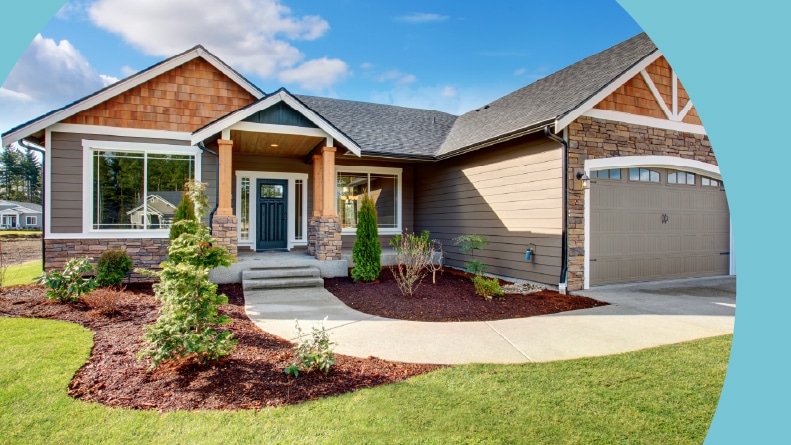
This depends on the community you live in. Some areas, such as Florida, that experience winter migrations may be more open to owners renting out their homes than a community in New York. This doesn’t mean that you can’t rent out your home in New York. It simply means that the guidelines may be very different.
Speaking of guidelines, even if you’re allowed to rent out your home, there are rules in 55+ communities. When you sign on the dotted line to purchase a home there, you’re also agreeing to the guidelines and restrictions. It’s very much like a homeowners’ association (HOA).
Here are some of the most common restrictions you may run into:
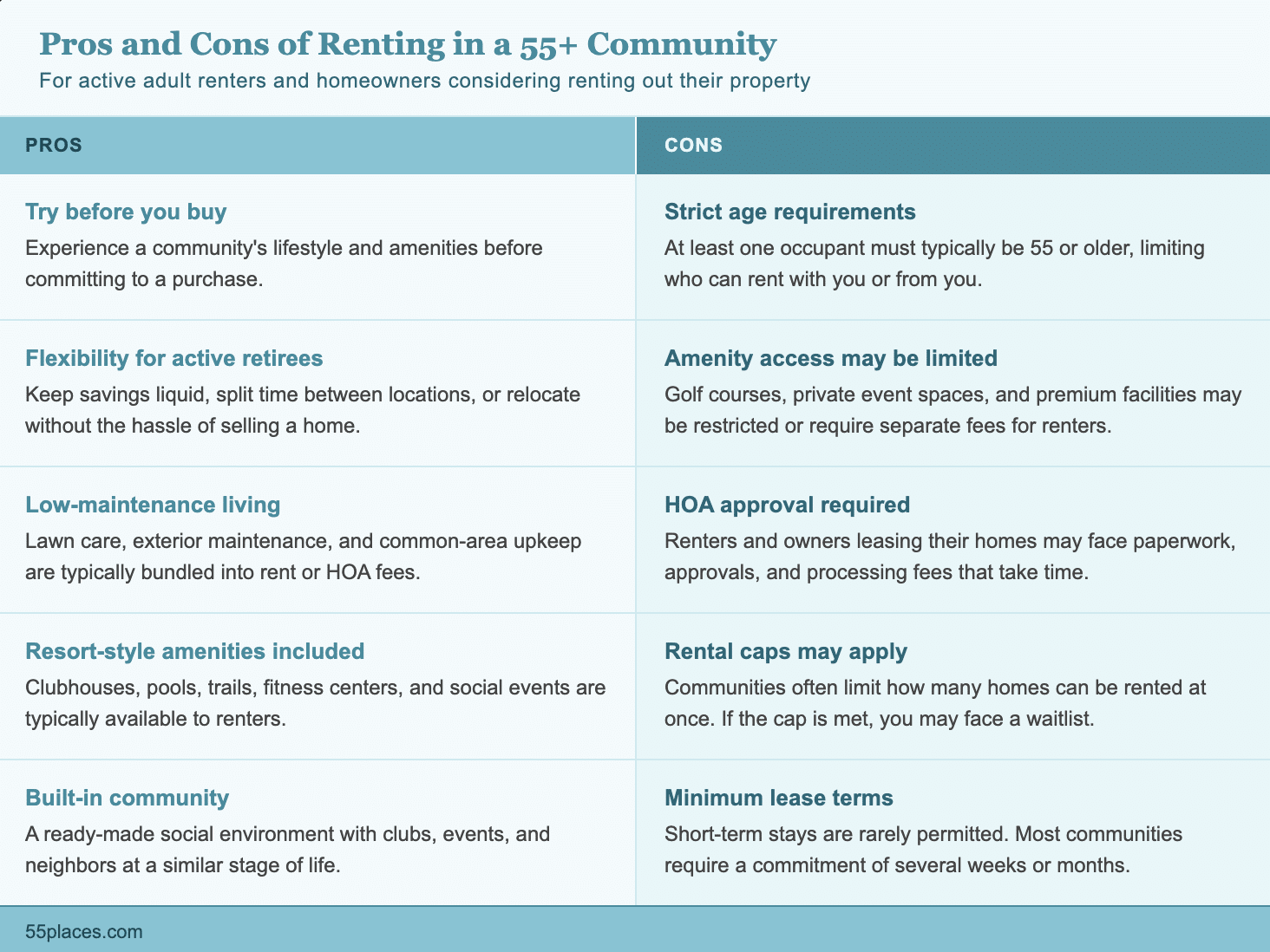
- Age requirements for tenants: Many communities require renters to be 55 or older, which means you may not be able to rent to your beloved nephew who needs a place to stay for a few days.
- Rental caps: Only a limited number of homes can be rented out at a time. If your neighbors have already signed up to rent their homes out, your request may be put on a waiting list or rejected.
- Minimum lease terms: You may need to find someone willing to rent for several weeks or even months. Those who live in a 55+ community do so for stability. Residents don’t want their neighborhood to turn into a vacation community.
What Are the Pros of Renting Out My 55+ Community Home?

If you’re planning to use your retirement to travel, then renting out your home just makes sense. The first step is to get approval from your community. After that, enjoy the numerous pros.
Here’s what works in your favor:
- Low-maintenance ownership: You won’t be responsible for maintenance while you’re away. Typically, the community’s maintenance crew handles landscaping, exterior upkeep, and common-area care. You don’t have to travel back every other weekend to mow the lawn.
- Community oversight protects your property: 55+ communities enforce HOA rules and often have on-site management or security that helps keep the neighborhood in order. That built-in structure means your property is less likely to face issues while you’re away.
- Desirable locations attract reliable renters: Most 55+ communities are in sought-after areas near shopping, health care, and recreation. You won’t have to work hard to convince someone to rent your home. The location and lifestyle sell themselves.
- Targeted marketing is simpler: Because 55+ rentals appeal to a well-defined audience, your marketing plan can be focused and straightforward. You know exactly who you’re reaching.
What Are the Cons of Renting Out My 55+ Community Home?

While there are plenty of reasons why renting out your 55+ community home is great, there are a few cons to consider before you do so.
- A smaller renter pool: In most age-restricted communities, you can only rent to someone who is 55 or older. That narrows your pool of potential tenants compared to a standard rental property. If your community doesn’t enforce age restrictions, this won’t apply to you, but it’s worth checking upfront.
- HOA dues don’t stop: Whether or not you have a renter in place, you will still need to pay monthly HOA dues and assessments. If your home sits vacant between tenants, you’ll need another way to cover those costs while you’re away.
- HOA paperwork and approval: Many communities require you to submit a rental application, register your tenant with the HOA, and sometimes pay a processing fee. The approval process can take time, so plan ahead if you’re working with a specific move-out date.
- Rental caps may block you: Some communities limit how many homes can be rented at any given time. If the cap has already been reached, your request may be placed on a waiting list, even if your home meets all other requirements.
How Do I Advertise My Rental?

Since most 55+ communities require longer lease terms (often several months or more), the best advertising channels are those designed for long-term rentals, not short-stay vacation platforms.
Here are a few effective options:
- Your community’s HOA or management company: Many HOAs maintain a bulletin board, newsletter, or resident portal where approved rental listings are shared. This keeps your listing in front of people who already understand the community’s rules.
- Local 55+ real estate agents: An agent who specializes in the 55+ market can help you find qualified tenants and handle the paperwork. They’ll also know which marketing channels work best in your area.
- Word of mouth: Given the close-knit nature of most 55+ communities, word of mouth is one of the best ways to find renters. Talk to your neighbors. Someone in the community may know a friend or family member who’s been looking for a temporary home in the area.
No matter where you advertise, include plenty of photos, a clear description of lease terms and costs, and any HOA-required details (like the age requirement). Transparent listings attract more serious inquiries and help you find the right tenant faster.
How do I find 55+ rental communities?

So, can I rent a house in a 55+ community? The answer is: It depends. Age restrictions, rental terms, and amenity access all vary by location and HOA guidelines. Whether you’re hoping to rent in one of these vibrant communities or considering renting out your own property, it’s important to do your research and understand the specific rules in place.
Here are a few steps to get started:
- Browse listings by state: Head to 55places.com to explore 55+ rental communities in the states and cities you’re interested in. You can compare amenities, pricing, and community profiles side by side.
- Contact communities directly: Once you’ve narrowed your list, reach out to the communities that catch your eye. Ask about age requirements, lease terms, amenity access for renters, and total monthly costs.
- Work with a 55+ real estate agent: A specialist who knows the 55+ market can help you find rental options that match your budget and lifestyle and save you time sorting through communities that don’t allow renters.
Once you’ve found a community you like, applying for a 55+ apartment is typically straightforward, but knowing the steps in advance helps you move faster when the right unit opens up.
Finding the Right Community
If you’re ready to explore 55+ rental communities tailored to your lifestyle, 55places.com can help you browse apartments and guide you through the process from start to finish. Reach out to us today and take the next step toward finding your perfect 55+ rental home!
- Insights and market stats
- Instant new home alerts
- Answers from local 55+ experts