As you begin your next chapter, you may encounter several possibilities for 55+ housing. Two popular options to compare are a 55+ retirement community vs. independent living. But how do you know which one is right for you? Let’s look at what each of them has to offer and how to pick the one that will meet your needs.
If you’re searching for 55+ communities, you have a wide range of housing options available, and selecting the one that best suits your needs is crucial. After all, finding the proper housing situation for your retirement can have a significant impact on your health and happiness.
What Is a 55+ Community?

A 55+ community (also referred to as an age-targeted community, a retirement community, or an active adult community) is a neighborhood or complex that typically has a 55+ age restriction for residents. These developments range in size and amenity options depending on the type of community you’re looking for.
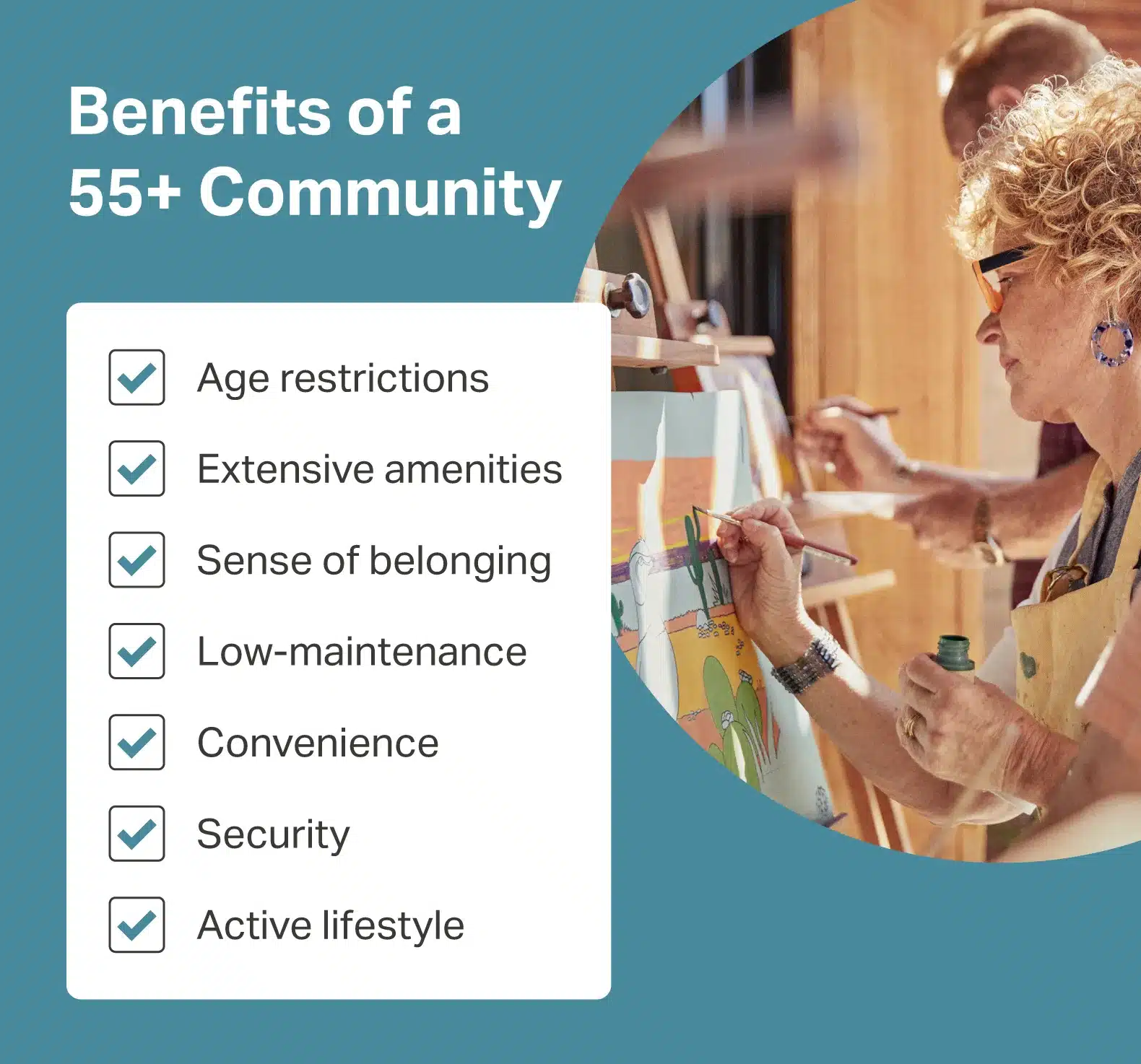
This living arrangement is ideal for active adults seeking low-maintenance properties, various activities and amenities, and a feel more like a town or city.
What Is Independent Living?

Independent Living (also referred to as a senior community, a retirement home, or a Continuing Care Retirement Community) allows older adults to maintain their livelihood in a community of peers. This type of senior housing is age-restricted with shared services and activities for residents.
This living situation is ideal for healthy adults seeking maintenance-free living, social interaction, and convenient access to medical care.
Which Is Right for You?
If you’re ready for a new home during your retirement, you may be wondering which of these options is right for you. The simple answer is you should choose the community that best meets your needs. The actual answer is much more complicated than that.
A 55+ retirement community and independent living are similar but have a few key differences.
Cost of Buying vs. Renting
If you’re a fully independent active adult, it’s essential to compare a 55+ retirement community with independent living in terms of both your lifestyle needs and budget.
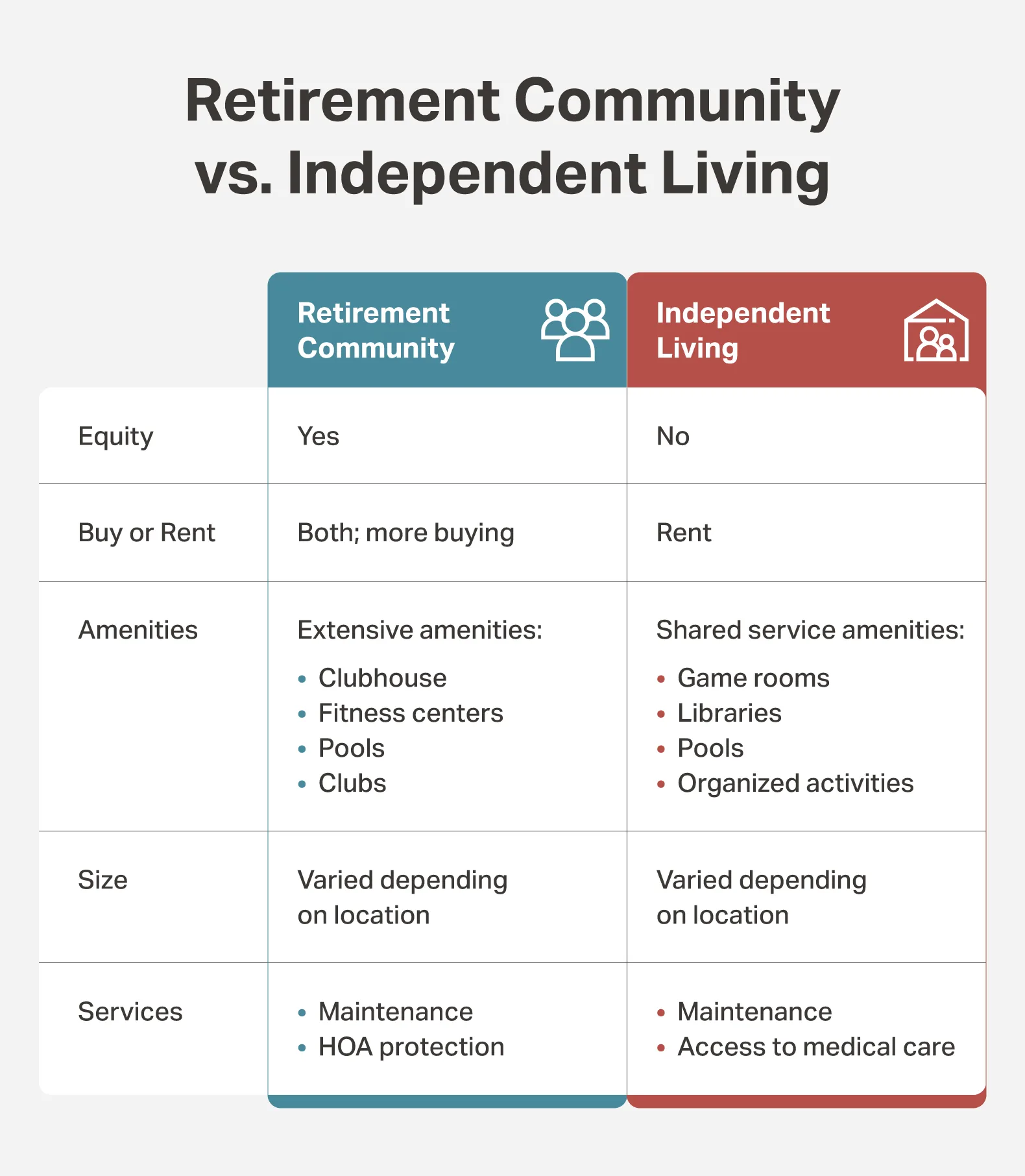
Most people rent in an independent living community, whereas 55+ retirement communities are mostly comprised of individuals who own their homes, with some rental options available. The focus here is to continue living independently, as they did in their original home, before moving into an independent living community.
In general, it costs more to buy a home in a 55+ community, but it also comes with equity, along with a lower monthly fee. On the other hand, independent living typically requires a large upfront payment and higher monthly costs. Generally, the fee to join an Independent Living community is partially or fully refundable; however, it still requires that individuals have sufficient funds to do so.
Available Amenities
Amenities in 55+ communities are typically more extensive than those in independent living. Often, a 55+ community features a clubhouse with a plethora of social clubs and activities, numerous fitness options, and water-based activities that are great for active adults who enjoy staying busy. 55+ retirement-style communities usually include maintenance and activities in their HOA fees.
In independent living, amenities center around community activities designed to alleviate the hassle of daily life. Independent living social activities are bolstered by residents’ convenient access to onsite shared spaces, such as pools, libraries, and game rooms. Those with medical or mobility restrictions might consider independent living for the sense of independence while still having access to the care they need.
Size of Community
55+ and independent living communities both vary in size depending on their location. Find a community that meets your preferences, from a quaint, smaller feel to large, well-known 55+ retirement communities like The Villages in Florida, which spans three counties.
Level of Assistance and Access to Care
One of the challenging aspects of aging is determining the level of support you require to maintain your health and safety. If you only desire a small amount of assistance, such as laundry or house cleaning services, hiring someone to come into your 55+ retirement community home is probably more cost-effective.
However, if nearby access to medical care is essential to you, independent living might be the answer. Moving doesn’t get any easier as time goes by. So, if you’re facing a major surgery or health problem that’s going to change how much help you need significantly, it may be better to find an independent living community to settle into now to maintain your independence while having easy access to care.
Tips To Choose The Best 55+ Community
This is a complicated decision with many factors to consider. Finances, lifestyle, health needs, and plans for your future all come into play when picking which option is best for you. If you’re not sure which way to go, here are some tips to help you make the right decision for you.
1. Talk to the Experts
This doesn’t just mean your doctors, although they are a great resource as well. Sit down with real estate agents who specialize in 55+ communities, family members, peers, or anyone whose opinion you trust to help you sort through the options. People who care about you typically have insights you might have missed.
2. Look at Your Finances
You can’t figure out how much you can afford if you don’t know what you have. Take a clear-eyed look at your budget and figure out just how much you’re comfortable spending. If you need more information, it may be a good idea to speak to a financial advisor.
3. Find Priority Health and Medical Services
As an active adult, your health and wellness are a top priority. Look for health and medical services in 55+ communities that meet your needs—whether it’s fitness amenities or proximity to medical facilities. Then, you can determine which communities check your boxes.
4. Tour Different Communities
There’s simply no substitute for seeing what something is like first-hand. You should be able to tour any community you’re interested in and get a good idea of what they have to offer. You can even join the 57% of adults over 55 using virtual tours to help find a property. Ask yourself: Which place feels right and has amenities that you love?
Ultimately, this decision is a very personal one. Only you know what you need and want in your life. Once you have all the input and the facts, it will hopefully become clear which choice is your next home.
Not sure if the 55+ lifestyle fits your situation? Connect with a local 55+ expert.
FAQ: 55+ Retirement Community vs. Independent Living
1. What is the difference between a retirement community and independent living?
A retirement community, often referred to as a 55+ or active adult community, focuses on an active, maintenance-free lifestyle for adults aged 55 and above. Independent living, on the other hand, is designed for older adults who still live independently but prefer a community that offers more daily conveniences, such as meal options, housekeeping services, and access to medical care.
2. Who should choose a 55+ retirement community?
A 55+ community is best for active, healthy adults who want to downsize, enjoy social activities, and live in a low-maintenance environment. These communities emphasize recreation and lifestyle, rather than health care.
3. Who is independent living best suited for?
Independent living works well for older adults who are still independent but want easier access to support services, such as dining options, transportation, or light assistance with daily chores. It’s an excellent choice for those who value convenience, community, and autonomy.
4. Do 55+ retirement communities offer health care services?
Most 55+ retirement communities do not provide on-site medical or personal care services. However, many are located near hospitals and clinics, and residents can hire in-home caregivers if needed.
5. Are 55+ communities and independent living the same as assisted living?
No. Assisted living is designed for individuals who need daily help with tasks such as bathing, dressing, or medication management. In contrast, 55+ and independent living communities cater to adults who are still self-sufficient and don’t require daily medical care.
6. What is the cost difference between a 55+ community and independent living?
Generally, 55+ communities are less expensive because you typically own your home and pay HOA fees that cover amenities and maintenance. Independent living often comes with monthly rental fees or entrance costs that include meals, housekeeping, and other services.
7. What amenities do 55+ retirement communities typically offer?
Most feature clubhouses, pools, fitness centers, pickleball and tennis courts, walking trails, and social clubs. The focus is on fun, recreation, and connecting with others who share similar interests.
8. What amenities are standard in independent living communities?
Independent living amenities often include restaurant-style dining, housekeeping services, laundry facilities, fitness rooms, transportation, and organized social activities. These communities focus on convenience and comfort.
9. Can couples live together if only one partner meets the age requirement?
In both 55+ and independent living communities, at least one household member must meet the age requirement, typically 55 or older. The younger partner is usually permitted to live there as well.
10. How do I decide between a 55+ community and independent living?
Start by evaluating your health, lifestyle preferences, budget, and long-term plans. If you’re active and want resort-style living, a 55+ community may be the ideal choice. If you prefer more convenience and supportive services, independent living may be a better fit. Touring both options can help you decide what feels right.
55places Can Help You Find Your Dream 55+ Community
Now that you know the benefits of living in a 55+ retirement community vs. independent living, it’s time to find the place for you. If you’re interested in purchasing a home in a 55+ community, contact 55places today! Our curated network of real estate professionals is here to help you find the perfect home for you as you start the next great adventure in your life.

- Insights and market stats
- Instant new home alerts
- Answers from local 55+ experts