OVERVIEW
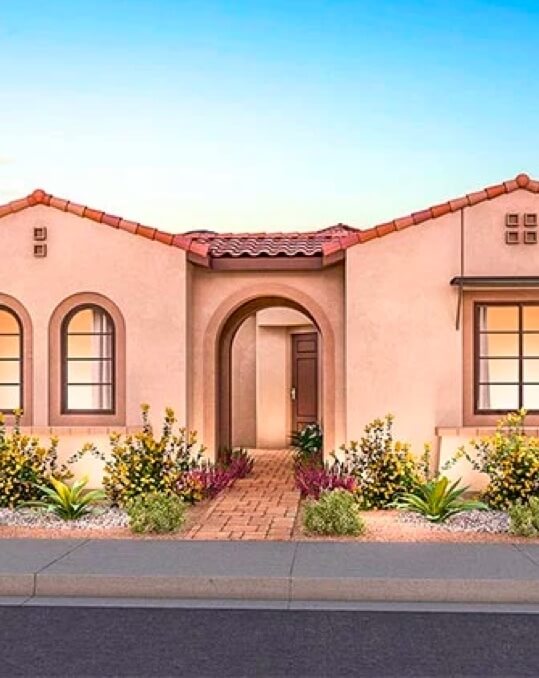
In 55+ and active adult communities, a villa is typically a single-story attached home with its own exterior entrance, no neighbors above or below, and a patio or lanai in place of a yard. HOA fees for villas range from $200 to $600 or more per month and commonly cover exterior maintenance, landscaping, and roof repairs. Villa prices start around $100,000 in established Florida and Arizona resale communities and exceed $800,000 in coastal California markets.
If you’ve been browsing active adult communities, you’ve probably come across the term “villa” and wondered what it means. It’s one of those real estate terms used loosely, and in the 55+ market, it can mean different things depending on the community.
Here’s a clear breakdown of what villas are, how they differ from condos and townhomes, what ownership looks like, and whether the villa lifestyle might be the right fit for you.
What Is a Villa?
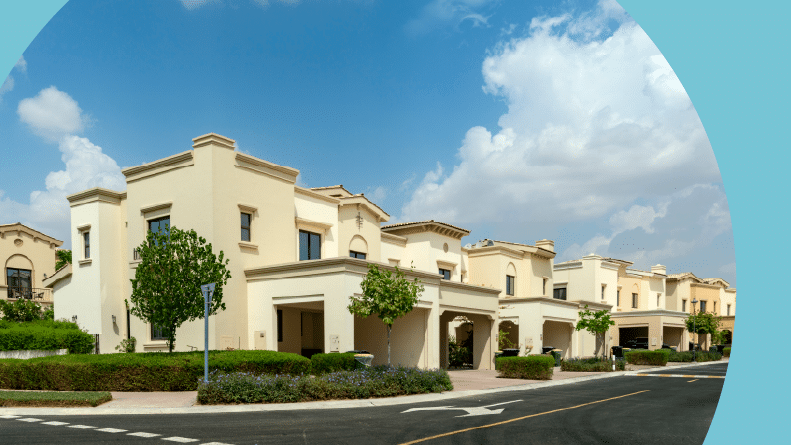
In 55+ communities, a villa is typically a single-story attached home. It shares one or two walls with neighboring units but has no units above or below it. Most villas have a small patio or veranda instead of a yard, and exterior maintenance is usually covered by a homeowners’ association (HOA) usually covers exterior maintenance.
The term has old roots. It originally referred to a Roman country estate, a large private property with a main residence and surrounding grounds. Over the centuries, the meaning narrowed from those sprawling estates to far more modest homes, and today in American real estate the word signals an attached, single-story, low-maintenance home. In some communities, it can still signal a detached or premium home, which is why it’s worth confirming the exact definition with any specific community you’re considering.
In most 55+ communities, though, the word “villa” generally signals a single-story, attached home that is more affordable and low-maintenance than a single-family home.
How Villas Compare to Other Home Types
Understanding the differences among villas, condos, and townhomes helps you determine which home type best fits your lifestyle.
Villa vs. Condo
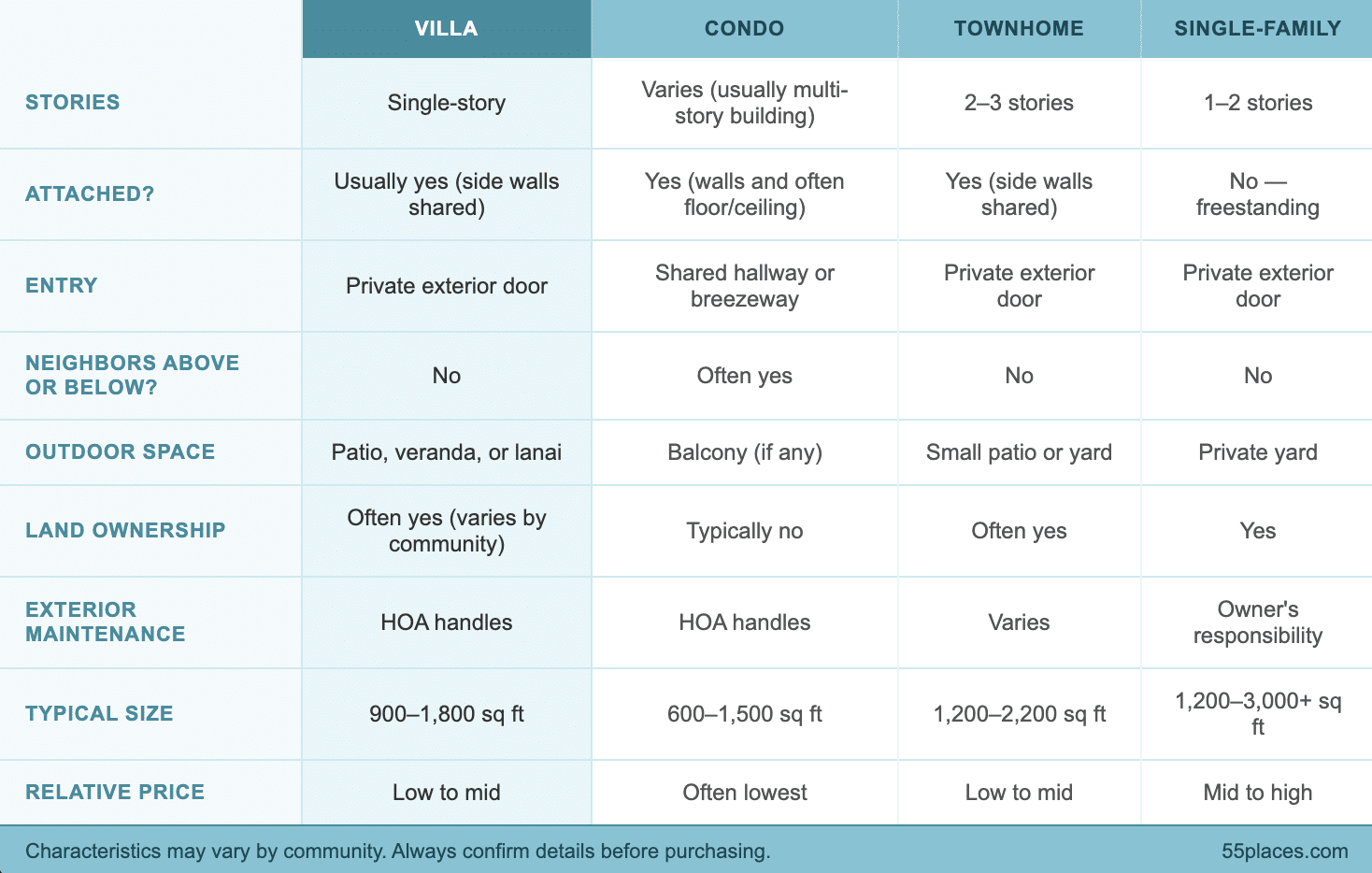
The most practical difference is how you enter your home. Condos in 55+ communities are typically housed in multi-story buildings with shared hallways, lobbies, or breezeways, meaning you’ll likely pass through common spaces to reach your unit. Villas are individual homes with their own exterior entrances. You walk out your front door to the outdoors, not into a shared corridor.
Condos are also more likely to have neighbors above or below, which can affect noise and privacy. Villas don’t have that concern.
Ownership structure can differ as well. In a condo, you typically own your individual unit but not the land beneath it. With a villa, depending on the community, you may own the land your home sits on, though this varies.
Villa vs. Townhome
The main distinction is stories. Townhomes are usually two or three stories, with bedrooms on an upper floor and living areas below. Villas are almost always single-story, which is a meaningful advantage for many active adults who prefer to avoid stairs. A villa typically feels more like a smaller single-family home, while a townhome feels more like a compact house with vertical living.
Villa vs. Single-Family Home
Villas are attached; single-family homes are freestanding. That’s the clearest difference. Single-family homes generally offer more square footage, more privacy, and a larger outdoor footprint. The trade-off is more maintenance responsibility and, usually, a higher price. Villas suit buyers who want the feel of a house without the upkeep.
What Does a Villa Include?

Floor plans, sizes, and included features vary by community, but most villas in 55+ communities share a few common characteristics:
Size: Villas typically range from about 900 to 1,800 square feet, though some communities offer larger models. They’re most commonly two-bedroom, two-bathroom layouts, occasionally with a den.
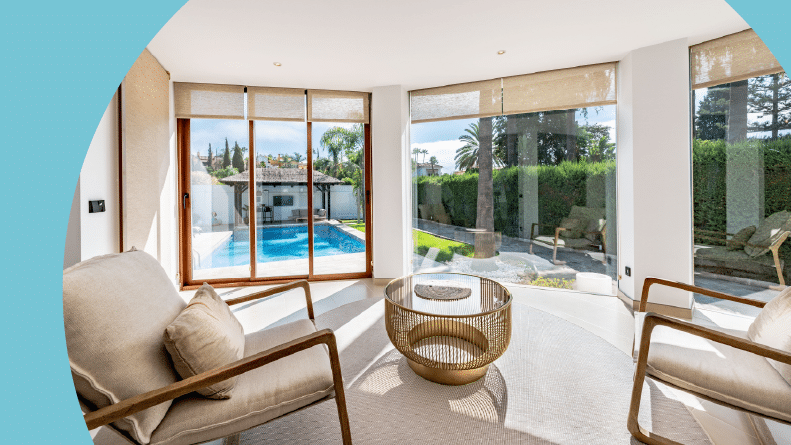
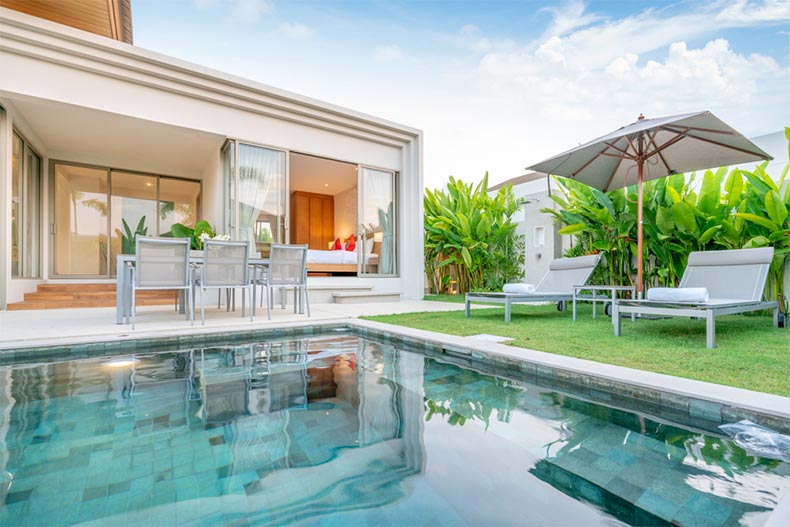
Outdoor space: Instead of a yard, expect a patio, veranda, or covered lanai. Some villa sections within communities also have access to a private pool or courtyard shared only by villa residents.
Garage: Most villas include an attached one- or two-car garage.
Single-story layout: Most villas are single-level, which is part of their appeal for buyers planning for long-term accessibility.
HOA coverage: This is where villas often stand out. HOA fees for villas typically cover exterior maintenance, landscaping, roof repairs, and sometimes exterior painting. This means you’re responsible for the inside of your home, and the association handles the outside. What’s covered varies by community, so always ask for a written breakdown before committing.
What Does a Villa Cost?
Pricing depends on location, community size, and the amenities package. In states like Arizona and Florida, you can find villas priced from $100k to $200k in established resale communities. Established Florida resale communities, in particular, offer some of the most affordable entry points for villa ownership. In higher-cost markets like coastal California or the Northeast, villa prices can reach $500k to $800k+.
The monthly HOA fee is the other number to watch. Villa HOA fees can run anywhere from $200 to $600 or more per month, depending on what’s included. A higher fee that covers exterior maintenance, landscaping, and community amenities often represents real value compared to a lower fee that leaves those costs to you.
Is a Villa Right for You?

A villa tends to be a strong fit if:
- You want a low-maintenance lifestyle without giving up the feel of a standalone home
- You’re downsizing from a larger single-family home and don’t need as much space
- Single-story living is a priority for long-term comfort and accessibility
- You’d rather spend time on community activities than on yard work and exterior upkeep
- You want to be closer to neighbors—villas often foster more of a community feel than single-family homes
It may not be the best fit if you need significant indoor square footage, want a private yard, or prefer more separation from neighboring homes.
At the same time, it’s worth weighing the trade-offs honestly:
- Less indoor square footage than a comparable single-family home, so storage and extra rooms can be tighter
- Private outdoor space limited to a patio, veranda, or lanai rather than a full yard
- One or two shared walls, which means a little less separation from neighbors
- Monthly HOA fees and community rules to factor into your budget and daily routine
For many active adults, these are simply the terms of the exchange: a bit less space and autonomy for single-story living and far less upkeep. That’s a trade most villa buyers make gladly.
55+ Communities With Villas
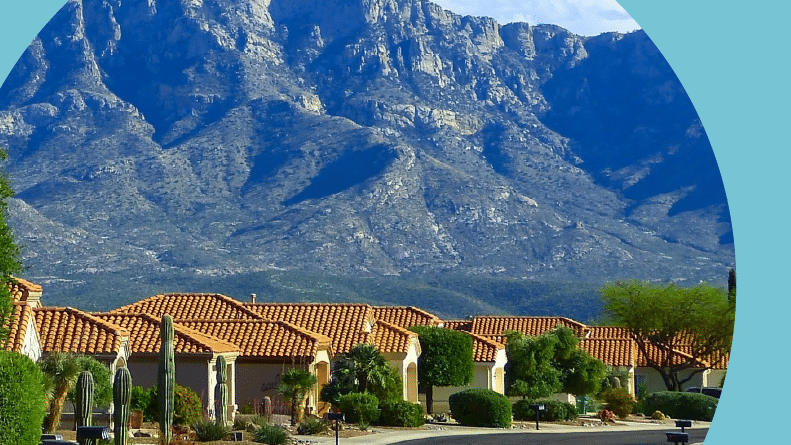
Villas are available in active adult communities across the country, from the Sun Belt states that draw the most active adult buyers to growing markets in the Mid-Atlantic and Southeast. Browse 55places.com to explore the full range of active adult communities with villas in your preferred location.
Alabama
Arizona
- Canoa Ranch
- The Grand
- K. Hovnanian’s Four Seasons at Victory at Verrado
- PebbleCreek
- Quail Creek
- Robson Ranch – Arizona
- SaddleBrooke
- Scottsdale Heights
- Sun City
- Sun City Oro Valley
- Sun City West
- Sun Lakes
California
- Auberge at Del Sur
- The Colony at Mandalay Beach
- High Country Villas
- Lake San Marcos
- Oaks North
- Palmia
- Smith Ranch Homes
- Sunny Glen
- Villa Portofino
- Villa Trieste
Colorado
- Fairway Villas at Green Valley Ranch
- Green Gables Reserve
- Hillside at Castle Rock
- Hover Park
- Lincoln Creek
- The Patios at The Meadows
- Sterling Ranch Patio Villas
- Verona
- The Villas at Great Plains Park
- The Villas at Pleasant Valley
Delaware
- Forest Landing at Bethany Beach
- Longacre Village
- Riverbend
- The Villas at The Preserve at Robinson Farms
Florida
- Aberdeen
- Angeline
- Arlington Ridge
- Ashley Oaks
- Avalon Trails
- Barkley Villas
- Baytree
- Baywinds
- Beacon Lakes
- Bellacina by Casey Key
- Bent Tree Villas West
- Boca Ciega Point
- Boca Lago
- Bonita Bay
- Brandywine
- Briar Patch
- Bridge Bay at Bannon Lakes
- Bridgewater at Viera
- Bridgewater Landing
- Brightmore at Wellen Park
- Burnt Store Marina
- Camelot Village
- Chanteclair Villas
- Cinnamon Cove
- Coral Lakes
- Cormorant Point
- Country Manors
- Crosley Villas
- Cross Creek Country Club
- Cypress Falls at The Woodlands
- Del Webb at Viera
- Del Webb BayView
- Del Webb Naples
- Del Webb Nocatee
- Del Webb Oasis
- Del Webb Sunbridge
- Del Webb Tradition
- Del Webb Wildlight
- Delray Villas
- Dudley Villas
- Emerald Pointe
- Esplanade at Artisan Lakes
- Esplanade at Lakewood Ranch
- Esplanade at McKinnon Groves
- Esplanade at Starkey Ranch
- Esplanade at Wiregrass Ranch
- Esplanade Lake Club
- Fair Winds Village
- Fairway Pointe
- Floral Lakes
- Four Seasons at Orlando
- Four Seasons at Wylder
- Garden Lakes Village
- Garden Patio Villas
- GlenLakes Country Club
- Golden Lakes Village
- Grand Palm
- Grandezza
- Green Dolphin
- The Groves Golf and Country Club
- Gulf Harbour Yacht & Country Club
- Halifax Plantation
- Hammocks at Bent Tree
- Harbour Isle
- Harmony Reserve
- Heritage Cove
- Heritage Hills
- Heritage Isle
- Heritage Lake
- Heritage Palms
- Heritage Pines Florida
- Heritage Springs
- Highland Lakes
- Highland Lakes on Lake Tarpon
- Highlands Ridge
- Huntington at Hunter’s Ridge
- Huntington Pointe
- Imperial Cove
- Indian Spring
- Indigo
- Island Walk
- The Isles of Collier Preserve
- The Isles on Palmer Ranch
- Key Vista Villas
- Kings Gate
- Kings Point
- Kings Point in Tamarac
- Lake Tippecanoe
- LakePark at Tradition
- LakeRidge Falls
- Lakeshore Village
- Lakeside Landings
- Las Verdes
- Lauderdale West
- Legends Golf and Country Club
- Lely Resort
- Lennar at Sanctuary at Wellness Ridge
- Lucerne Lakes
- Magnolia Landing
- MiraBay
- Mirada
- Mirror Lakes
- New Port Corners
- Oakhurst
- Ocala Preserve
- On Top of the World
- Palm Aire
- Palm Chase
- Palm Chase Lakes
- Palm Greens
- Palm Isles
- The Palms at Weston
- Parkside Village
- Paseo
- Pelican Bay
- Pelican Landing
- Pelican Preserve
- Pennbrooke Fairways
- PGA Village Verano
- Pine Ridge at Fort Myers
- The Pines of Delray
- The Plantation
- Plantation Golf & Country Club
- The Preserve at La Paloma
- Prosperity Lakes
- Renaissance at West Villages
- Reverie at Silverleaf
- Riverwood
- Rolling Green Golf Village
- Sarasota National
- Sausalito Place
- Seven Lakes
- The Shores at Brightwater
- Silverthorn
- Southshore Bay
- Southshore Falls
- Spanish Main Yacht Club
- Springwood Villas
- Stillwater
- Stone Creek
- Stonecrest
- Sullivan Ranch
- Summertree
- Sun City Center
- Sweetwater
- Swifton Villas
- TerraWalk at Babcock Ranch
- Thunderbird Hill
- Tidewater by Del Webb
- Timber Greens
- Timber Oaks
- Timber Pines
- Tohoqua Reserve
- Trilogy® Orlando
- Tuscany Bay
- Tuscany Isles
- Twin Lakes
- Valencia del Sol
- Valencia Lakes
- Valencia Parc
- Venetian Falls
- Venetian Isles
- Verandah
- VeronaWalk
- Vienna Square
- Village Green
- Village In The Pines
- Village on the Green
- The Villages of Citrus Hills
- The Villages®
- VillageWalk at Lake Nona
- VillageWalk of Bonita Springs
- VillageWalk of Sarasota
- Villaggio Reserve
- Villas of Lake Arbor
- WaterSong at RiverTown
- Wellington at Seven Hills
- Whispering Sound
- Woodfield
- Woodside Terrace
- Woodside Village East
- Woodside Village West
Georgia
- Brookhaven at Sugarloaf
- Cottages at Autumn Lake
- Del Webb at Lake Oconee
- The Fairways at Savannah Quarters
- Mars Hill Village
- McEver Mill
- The Orchards of Central Park
- The Orchards of South Forsyth
- The Orchards of Stoney Point
- The Overlook at Old Atlanta
- Village at Deaton Creek
- Westbrook Villas at Savannah Quarters
Idaho
Illinois
- Briarwood Lakes
- Heritage Club Villas
- Rob Roy Country Club Village
- Sun City Huntley
- Timbers Edge Villas
Indiana
- Blackthorne Villas
- Cobblestone Square Villas
- Liberty Villas
- Regency Reserve
- Reserve at Rocklane Ridge
- Villas at Vale Park
Kansas
Maryland
- Ballenger Run
- Bethany Glen
- Boxwood Villas
- Castlefield
- Central Parke at Victoria Falls
- Cromwell 55+
- The Enclave at Ellicott Hills
- The Enclave at Hines Farm
- Gatherings at Ellicott Mills
- Gatherings at Perry Hall Place
- Gerst Farm
- Hawthorne Greene
- Heritage at St. Charles
- Nells Acres
- Parklands
- Rosehill Manor Villas
- SummersGate
- Tanyard Shores
- Two Rivers
- Victoria Park at Parkside Villas
- The Village at Cabin Branch
- Village Crest
- The Villas at Greenbrier
- Walden Woods
- Winifred Manor
Massachusetts
Michigan
Minnesota
- Anton Village Villa
- Cedar Hills Villa
- Lexington Waters
- Tavera Villa
- The Villas at River’s Edge
- Watermark Villas
Missouri
Nevada
New Hampshire
New Jersey
- The Club at East Brunswick
- Cranbury Brook
- Four Seasons at Great Notch Spa and Club
- Four Seasons at Lakewood
- Hearthstone at Hillsborough
- Madison Crossing at Birch Hill
- Montebello
- Princeton Windrows
- Regency at Readington
- Regents Wharf
- The Renaissance Club
New York
North Carolina
- Bella Sera Villas
- Cornelius Woods
- Crow Creek
- Heritage Pines
- The Highlands at Meadowlands
- The Landing at Sycamore Creek
- Olde Towne Village
- The Orchard Villas
- Polo Club at Matthews
- The Polo Club at Mountain Island Lake
- Ridge Road Villas
- Sea Trail
- The Tapestry
- The Villas at Creek Walk
- The Vineyards on Lake Wylie
- The Walk at East Village
Ohio
- Concord Village
- The Village at Windemere
- The Villas at Maple Creek
- Villas at Waterford Glen
- The Villas of Gahanna
Oklahoma
Pennsylvania
- Alden Place
- Amblebrook
- Big Elk
- Cobblestone Village
- Coldstream Crossing
- The Fields at Lafayette Way
- Foxfield
- Jennersville Farm
- Preserve at Marsh Creek
- Regency at Creekside Meadows
- Regency at South Whitehall
- Regency at Stone Meadows Farm
- Regency at Valley Creek
- Spring Valley Estates
- The Villages at Hillview
- Villas at Cattail
- The Villas at Five Ponds
- The Villas at Linfield
- The Villas of Newtown
Rhode Island
South Carolina
- Bridgewater
- Brook Run
- Hammock Walk at Nexton
- Hilton Head Plantation
- Indigo Run
- Kalmia Landing
- Latitude Margaritaville Hilton Head
- The Sanctuary at East Argent
- Sun City Carolina Lakes
- Sun City Hilton Head
- The Village at India Hook
Tennessee
- Astor Club and Residences at Westhaven
- Del Webb Lake Providence
- Dogwood Villas
- Nexus South
- Rarity Bay
- StoneBridge
- Westhaven Active Adult
Texas
- Gardens at Verde Vista
- Heritage Ranch
- Mira Lagos Villas
- The Retreat at Craig Ranch
- Sun City Texas
- Tuscan Village
- Tuscan Village Horseshoe Bay
- The Village at Prestonwood
- Woodbridge Villas
Utah
- Cherry Springs Villas
- Country View Villas
- Haven
- Hearthstone Villas
- Meadow Park Villas
- Midas Creek Villas
- Starhaven Villas
- Strawberry Creek Villas
- The Villas at Legacy Farms
- The Villas at Pioneer Crossing
- The Villas at Water’s Edge
- Willow Park Villas
Virginia
- Birchwood at Brambleton
- Cadence at Lansdowne
- Carter’s Mill
- Celebrate
- Central Parke at Lowes Island
- Church Square
- Eagle Pointe at Cahoon Plantation
- Falls Run
- Four Seasons at Virginia Crossing
- Greenwich Walk
- Havenwood Villas
- Heritage Hunt
- Keswick Villas
- Magnolia Lakes
- Mill Creek
- Montebello
- Potomac Green
- Retreat at Edinburgh Farms
- The Retreat at Western Branch
- River Crossing at Spring Arbor
- Rock Creek Villas
- Turnberry East at Lee’s Hill
- Twin Lake Villas
- Villas at Ashlake
- Villas at Dogwood
- Villas at Five Forks
- Villas at Providence
- The Villas of Salem Church
- Winchester Landing
Washington
Wisconsin
FAQ: Villas in 55+ Communities
Is a villa the same as a condo?
Not exactly. Both are common in 55+ communities, but villas have their own exterior entrances and typically no neighbors above or below. Condos are usually inside multi-story buildings with shared entry areas.
Are villas single-story?
Most villas in 55+ communities are single-story, which is one of their key advantages for buyers seeking long-term accessibility and convenience.
Do villas have yards?
Most villas have a patio, veranda, or lanai rather than a traditional yard. Exterior landscaping is typically maintained by the HOA.
What does the HOA cover for a villa?
This varies by community, but HOA fees for villas commonly cover exterior maintenance, landscaping, roof repairs, and sometimes exterior painting. Always ask for a written list of what’s included before purchasing.
Can I find affordable villas in 55+ communities?
Yes. In many communities (particularly established resale communities in Florida, Arizona, and the Carolinas), villas are among the most affordable entry points into active adult living.
What makes a villa a villa?
What makes a villa a villa is the combination of three traits. A villa is attached, sharing one or two walls with neighboring units; it’s almost always single-story, with no neighbors above or below; and the HOA maintains the exterior. That mix is what sets a villa apart from a freestanding single-family home and from a condo stacked inside a larger building. Floor plans and finishes vary by community, but those core characteristics hold across most 55+ villas.
What are the disadvantages of a villa?
The disadvantages of a villa mostly come down to space and separation. A villa usually offers less indoor square footage than a single-family home, and outdoor space is limited to a patio, veranda, or lanai rather than a full yard. Sharing one or two walls means less separation from neighbors than a freestanding home, and an HOA sets monthly fees and exterior rules. For buyers who prioritize low-maintenance, single-story living, those tradeoffs are usually well worth it.
Finding the Right Villa for You
If the villa lifestyle sounds like a good fit, the next step is to explore communities where villas are available in your preferred location and price range. A 55+ real estate specialist can help you understand the HOA structure, compare communities side by side, and find options that match what you’re looking for.
Browse villa communities on 55places.com to get started, or connect with a local expert who knows your area’s market. Contact 55places.com today!
- Insights and market stats
- Instant new home alerts
- Answers from local 55+ experts