OVERVIEW
The five least humid states in the U.S. for retirement are Nevada, Arizona, New Mexico, Utah, and Colorado. Nevada is the driest, averaging about 10 inches of annual precipitation statewide, while Arizona receives 86% to 92% of possible sunshine. All five sit in the arid and semi-arid interior West and hold established 55+ communities built for active adults.
Low humidity states offer the dry, comfortable weather that makes an active outdoor life easier to keep up, without the sticky, storm-heavy summers of wetter regions. Five states stand out for anyone who wants that kind of climate: Nevada, Arizona, New Mexico, Utah, and Colorado. Each one pairs dry air and plenty of sunshine with established active adult communities, so the search for the right home starts with real options instead of guesswork.
If you can feel a storm coming in an achy knee or dread muggy afternoons, a drier climate can noticeably improve day-to-day comfort. The states below offer that comfort, along with sunshine, scenery, and a welcoming 55+ lifestyle.
What Counts as Low Humidity?
Humidity usually refers to relative humidity, or the share of moisture the air holds compared with the most it could hold at that temperature. Indoors, air feels comfortable to most people when relative humidity sits between about 30% and 50%, and the Environmental Protection Agency recommends keeping it in that range and below 60%. Above roughly 60%, the air starts to feel muggy and sticky, while dry climates often stay well below that range.
Comfort tends to matter more with age, since drier air can make warm afternoons and time outdoors easier to enjoy. Choosing a climate that fits your routine is part of finding one of the Healthiest Places to Retire for your everyday comfort.
Low-Humidity States at a Glance
Here is how the five low-humidity states compare, using the climate figures detailed in each section below.
| State | Typical Relative Humidity / Rainfall | Climate Snapshot | Best For |
|---|---|---|---|
| Nevada | About 10 inches statewide (about seven in the south); driest state | Dry desert air, mild southern winters, abundant sunshine | Active adults who want the driest air and no state income tax |
| Arizona | three to 40 inches a year, depending on the region | Warm, dry winters; hot summers; 86% to 92% of possible sunshine | Warm-winter seekers and sun lovers |
| New Mexico | Under 10 to over 20 inches by elevation | Sunny, dry, and mild, with extreme weather rare | Budget-minded buyers who want culture and mild seasons |
| Utah | Under five inches in the driest desert | Semi-arid to arid, with four distinct seasons | Four-season fans who want dry mountain air |
| Colorado | About 17 inches average annual | Semi-arid plains and alpine peaks; abundant sunshine | Active adults who want four seasons plus the mountains |
1. Nevada
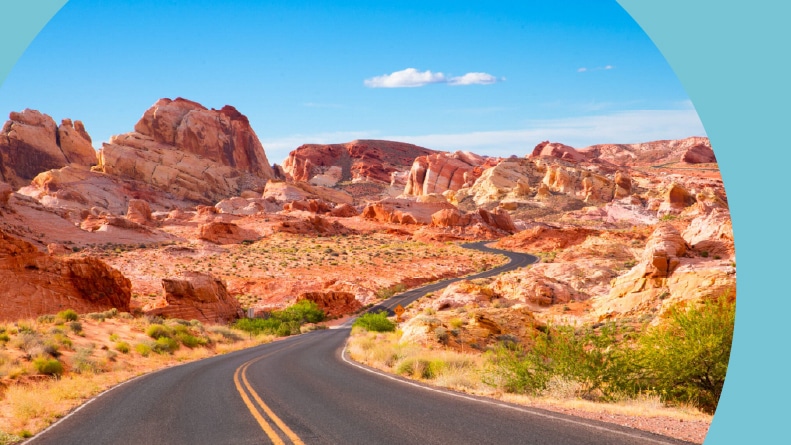
Nevada is the driest state in the country, which is a big part of its appeal for active adults. The dry air is often easier to tolerate for people sensitive to mold and dust mites, which thrive in damp conditions. Add plenty of sunshine and generally mild winters in the south, and you have a climate built for spending time outside. Southern Nevada’s mild winters mean golf and hiking stay on the calendar nearly year-round.
Beyond the weather, Nevada rewards anyone who likes to be outdoors. Landscapes range from the sandstone cliffs of Red Rock Canyon to the clear water of Lake Tahoe, with hiking, boating, and golfing close at hand. The state also has no state income tax and a relatively low cost of living, and metro areas like Las Vegas and Reno offer well-established health care.
A Closer Look at Nevada’s Climate
Nevada averages about 10 inches of precipitation a year statewide, making it the driest state; southern Nevada averages closer to seven inches, according to the Nevada State Climate Office and the Western Regional Climate Center. The driest southern valleys average less than five inches, while the wettest spots in the Sierra Nevada can receive up to about 40 inches.
Winters vary by region. Northern Nevada has long, fairly cold winters, while the south has shorter, milder ones. In the south, winter highs reach the 50s and summer highs climb toward 100 degrees in July and August. In the northeast, winter highs hover just above freezing, and summer highs reach the mid-80s.
Why Active Adults Love Nevada
- Striking scenery, from Red Rock Canyon to Lake Tahoe to open desert vistas
- Outdoor activities like hiking, golfing, and boating
- Tax-friendly policies, including no state income tax
- Entertainment options in Las Vegas and Reno, from dining to live shows
Recommended 55+ Communities in Nevada
- Sun City Summerlin – Las Vegas, NV
- Sun City Anthem – Henderson, NV
- Siena – Las Vegas, NV
- Sierra Canyon – Reno, NV
- Sun City MacDonald Ranch – Henderson, NV
2. Arizona
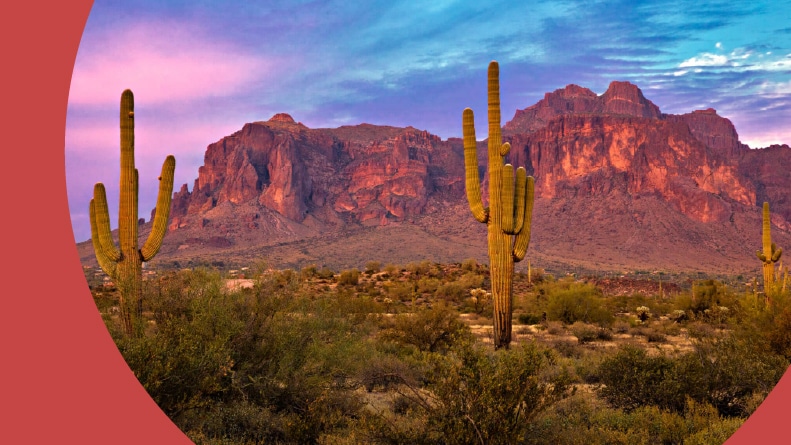
Arizona is one of the country’s most popular retirement destinations, and its dry desert air is a big reason why. Warm winters and hot summers feel more tolerable without humidity, and many people managing arthritis or respiratory sensitivities find the dry heat easier to live with. That comfort is one reason Arizona often shows up on lists of the Best Places to Retire With Arthritis.
With some of the sunniest skies in the country, receiving 86% to 92% of possible sunshine according to the Western Regional Climate Center, the outdoors is always calling. Highlights include the Grand Canyon, the red rocks of Sedona, and the Sonoran Desert, plus hiking, golf, and scenic drives. The cost of living is reasonable, taxes are retirement-friendly, and metro areas like Phoenix, Tucson, and Scottsdale offer strong health care. Active adults deciding between Arizona and a more humid destination like Florida often choose Arizona for its dry heat and year-round warmth.
A Closer Look at Arizona’s Climate
Arizona is predominantly semiarid, with arid desert in the southwest and cooler, wetter highlands in the north and east. In the southwestern desert, winter daytime temperatures sit in the lower 60s, and summer daytime highs run 105 to 115 degrees, according to the Arizona State Climate Office.
Precipitation ranges widely, from about three inches a year in Yuma in the southwest to nearly 40 inches in the White Mountains of east-central Arizona. According to the Western Regional Climate Center, the state has two rainy seasons: winter Pacific storms from November through March and a summer monsoon from July into mid-September that brings thunderstorms and a temporary bump in humidity.
Why Active Adults Love Arizona
- Among the sunniest states, with 86% to 92% of possible sunshine
- Natural beauty, from the Grand Canyon to Sedona to the Sonoran Desert
- Outdoor activities like hiking, golf, and scenic drives
- Retirement-friendly taxes and a reasonable cost of living
Recommended 55+ Communities in Arizona
- Sun City – Sun City, AZ
- The Grand – Surprise, AZ
- Sun City Festival – Buckeye, AZ
- PebbleCreek – Goodyear, AZ
- Robson Ranch Arizona – Eloy, AZ
3. New Mexico
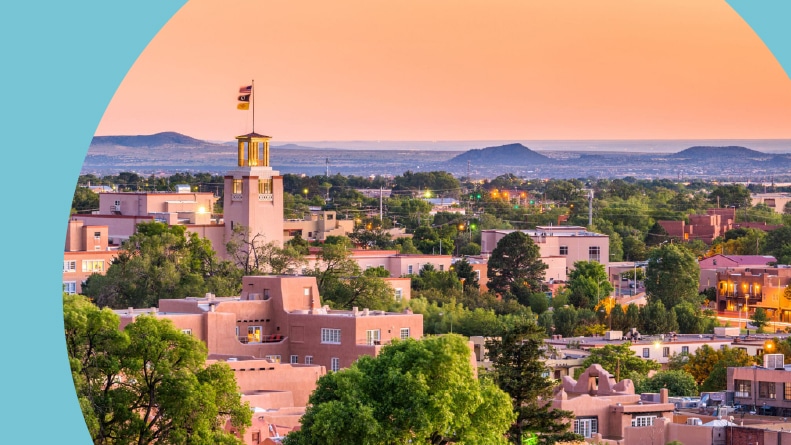
New Mexico is something of a hidden gem for active adults who want mild winters and warm summers without the humidity. The dry climate is comfortable for many people managing joint pain or respiratory sensitivities. Known as the Land of Enchantment, the state pairs desert landscapes and rugged mountains with some of the Southwest’s most memorable sunsets.
Days here can be filled with hiking, biking, and soaking in hot springs, or exploring Carlsbad Caverns and White Sands. The culture runs deep too, from thriving art scenes and Puebloan heritage to Albuquerque’s International Balloon Fiesta. With a cost of living and home prices below the national average, New Mexico stretches a retirement budget while keeping the pace relaxed.
A Closer Look at New Mexico’s Climate
New Mexico receives roughly 75% to 80% of possible sunshine annually, and its climate is predominantly dry, with extreme weather a rarity. Average annual precipitation ranges from under 10 inches in the southern desert to more than 20 inches at higher elevations. Elevation shapes the weather here, spanning from 2,817 feet at Red Bluff Lake in the southern Rio Grande Valley to 13,161 feet at Wheeler Peak in the north-central region, according to the Western Regional Climate Center. Higher altitudes tend to be cooler and a bit wetter.
Why Active Adults Love New Mexico
- Striking landscapes of deserts, mountains, and wide-open sunsets
- Outdoor activities like hiking, biking, hot springs, and national parks
- Rich culture and history, from art to Puebloan heritage to festivals
- A relaxed, unhurried pace of life
Recommended 55+ Communities in New Mexico
- Del Webb at Mirehaven – Albuquerque, NM
- Jubilee at Los Lunas – Los Lunas, NM
- Alegria – Bernalillo, NM
- The Islands – Rio Rancho, NM
- Golden West Patio Homes – Rio Rancho, NM
4. Utah
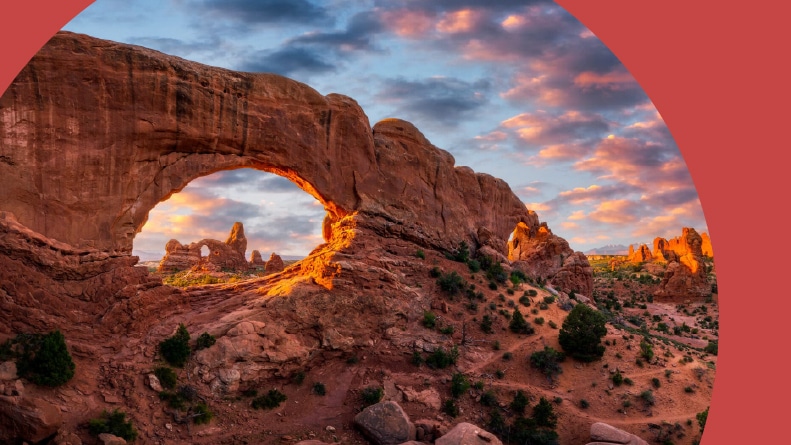
Utah’s low-humidity climate makes for comfortable weather year-round. Dry air takes the edge off both warm summers and chilly winters, and many people with joint or respiratory sensitivities find it easier to stay active. Because the air stays dry across all four seasons, warm afternoons and cold mornings both tend to feel more comfortable than the thermometer suggests.
The scenery is hard to beat, from the red rock of Zion and Bryce Canyon to the alpine peaks of the Wasatch Mountains. Hiking, biking, skiing, and five national parks keep active adults busy year-round. Utah also offers a lively arts and culture scene and a lower cost of living than many other Western states, along with quality health care and retirement-friendly taxes.
A Closer Look at Utah’s Climate
Utah’s climate runs from semi-arid to arid, with low annual precipitation overall. The Great Salt Lake Desert is the driest part of the state, seeing under five inches a year, according to the Western Regional Climate Center. Temperatures vary widely, from average January highs around 30 degrees in the northern valleys to the low 50s in St. George, with July highs of roughly 85 to 100 degrees, according to the Utah Office of Tourism.
The mountains are cooler and wetter, and the Wasatch Range can collect up to 500 inches of snow a year thanks to lake-effect moisture from the Great Salt Lake. Seasons are distinct, with cold winters and hot summers, and the mountains usually shield the valleys from cold air, aside from the occasional Arctic blast.
Why Active Adults Love Utah
- Striking natural beauty, from red rock to alpine mountains to five national parks
- Outdoor recreation like hiking, biking, and skiing
- Cultural attractions, including arts, festivals, and history
- A safe, welcoming atmosphere with a strong sense of community
Recommended 55+ Communities in Utah
- SunRiver St. George – St. George, UT
- Regency at Desert Color – St. George, UT
- Entrada at Snow Canyon Country Club – St. George, UT
- Brio – St. George, UT
- Garden Park at Daybreak – South Jordan, UT
5. Colorado
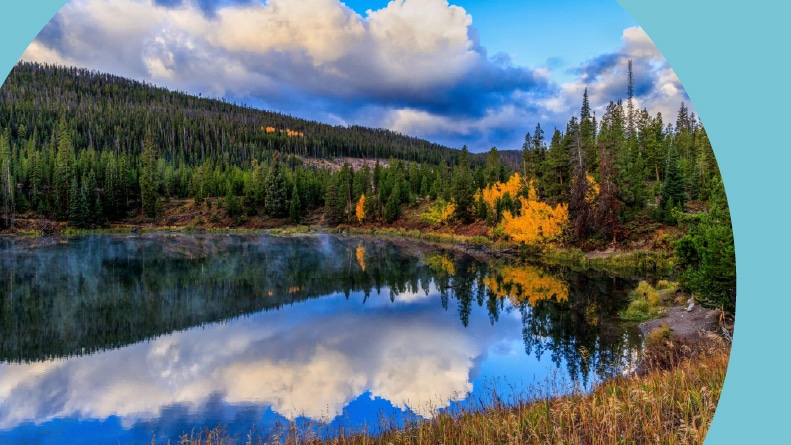
Colorado brings dry air together with abundant sunshine, a combination that suits active adults who want four seasons without heavy humidity. The Rocky Mountains are made for hiking, Garden of the Gods offers striking red-rock formations, and golf courses are plentiful. Cities like Denver, Boulder, and Colorado Springs blend outdoor access with culture and amenities. Colorado’s retirement-friendly tax policies include generous exclusions for retirement income, which helps stretch a fixed budget.
A Closer Look at Colorado’s Climate
Colorado covers several climate zones: semi-arid, alpine, and continental. Summer highs on the plains reach the upper 80s in July and August, with daily temperature swings of 30 degrees or more, according to Colorado State University. Denver averages July highs near 88 to 90 degrees, according to the National Weather Service.
Average annual precipitation is about 17 inches. The mountains are wetter, collecting heavy winter snow, while the plains and valleys stay drier; that mountain snowpack feeds the Colorado and Rio Grande rivers.
Why Active Adults Love Colorado
- Striking scenery across mountains, plains, and abundant sunshine
- Outdoor recreation like hiking, skiing, and golfing
- Quality health care geared toward older adults
- Cultural attractions, from museums to theaters to festivals in Denver and Boulder
Recommended 55+ Communities in Colorado
- Heather Gardens – Aurora, CO
- Anthem Ranch – Broomfield, CO
- Windsor Gardens – Denver, CO
- Heritage at Eagle Bend Golf Club – Aurora, CO
- Heritage Todd Creek – Thornton, CO
Which States Have the Highest Humidity?
Active adults looking to avoid muggy summers often ask which states are the most humid. In general, the most persistently humid states tend to lie along the Gulf Coast and the Southeast, including Louisiana, Mississippi, Alabama, Florida, and coastal Texas, where warm temperatures and abundant moisture generally create lush, green landscapes and long growing seasons. Hawaii’s climate is tropical and humid, too. Those regions have plenty to offer, but for anyone who specifically wants dry air, easy breathing on a hot afternoon, and low-maintenance sunshine, the five dry states above are the ones that stand out.
Choosing the Right Low-Humidity State for Retirement
Every one of these low-humidity states offers dry air and sunshine, so the right choice usually comes down to the kind of daily life you are picturing. If mild winters and reliable warmth top your list, southern Nevada and Arizona make it easy to stay outdoors nearly year-round. If you would rather have four distinct seasons with dry mountain air, Utah and Colorado deliver snow-capped winters and comfortable summers. New Mexico sits in between, with a mild climate, deep culture, and some of the most budget-friendly home prices of the group.
Budget, proximity to family, and how close you want to be to a particular community also matter. Weighing those factors against your climate preference is the fastest way to narrow a long list down to a short one.
Want help narrowing it down? A 55places partner agent can walk you through your options.
Frequently Asked Questions
Which US states have the lowest humidity?
The US states with the lowest humidity are Nevada, Arizona, New Mexico, Utah, and Colorado. All five sit in the arid and semi-arid interior West, where low annual rainfall and high sunshine keep the air dry and comfortable through much of the year.
Where is the best place to live with low humidity year-round?
The best place to live with low humidity year-round depends on your temperature preference. Southern Nevada and Arizona stay warm and dry through the winter, while Utah and Colorado offer dry air across four distinct seasons. New Mexico strikes a middle ground with mild weather and a lower cost of living.
What is a comfortable humidity level?
A comfortable humidity level for most people falls between about 30% and 50% relative humidity. Below that range, the air feels crisp and dry, while readings above roughly 60% start to feel muggy. The five states covered here typically sit on the drier, more comfortable end of that scale.
Which low-humidity states have mild winters?
Among the low-humidity states, southern Nevada and Arizona have the mildest winters, with daytime highs often in the 50s and 60s and abundant sunshine. New Mexico’s lower elevations stay fairly mild as well, while Utah and Colorado trade milder winters for true four-season weather and snowy mountains.
What should you consider when choosing a low-humidity state?
When choosing a low-humidity state, weigh climate preference (mild winters versus four seasons), cost of living and taxes, proximity to family, and how close established 55+ communities sit to the amenities and health care you want. Matching those priorities to a state’s climate makes the decision far easier.
Find Your Home in a Low-Humidity State
When you are ready to take the next step, we’ll connect you with a local real estate expert who knows these communities firsthand and can help you find the home built for your next chapter. Contact 55places.com today!
- Insights and market stats
- Instant new home alerts
- Answers from local 55+ experts