Retirement opens the door to a more active, social lifestyle, and walkable cities are one of the best places to enjoy it. Residents of pedestrian-friendly cities tend to get more daily movement and socialize more often, both of which contribute to better physical and mental health. For active adults looking to make the most of their retirement years, a walkable city can make all the difference.
Quantumrun Foresight ranked the 10 most walkable cities in America, and each one offers something worth exploring for active adults drawn to city life—think easy access to culture, dining, shopping, and more. Read on for a look at each city and the 55+ communities located within or near its limits.
1. San Francisco
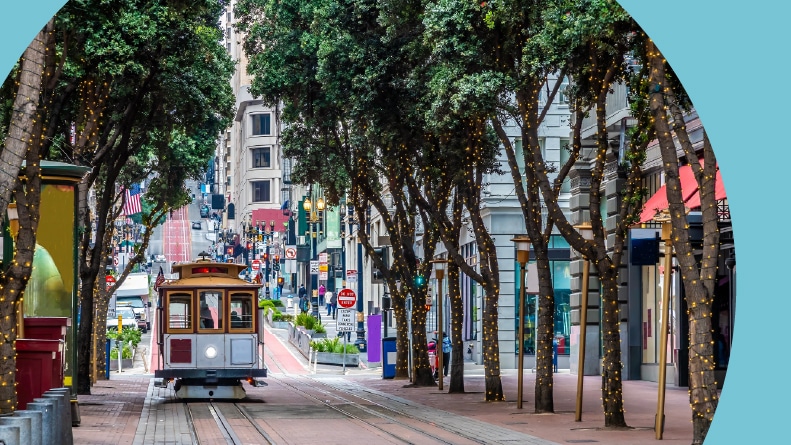
San Francisco tops Quantumrun Foresight’s list, and AARP backed that up in its December 2025 article “AARP’s Top 100 Places to Live for Older Adults,” which also ranked the city first. The city’s Better Streets Plan has driven ongoing development and revitalization projects, improving sidewalks, crosswalks, and pedestrian infrastructure across dozens of neighborhoods.
Each of San Francisco’s neighborhoods has its own character. The Castro, North Beach, and the Haight each offer distinct dining and shopping scenes within a walkable radius. Also, the Ferry Building Marketplace draws food lovers with its farmers market and local vendors, while the museums and galleries of Civic Center and the de Young in Golden Gate Park give art and culture enthusiasts plenty to explore on foot.
When residents want to step away from the city’s energy, more than 220 parks and open spaces are scattered throughout the city. Golden Gate Park alone spans over 1,000 acres. The Crosstown Trails connect many of these greenspaces, making it one of the most accessible ways to experience the city’s natural side.
55+ Communities in the Bay Area
FOR SALE
- Barcelona
- Bay Village
- Bella Vista Park
- Brooks Creek
- Buena Vista
- Chantarelle
- Clover Springs
- Connemara
- Cottage Green
- Creekside Village
- Diamond Grove
- Enclave at Mission Falls
- Foster Square
- Kindred & Balfour
- Leisure Town
- Liberty
- Los Gatos Commons
- Menlo Commons
- Oakmont Village
- Pajaro Village
- Parc Regent Condominium
- The Peninsula Regent
- Pine Tree Villas
- Rancho de Napa
- River’s Bend
- RiverView
- Rossmoor
- Smith Ranch Homes
- Summerset
- Sunny Glen
- Temelec
- The Cottages at Village Green
- The Meadows at Marsh Creek
- The Village at Ironwood
- The Villages Golf & Country Club
- Trilogy San Juan Oaks
- Trilogy at Rio Vista
- Trilogy at the Vineyards
- Twin Oaks
- Valley Oaks
- Villa Capri
- Willowbrook
- Woodland Estates
2. New York City
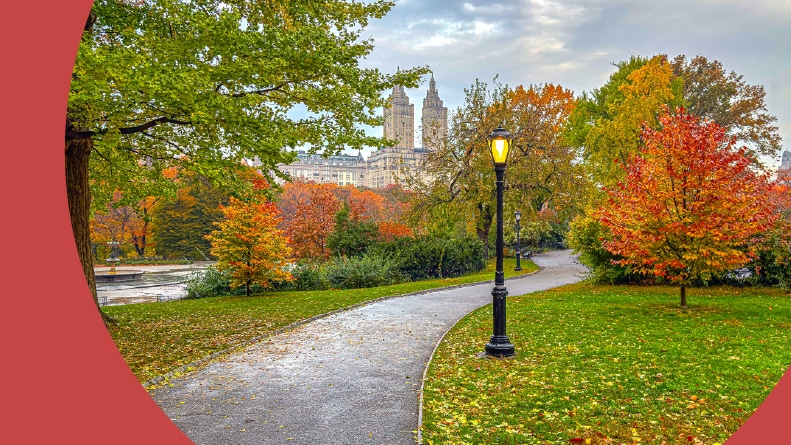
New York City’s walkability is built into its bones. According to 2023 U.S. Census data, only about a quarter of residents commute by car. For active adults who no longer need to commute at all, the city’s grid layout and extensive transit network make getting around straightforward without one. The Metropolitan Transportation Authority (MTA) operates the largest public transit system in North America, with 472 subway stations and more than 300 bus routes connecting Manhattan to Brooklyn, Queens, the Bronx, and Staten Island.
On street level, each borough offers its own mix of walkable destinations. In Manhattan, neighborhoods like the Upper West Side, Greenwich Village, and the Upper East Side put museums, restaurants, theaters, and parks within easy reach on foot. Brooklyn’s Park Slope and Cobble Hill are known for their tree-lined streets, independent shops, and proximity to Prospect Park, a 585-acre green space designed by the same landscape architects behind Central Park.
The city’s Open Streets program, launched in April 2020, has added even more room for pedestrians. Under the initiative, surface streets are temporarily closed to vehicle traffic on a scheduled basis, giving residents dedicated space for walking, cycling, and community gatherings. The program has expanded to more than 300 miles of streets across all five boroughs and remains one of the largest efforts of its kind in the country.
3. Boston
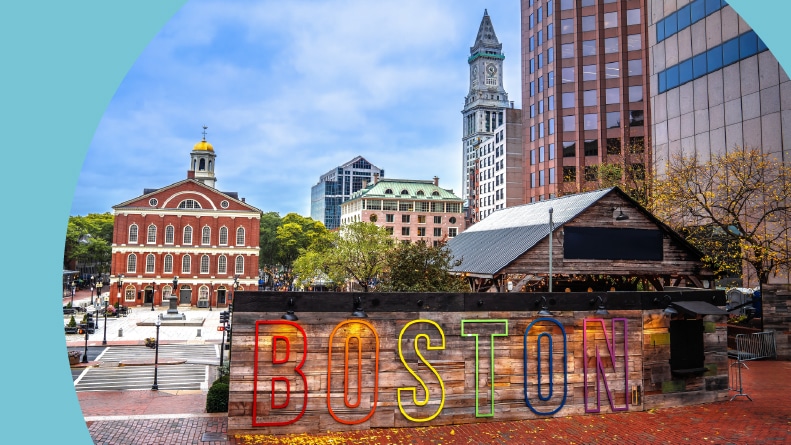
Boston’s famously irregular street layout (a product of colonial-era cow paths and organic growth rather than a formal grid) turns out to work in pedestrians’ favor. Narrow, winding streets naturally slow traffic and shorten block lengths, making the city’s compact footprint easy to cover on foot. At just 48 square miles, Boston is one of the smallest major cities in the country by land area, and many of its most popular destinations sit within a short walk of one another.
The 2.5-mile Freedom Trail connects 16 historically significant sites, winding through several of the city’s most walkable neighborhoods, including Beacon Hill, the North End, and Charlestown. The North End, Boston’s oldest neighborhood, is also home to some of the city’s most celebrated Italian restaurants and bakeries. Also, Beacon Hill offers upscale boutiques and cafe-lined streets. For those who want to venture further, the Massachusetts Bay Transportation Authority (MBTA) operates the oldest subway system in the United States, with five lines connecting Boston’s neighborhoods to surrounding cities like Cambridge and Brookline.
The city has made sustained investments in expanding pedestrian access. WalkMassachusetts advocates for safer walking infrastructure across the state, while the city’s Go Boston 2030 plan outlines targeted improvements to sidewalks, crosswalks, and transit connections with the goal of making 70% of all Boston trips by foot, bike, or public transit by 2030.
55+ Communities in the Boston Area
FOR SALE
- 59 North Main
- Adams Farm
- Angell Brook Village
- Arbor Hills
- Balancing Rock
- Bates Quarry
- Bigelow Farm
- Blue Heron Pond
- Brierly Pond Village
- Brookside Village
- Brooksmont
- Center Commons
- Chilton Park Village
- Del Webb Chauncy Lake
- Donovan Farm
- Duxbury Estates
- Enclave at Hudson
- English Commons at Topsfield
- Forest Glen
- Garrison Place
- Great Island
- Harmony Place
- Hatter’s Point
- Holliston Woods
- Kensington at The Pinehills
- Liberty Woods
- Mallard Lane Condominiums
- Martins Landing
- Millwood Preserve
- New England Commons
- North Meadow Village
- Northside Meadows
- Northwoods at Sudbury
- Oak Point
- Orchard Hill
- Pennington Crossing
- Peregrine Woods
- Pheasant Hill
- Preserve at Emerald Pines
- Quail Ridge
- Reading Woods
- Red Mill Village
- Regency at Assabet Ridge
- Regency at Emerald Pines
- Regency at Glen Ellen
- Regency at Methuen
- Riverside Woods
- Rockland Glen
- Rockwood Meadows
- Rolling Green at Topsfield
- Rolling Mill
- Sawyer’s Reach
- Seaside at Scituate – The Carriage Collection
- Seton Highlands at The Pinehills
- Spring Meadow
- Stone Castle Estates
- Stonebridge Commons
- Summer Reach
- Tara Woods
- The Elms of Hanover
- The Lanterns at Warren Woods
- The Seasons at Salisbury
- The Trails
- The Village at Auburnville
- The Village at Orchard Meadows
- The Village at Shepley Hill
- The Village at Westminster Place
- The Villages at Crane Meadow
- The Villages at Walker Meadow
- Trail Ridge at Harvard
- Upton Ridge
- Village at Silver Hill
- Villages at Weathervane
- Westbrook Crossing
- WestRidge
- Whitestone Village
- Willis Brook at Lynnfield
- Wolcott Woods
- Woodcrest Run
- Woodstone Crossing
- Wyman Farms
4. Chicago
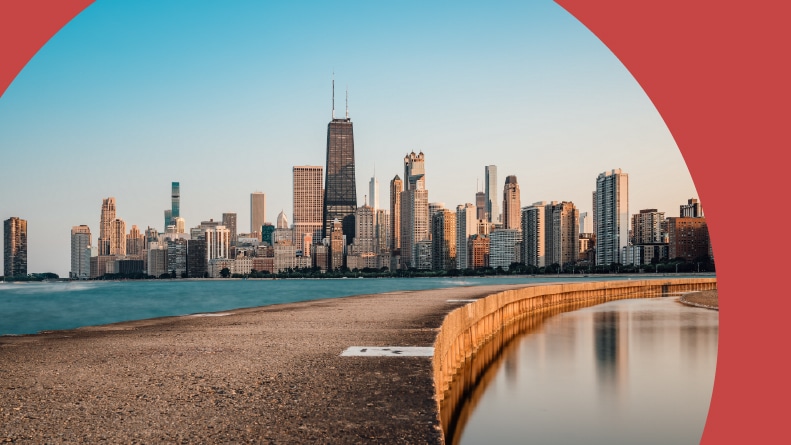
Chicago’s strict street grid makes navigation intuitive, with addresses corresponding directly to blocks from the city center. Also, mixed-use neighborhoods mean that grocery stores, restaurants, transit stops, and greenspaces tend to cluster within a few blocks of one another.
The Chicago Transit Authority (CTA) offers eight rail lines and more than 100 bus routes connecting neighborhoods across the city. Iconic neighborhoods like Lincoln Park, Wicker Park, and the Loop rank among the most walkable in the country, with Millennium Park, the Art Institute of Chicago, and the lakefront all accessible on foot from the city’s downtown core.
The 18-mile Lakefront Trail runs along Lake Michigan, offering residents a continuous path for walking and cycling with skyline views. Inland, the 606 Trail follows a former elevated rail line for 2.7 miles through Bucktown, Wicker Park, Humboldt Park, and Logan Square, connecting four neighborhoods and 13 parks in one continuous greenway. The Chicago Riverwalk extends 1.25 miles along the south bank of the Chicago River through the heart of downtown, lined with restaurants, kayak rentals, and public seating.
On the planning side, the Chicago Pedestrian Plan sets out infrastructure goals to expand and improve sidewalks citywide. Also, the Make Way for People program converts underused roadways and parking lanes into public plazas and pedestrian spaces. The city has also added accessible pedestrian signals and audible crosswalk features at intersections across Chicago to improve safety for residents with visual or sensory impairments.
55+ Communities in the Chicago Area
FOR RENT
FOR SALE
- Andaré at Glenloch
- Andaré at Remington Pointe North
- Andaré at Talamore
- Andaré at Woodlore Estates
- Ashwood Crossing
- Bradford Place Clubs
- Briargate
- Briarwood Lakes
- Cameo
- Carillon
- Carillon at Cambridge Lakes
- Carillon at Heatherstone
- Carillon at Stonegate
- Carillon Club
- Carillon Lakes
- Carillon North
- Chatham Grove
- Edgewater
- Forest Gate
- Forest Glen
- Grand Dominion
- Grand Haven
- Grand Reserve Algonquin
- Hampton Park
- Haverford Place
- Heritage Club Villas
- Hobson Villas
- Lago Vista
- Lake Barrington Shores
- Leisure Village
- Liberty Green
- Lincoln Prairie by Del Webb
- Lincoln Valley
- Meadowridge Villas
- Old Mill Park
- Park Place on the Green
- Patriot Estates
- Regency at Bowes Creek Country Club
- Regency at The Woods of South Barrington
- River Run Club
- Riverbend
- Rob Roy Country Club Village
- Saddlebrook Farms
- Shorewood Glen
- Somerset Farms
- Steeplechase at Churchill Club
- Stonegate West
- Sun City Huntley
- The Lakes of Boulder Ridge
- The Pines
- Timbers Edge Villas
- Trillium Farm
- Victoria Park
- Wentworth of Kildeer
5. Washington, D.C.

Washington, D.C., was designed with pedestrians in mind from the start. Pierre Charles L’Enfant’s original 1791 plan laid out a system of wide diagonal avenues intersecting a numbered and lettered street grid. That foundation still holds today, with tree-lined sidewalks, named and numbered streets, and an abundance of greenspace.
The city’s transit access reinforces that walkability. An impressive 96% of residents live within a half-mile of a Washington Metropolitan Area Transit Authority (WMATA) station, and a quarter of residents live within a quarter-mile of a bus stop. The National Mall stretches two miles from the Lincoln Memorial to the Capitol Building, with the Smithsonian’s 17 museums and galleries lining much of the route. Neighborhoods like Dupont Circle, Capitol Hill, and Adams Morgan offer restaurants, independent shops, and cultural venues within compact, walkable footprints. Also, Rock Creek Park is one of the largest urban parks in the country, with more than 1,700 acres.
The District’s Pedestrian Master Plan builds on existing infrastructure with targeted improvements to crosswalks, sidewalk conditions, and pedestrian signal timing across the city.
55+ Communities in the Washington, D.C. Area
FOR RENT
FOR SALE
- Belmont Bay
- Birchwood at Brambleton
- Cadence at Lansdowne
- Carter’s Mill
- Central Parke at Lowes Island
- Dunbarton
- Four Seasons at Ashburn Village
- Four Seasons at Historic Virginia
- Four Seasons at Vint Hill
- Four Seasons at Virginia Crossing
- Gatherings at Potomac Station
- Gatherings at Wellington
- Heritage Hunt
- HiddenBrooke
- Lansdowne Woods of Virginia
- Lexington 7
- Lexington Square
- Liberty Grove
- Montebello
- Potomac Green
- Railroad Cottages
- Regency at Ashburn
- Regency at Belmont
- Regency at Creekside
- Regency at Dominion Valley
- River Ridge
- Robinson Manor
- Saintsbury Plaza
- Spring Hill
- Suffield Meadows
- The Atrium at MetroWest
- The Crest of Alexandria
- The Flats at Heathcote Village by Del Webb
- The Retreat at Poland Hill
- The Signature at Broadlands
- The Villages at Broadlands
- Vistas at Lansdowne
- Walhaven at Kingstowne
6. Miami
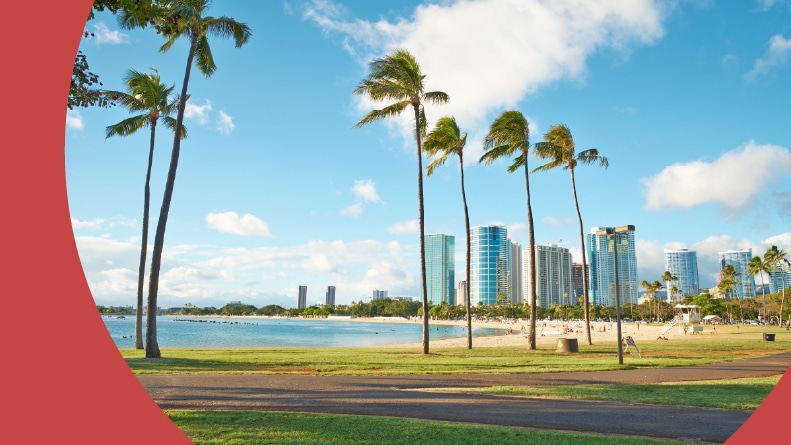
Miami prioritizes mixed-use, high-rise development in neighborhoods like Brickell, Edgewater, and Wynwood, putting dining, shopping, and cultural venues within walking distance of thousands of residents. Brickell, Miami’s financial district, has evolved into one of the most walkable neighborhoods in the Southeast. Also, Wynwood draws residents and visitors with its internationally recognized street art district, gallery spaces, and an ever-growing concentration of restaurants and shops, all laid out across a grid of walkable blocks.
Beneath the Metrorail’s elevated tracks, the Underline is transforming 10 miles of underused right-of-way into a continuous linear park and trail running from Brickell to Dadeland South. The project incorporates walking and biking paths, fitness equipment, public art installations, and native plantings, connecting a string of Miami-Dade neighborhoods with a car-free greenway.
55+ Communities in Miami
FOR SALE
7. Seattle
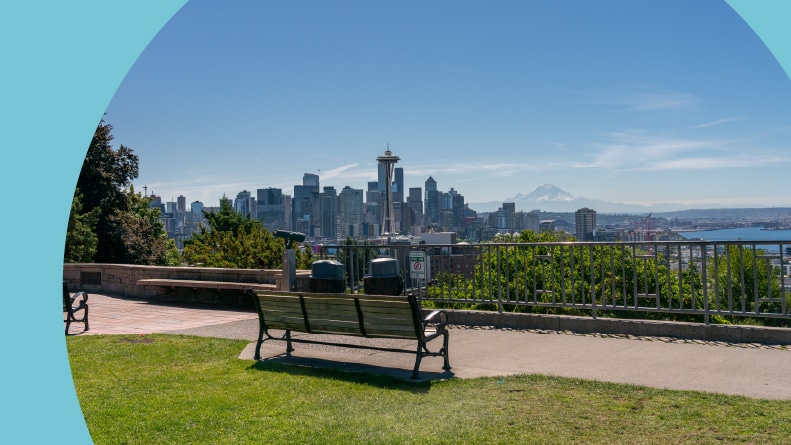
Seattle features greater elevation change than most major walkable cities, but its most pedestrian-friendly districts are on flatter or gently sloping terrain. Capitol Hill is one of the city’s most walkable neighborhoods, with Broadway and Pike/Pine corridors lined with restaurants, coffee shops, live music venues, and boutiques. Fremont (known for its public art and Sunday farmers market) and Belltown (which sits at the edge of downtown with direct access to the waterfront) both offer mixed-use blocks well suited to pedestrians. First Hill and East Queen Anne round out a collection of neighborhoods where daily errands and leisure are easily handled without a car.
King County Metro and Sound Transit together operate one of the most extensive transit networks on the West Coast. Seattle Center sits roughly a mile from downtown and is accessible on foot, by the South Lake Union Streetcar, or via the Seattle Center Monorail. Climate Pledge Arena hosts the NHL’s Seattle Kraken and the NWSL’s Reign FC, while Lumen Field and T-Mobile Park sit side by side just south of downtown.
The City of Seattle’s Pedestrian Master Plan outlines a long-term framework for improving sidewalk coverage, crossing safety, and accessibility, with priority investments to close gaps in the pedestrian network in underserved neighborhoods.
55+ Communities in Seattle
FOR SALE
8. Philadelphia
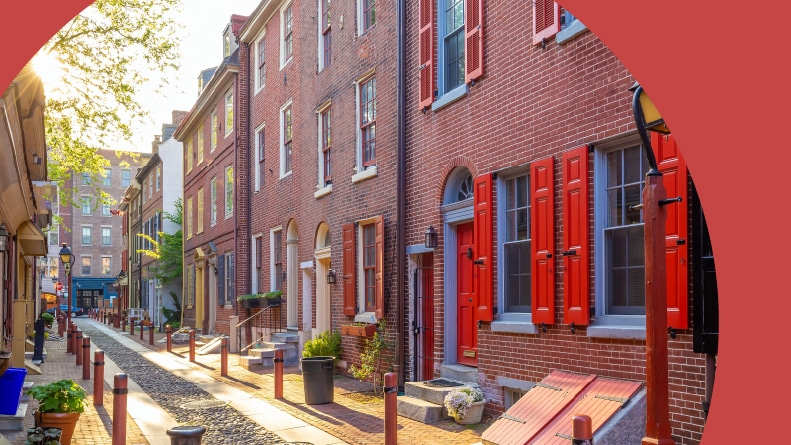
Philadelphia has claimed USA Today’s Most Walkable City to Visit title three years running, and the publication also ranked it the No. 1 Best City for Street Art in 2026. Those recognitions reflect a city that has made its pedestrian experience a genuine asset.
Downtown Philadelphia’s main commercial corridor, Market Street, runs east to west across the city’s core. Along the way, pedestrians pass through Old City, home to Independence Hall and the Liberty Bell, and past Reading Terminal Market, one of the oldest and largest public markets in the country.
For residents who want access to open space, Philadelphia’s park system encompasses more than 10,000 acres, including Fairmount Park. The Schuylkill River Trail runs along the riverbank, connecting Center City to surrounding neighborhoods and suburbs. Also, the Southeastern Pennsylvania Transportation Authority (SEPTA) complements the city’s walkability with subway, trolley, bus, and regional rail service spanning Philadelphia and its surrounding counties, with ongoing expansions and infrastructure improvements.
55+ Communities in Philadelphia
FOR RENT
FOR SALE
9. Portland
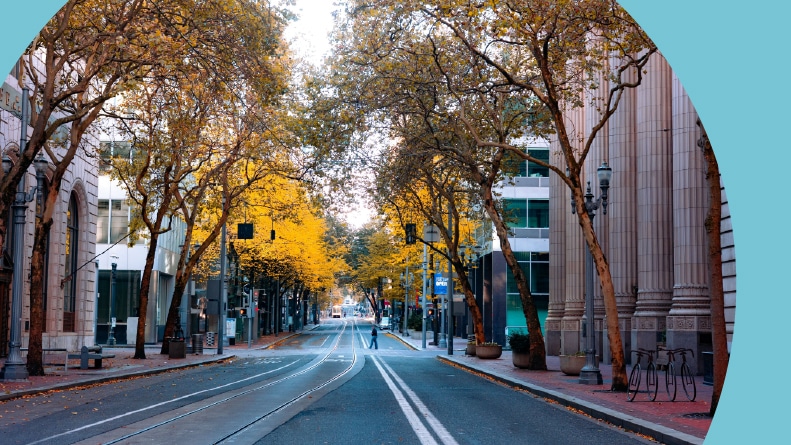
Portland has long prioritized mixed-use zoning, light-rail investment, and a compact-development philosophy that keeps neighborhoods close together. Portland’s downtown core is anchored by a 300-block grid, one of the smallest in any major American city.
Just outside the downtown business district, Providence Park hosts Portland Timbers and Portland Thorns matches in a stadium that sits directly on the MAX Light Rail line. A 20-minute walk north, the Pearl District is one of the city’s most walkable neighborhoods, with contemporary art galleries, design studios, and restaurants along tree-lined blocks. Powell’s City of Books anchors the neighborhood’s western edge. The independent bookstore occupies an entire city block and draws visitors from across the country.
Across the Willamette River, Portland’s inner East Side offers a different but equally walkable character. The Hawthorne District stretches along Southeast Hawthorne Boulevard with a mix of independent bookshops, vintage clothing stores, and neighborhood restaurants. Mississippi Avenue in North Portland has become a hub for locally owned boutiques and cafes, while the Sellwood neighborhood is known for its concentration of antique dealers and its proximity to Sellwood Riverfront Park.
55+ Communities in Portland
FOR SALE
10. Jersey City
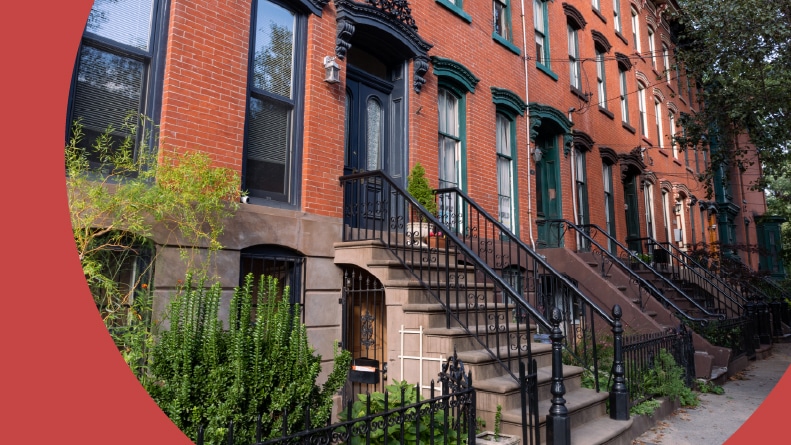
Jersey City shares the density of Boston and San Francisco, but benefits from flat terrain that makes walking between neighborhoods easier. Newark Avenue’s pedestrian mall stretches through the heart of the Downtown neighborhood, lined with restaurants, bars, and independent retailers. The 18.5-mile Hudson River Waterfront Walkway runs continuously along the waterfront from Bayonne to Fort Lee. Also, Liberty State Park offers 1,200 acres of open space along the Hudson, including the restored Central Railroad of New Jersey Terminal and ferry access to Ellis Island and the Statue of Liberty.
For trips into New York City, the Port Authority Trans-Hudson (PATH) train connects Journal Square, Newport, and Exchange Place to Midtown and Lower Manhattan. Locally, the Hudson-Bergen Light Rail links Jersey City’s neighborhoods from Bayonne in the south to Hoboken and Weehawken in the north, with 24 stations serving the waterfront corridor and inland districts alike.
FAQ: Walkable Cities for Retirement
What are the most walkable cities in the U.S. for retirement?
According to Quantumrun Foresight, the most walkable cities in the U.S. for retirement are San Francisco, New York City, Boston, Chicago, Washington, D.C., Miami, Seattle, Philadelphia, Portland, and Jersey City. These cities rank highly because of their pedestrian-friendly infrastructure, robust public transit systems, dense neighborhoods with easy access to shopping and dining, and ongoing investments in walkability improvements.
Why is walkability important for retirees?
Walkability is important for retirees because it supports both physical and mental health. Residents of walkable cities tend to be more physically active simply by going about their daily lives. Walkable neighborhoods also encourage more frequent social interaction, which supports mental well-being. For retirees who no longer commute or who prefer not to rely on a car, living in a pedestrian-friendly city means easier, more independent access to the amenities and services they need day to day.
What makes a city walkable for retirees?
A city is considered walkable for retirees when it has well-maintained sidewalks, a compact and navigable layout, reliable public transportation, easy access to shopping and dining on foot, and greenspaces for outdoor recreation. Pedestrian safety features, such as improved crosswalks, directional signage, and accommodations for the sensory impaired, are also important.
What are the health benefits of living in a walkable city during retirement?
Living in a walkable city during retirement offers significant physical and mental health benefits. On the physical side, residents of pedestrian-friendly cities naturally incorporate more movement into their daily routines, which supports cardiovascular health, mobility, and overall fitness. On the mental health side, walkable neighborhoods encourage more frequent social interaction with neighbors and community members, which combats isolation and supports emotional well-being.
Are there 55+ communities in walkable urban areas?
Yes, many walkable urban areas have 55+ communities nearby. The Bay Area, Boston, Chicago, Washington, D.C., and Philadelphia all have sizable selections of 55+ communities within reach of their walkable city centers. Some communities are located within the urban footprint itself, while others are in nearby suburbs that offer easy transit access to the city core. For retirees who want the health and lifestyle benefits of walkability without giving up the amenities of a 55+ community, these metro areas provide the best of both worlds. Contact 55places.com to find communities near the walkable city that interests you.
Ready to Take the First Steps to Finding Your 55+ Community?
Whether you want to be close to an easy-to-explore major city or amid quieter, slower-paced surroundings, 55places.com has the housing market insights you need to make an informed choice. Contact us today, and we’ll connect you with a real estate expert specializing in the locations that resonate with you.

- Insights and market stats
- Instant new home alerts
- Answers from local 55+ experts