OVERVIEW
Reno, Nevada, is a good place to retire for active adults who prioritize outdoor recreation, tax advantages, and a manageable mid-sized city lifestyle. Nevada has no state income tax, an effective property tax rate of 0.44%, and a median home price of $649,000 in Reno. The city offers proximity to Lake Tahoe, Sierra Nevada hiking and skiing, and hospitals, including Renown Regional Medical Center, making it a well-rounded retirement destination for 55+ adults.
For many 55+ adults exploring their next chapter, finding the right place to retire is about more than just affordability—it’s about lifestyle, access to care, and enjoying each day on your terms. Once known primarily for its casinos, Reno, Nevada, has quietly transformed into a vibrant, well-rounded destination that’s catching the attention of active retirees across the country.
So, is Reno, Nevada, a good place to retire? The answer depends on your priorities. Below, we take a balanced look at what retirees can expect, from cost of living and taxes to climate, health care, and everyday lifestyle.
Why Retirees Are Considering Reno
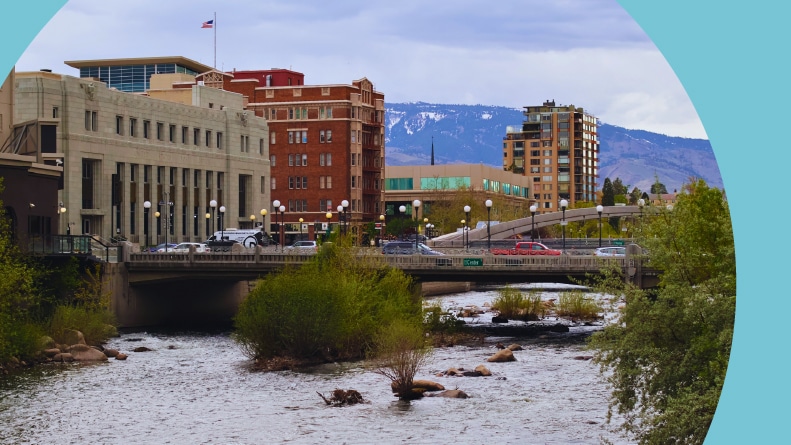
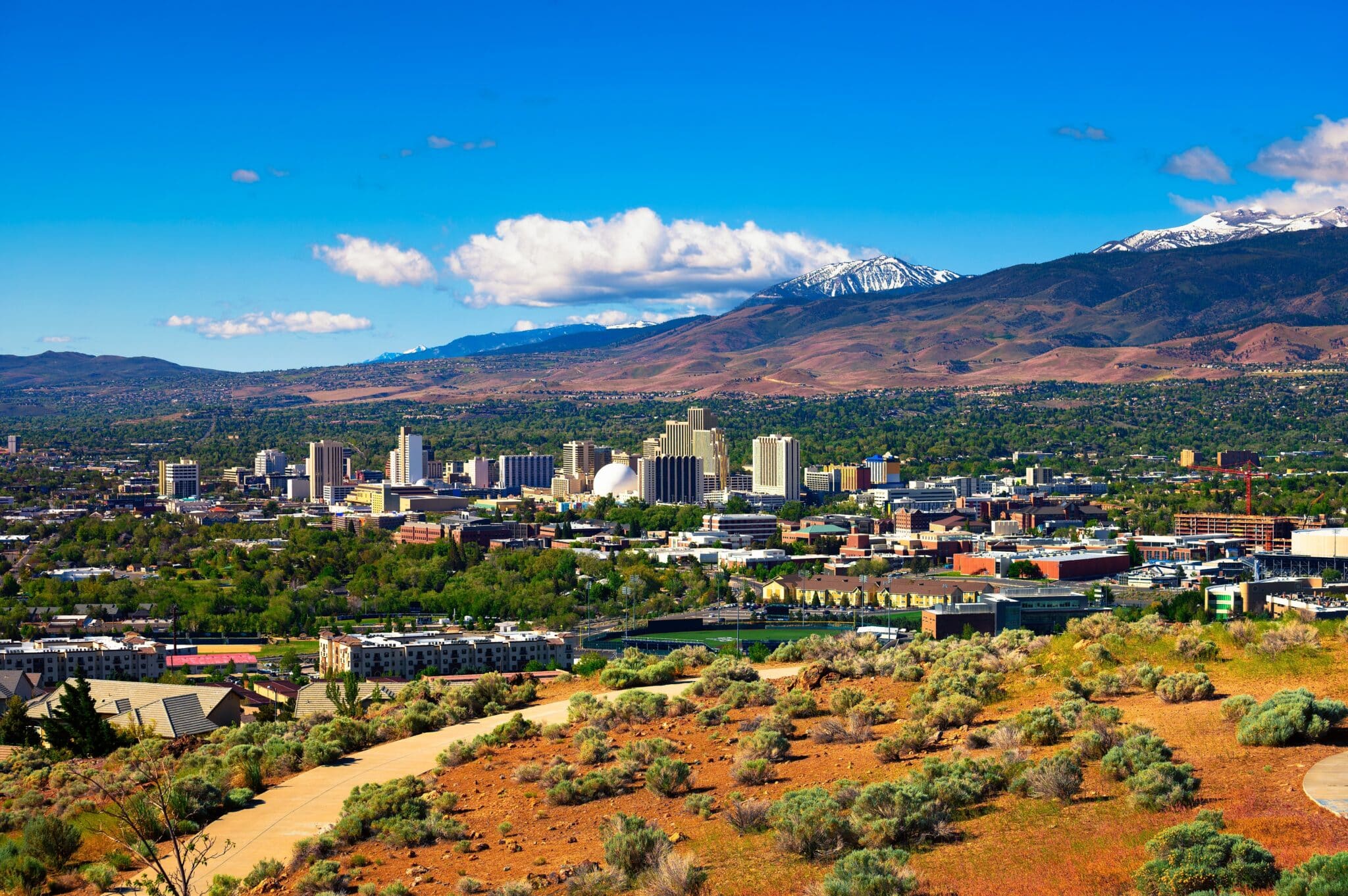
Reno has undergone a noticeable shift over the past decade. While gaming and entertainment are still part of its identity, the city has evolved into a lifestyle-focused destination with a growing arts scene, improved infrastructure, and a stronger sense of community.
Active retirees are especially drawn to Reno’s balance. It offers the energy of a mid-sized city without the congestion and fast pace of larger metros. For those who enjoy outdoor recreation, Reno’s location near the Sierra Nevada mountains opens the door to hiking, skiing, and lake activities just a short drive away.
Additionally, ongoing revitalization efforts have made downtown areas more appealing, with new restaurants, cultural spaces, and walkable districts. For retirees who want to stay engaged without feeling overwhelmed, Reno strikes an appealing middle ground.
Cost of Living in Reno

Reno’s cost of living is in the middle; it’s more affordable than many California cities but higher than some traditional retirement destinations. According to Rent Cafe, Reno is 3% higher than the state average and 4% higher than the national average, far less expensive than major West Coast metros like San Francisco.
Housing is the biggest factor, with the median home price in Reno around $649,000, reflecting steady growth. While that’s significantly lower than San Francisco (where median home values often exceed $1 million), it’s notably higher than many traditional retirement markets in the Midwest or Southeast. However, the median list price of a home in a 55+ community in the Reno area is $630,000, according to data from 55places. Renting is also an option, with average monthly rents for a one-bedroom apartment typically ranging from $1,100 to $2,400, depending on location and apartment size.
Everyday expenses such as groceries, utilities, and transportation are fairly moderate. Data from Numbeo suggests that grocery and transportation costs in Reno are generally about 3–8% above the national average. Gas prices, in particular, tend to run higher due to regional supply factors, though still below California levels.
For retirees relocating from high-cost states (especially along the West Coast), Reno can feel like a financial upgrade, offering tax advantages like no state income tax and relatively lower overall expenses. However, those coming from more affordable regions may find the transition less favorable, particularly regarding housing costs.
Taxes and Financial Benefits for Retirees

One of Reno’s biggest advantages is Nevada’s tax structure. For retirees managing fixed incomes or drawing from retirement accounts, this can make a meaningful difference.
Nevada does not have a state income tax. This means Social Security benefits, pensions, and withdrawals from retirement accounts are taxed at 0% at the state level. For many retirees, this alone can result in thousands of dollars in annual savings compared to states that tax retirement income.
Property taxes in Nevada are also relatively low. The effective property tax rate is about 0.44% of a home’s assessed value, compared to a national average of roughly 0.99%. For example, on a $500,000 home in Reno, annual property taxes may average $2,200–$2,800, depending on the county’s assessment and caps.
Sales tax, on the other hand, is somewhat higher. In Reno (Washoe County), the combined state and local sales tax rate is approximately 8.27%, according to the Nevada Department of Taxation. This is above the national average combined rate of around 7.0–7.5%, meaning everyday purchases can be slightly more expensive.
Overall, Reno is considered a tax-friendly location for retirees, particularly for those focused on preserving retirement income. The absence of a state income tax, combined with relatively low property taxes, can significantly reduce the overall tax burden, even when accounting for higher sales taxes.
Health Care Access and Quality

Health Care is a critical factor for 55+ adults evaluating where to retire. Reno offers a solid range of health care services, including hospitals, specialty clinics, and primary care providers.
The city is home to several well-regarded medical facilities, including Renown Regional Medical Center, the area’s largest hospital and a major hub for advanced care. Saint Mary’s Regional Medical Center is another full-service hospital offering a wide range of services, including cardiac and surgical care. For those seeking more personalized or specialty-focused treatment, Northern Nevada Medical Center and Northern Nevada Sierra Medical Center provide additional options within the greater Reno-Sparks area.
Beyond hospitals, retirees will find access to specialty clinics in areas commonly needed by aging populations, such as cardiology, orthopedics, and general wellness care. Organizations like Renown Health offer an integrated network of providers, making it easier to coordinate care.
For more complex or highly specialized treatments, larger medical hubs in nearby regions (including Sacramento) are within driving distance, providing added peace of mind.
For those considering long-term care or assisted living options, Reno offers choices, though availability and cost should be evaluated early in the retirement planning process.
Climate and Weather Year-Round

Reno’s climate is often described as one of its biggest draws. The city experiences four distinct seasons, but winters are generally milder than in many northern states.
Snow does fall during winter, but it tends to be manageable, and sunshine is common throughout the year. In fact, Reno averages over 250 sunny days annually, which is appealing for retirees who want to stay active outdoors.
The high-desert environment features low humidity, which many people find comfortable. However, the dry air can take some getting used to, especially for those with respiratory sensitivities.
One potential downside is wildfire smoke during certain times of the year, which can temporarily affect air quality. This is an important consideration for retirees with existing health concerns.
Lifestyle and Things to Do

For active retirees, lifestyle often plays a bigger role than any single financial factor, and Reno delivers a wide range of options.
Outdoor enthusiasts will find no shortage of activities. Popular hiking and biking trails include the Peavine Mountain Trail and the Rancho San Rafael Regional Park. Golfers can enjoy courses like Somersett Golf & Country Club and Wildcreek Golf Club, while winter sports enthusiasts have quick access to ski resorts such as Mt. Rose Ski Tahoe and Northstar California Resort. Nearby lakes like Lake Tahoe and Pyramid Lake offer boating, fishing, and other water-based recreation year-round.
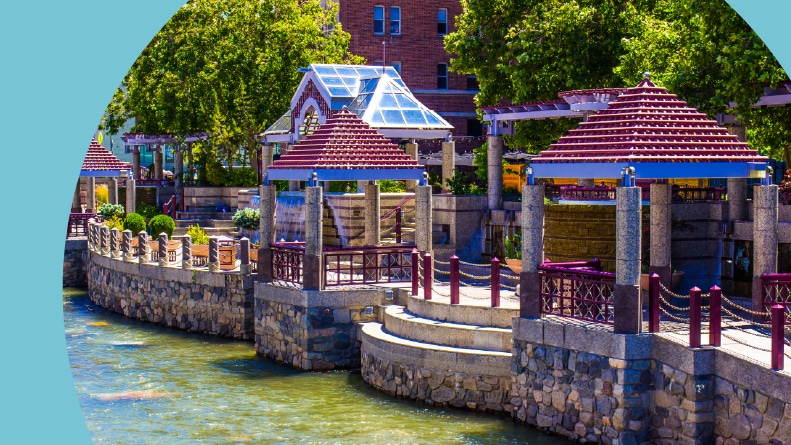
Beyond the outdoors, Reno has a growing arts and culture scene. Retirees can explore galleries like the Nevada Museum of Art or enjoy live music at venues such as The Pioneer Center for the Performing Arts. Annual festivals like the Reno River Festival, Great Reno Balloon Race, and Artown provide community engagement and entertainment throughout the summer and fall months. Dining options have also expanded, from casual favorites in Midtown and the Riverwalk District to upscale restaurants featuring farm-to-table cuisine.
While casinos remain part of the landscape, they are no longer the main attraction for many residents. Retirees can enjoy entertainment, nightlife, and social events without feeling that gaming dominates their daily lives.
Compared to larger cities, Reno offers a slower, more manageable pace. This makes it especially appealing to retirees who want access to amenities, cultural activities, and outdoor recreation without the stress of heavy traffic and overcrowding.
Who Should Consider Retiring in Reno?
Reno isn’t the perfect fit for everyone, but it stands out for certain types of retirees. Active retirees who enjoy outdoor living will likely find Reno especially appealing. The proximity to mountains, trails, and lakes makes it easy to stay engaged and healthy.
Those looking for a tax-friendly state will also benefit from Nevada’s lack of an income tax, particularly if they rely on retirement income. Reno is also a good option for retirees who want a smaller city feel with access to larger destinations when needed. Its location allows for relatively easy travel to other parts of the West.
Finally, retirees who work remotely or are not dependent on major metropolitan infrastructure may find that Reno offers the right balance of convenience and livability.
FAQ: Retiring in Reno, Nevada
Is Reno, Nevada, a good place to retire?
Yes, Reno is a strong retirement destination for active adults who value outdoor recreation, tax savings, and a mid-sized city feel. Nevada has no state income tax, property taxes are low, and the city averages over 250 sunny days per year. Lake Tahoe, ski resorts, and mountain trails are all a short drive away. The main tradeoffs are a median home price of around $649,000, occasional wildfire smoke, and a cost of living 4% above the national average.
What is the cost of living in Reno, Nevada?
Reno’s cost of living is 4% above the national average. The median home price is around $649,000, and the median list price in a 55+ community is $630,000, according to 55places data. One-bedroom apartment rents range from $1,100 to $2,400. Grocery and transportation costs run 3–8% above the national average. For retirees relocating from high-cost West Coast cities, Reno typically feels like a financial upgrade.
Does Nevada have a state income tax?
No. Social Security benefits, pensions, 401(k) withdrawals, and IRA distributions are all taxed at 0% at the state level. Nevada also has no estate or inheritance tax. For many retirees, this results in thousands of dollars in annual savings compared to states that tax retirement income.
What are property taxes like in Reno?
Nevada’s effective property tax rate is about 0.44%, roughly half the national average of 0.99%. On a $500,000 home in Reno, annual property taxes typically run $2,200 to $2,800. Combined with the lack of a state income tax, this makes Reno a tax-friendly location for retirees.
What is the weather like in Reno?
Reno has a four-season, high-desert climate with over 250 sunny days per year. Winters bring some snow but are milder than most northern states. Humidity is low year-round. The main weather concern is wildfire smoke during late summer and early fall, which can temporarily affect air quality—an important consideration for retirees with respiratory sensitivities.
What hospitals and health care are available in Reno?
Reno’s largest facility is Renown Regional Medical Center, a major hub for advanced care. Other options include Saint Mary’s Regional Medical Center, Northern Nevada Medical Center, and Northern Nevada Sierra Medical Center. Specialty clinics in cardiology, orthopedics, and wellness are available locally. For highly specialized treatments, Sacramento’s medical hubs are within driving distance.
What outdoor activities are available in Reno?
Reno offers hiking and biking at Peavine Mountain Trail and Rancho San Rafael Regional Park, golf at Somersett Golf & Country Club and Wildcreek Golf Club, skiing at Mt. Rose Ski Tahoe and Northstar California Resort, and boating and fishing at Lake Tahoe and Pyramid Lake. The Sierra Nevada location makes year-round outdoor recreation a central part of daily life.
How far is Reno from Lake Tahoe?
Lake Tahoe is about 30 to 45 minutes from Reno by car. The largest alpine lake in the U.S., it offers boating, fishing, hiking, skiing, and scenic drives year-round. Many Reno retirees treat the lake as an extension of their everyday recreation.
What is there to do in Reno besides casinos?
Reno has a growing arts scene, including the Nevada Museum of Art and The Pioneer Center for the Performing Arts. Annual events like the Great Reno Balloon Race, Reno River Festival, and Artown add community entertainment. The Riverwalk District and Midtown neighborhood offer restaurants, cafes, and boutiques. For most residents today, outdoor recreation is a bigger part of Reno’s identity than gaming.
Are there 55+ communities in Reno?
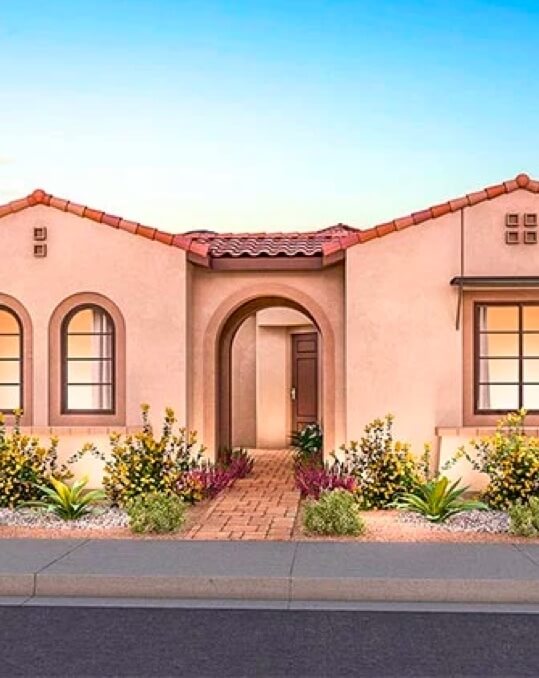
Yes, Reno has several 55+ communities, all for-sale. Options include Sierra Canyon, Regency at Caramella Ranch, Regency at Damonte Ranch, Regency at Stonebrook, Silverado Village, Villa Toscana, and Miners Village. The median list price in a Reno-area 55+ community is $630,000, according to 55places data.
Is Reno cheaper than California for retirement?
Yes. Reno’s median home price of $649,000 is well below San Francisco, where median prices often exceed $1 million. Nevada has no state income tax, while California has one of the highest in the country. Nevada’s property tax rate (0.44%) is also lower than that of most California counties. For retirees relocating from the Bay Area or other high-cost California cities, Reno can deliver substantial savings.
Who is Reno best suited for in retirement?
Reno is best suited for retirees who want an active outdoor lifestyle, tax-friendly finances, and a smaller-city atmosphere, especially those relocating from high-cost West Coast states. It’s ideal for adults who enjoy hiking, skiing, golfing, and lake recreation. Those with significant respiratory concerns should weigh the occasional wildfire smoke, and buyers should be prepared for a housing market that has seen steady price growth.
Final Verdict: Is Reno a Good Place to Retire?
So, is Reno, Nevada, a good place to retire? For many 55+ adults and active retirees, the answer is yes—but with a few caveats.
Reno offers a compelling mix of tax advantages, outdoor lifestyle, and manageable city living. Its sunny climate, growing amenities, and proximity to natural beauty make it an attractive option for those who want to stay active and engaged. However, rising housing costs, occasional air quality concerns, and health care access considerations mean it’s important to evaluate your personal priorities.
Ultimately, Reno is best suited for retirees who value lifestyle and flexibility as much as financial benefits. If you’re looking for a place that supports an active, balanced retirement without the intensity of a major metro, Reno is well worth considering.
- Insights and market stats
- Instant new home alerts
- Answers from local 55+ experts