HIGHLIGHTS
- Yes, retirement communities near universities exist, and the model is growing. An estimated 75 to 100 U.S. communities have some tie to a college or university.
- A true university-based retirement community (UBRC) meets five specific criteria, so simply being near a campus doesn’t qualify.
- Many UBRCs are life-plan communities with sizable entry fees, while active adult 55+ communities near campuses offer a lower-commitment, ownership-based path.
- Lifelong learning isn’t just enriching. Research links staying intellectually engaged to a lower risk of cognitive decline.
- The right fit depends on whether you want a full care continuum or an active, independent 55+ lifestyle close to campus life.
Are There Really Retirement Communities Near Universities?
Yes, and the model is growing. According to UniversityRetirementCommunities.com, an estimated 75 to 100 communities across the country have some type of association with an academic institution. That is not a handful of experiments. It is an established, findable category with options coast to coast.
The timing is not a coincidence. In 2025, a record 4.18 million Americans turned 65, roughly 11,400 people a day, according to SBAM. As that wave reshapes retirement, colleges have taken notice. The country has more than 2,600 four-year institutions, according to the National Center for Education Statistics, many with campus resources, cultural programming, and space to share with an older audience eager to keep learning.
What matters for your search is that “near a university” splits into two distinct paths. One is a true UBRC, usually a life-plan community with a formal campus partnership. The other is an active adult 55+ community located near a campus, where you own your home and live independently. 55places tracks active adult communities nationwide, and the difference between these two paths shapes everything from cost to daily life.
What Is a University-Based Retirement Community (UBRC)?
A university-based retirement community is a retirement community with a formal, ongoing relationship to a college or university. The connection goes well beyond a shared ZIP code. It is built into how the community operates, funds itself, and programs daily life.
The term comes from Andrew Carle, adjunct faculty in senior living administration at Georgetown University, who coined “UBRC” in 2006. He also defined the framework that separates a genuine UBRC from a community that simply sits near a campus. To qualify, Carle argues a community should meet five criteria:
- Location accessible to the core campus, typically within about a mile.
- Formalized programming that integrates residents with students and faculty.
- A full continuum of housing and care on site.
- A documented financial relationship between the community and the university.
- A goal that at least 10% of residents have a university connection, such as alumni, retired faculty, or former staff.
Here’s the candid part. About 80% of communities that carry the “UBRC” label have only informal ties to their neighboring school, according to Love & Company, and only about 20% meet the full model. What that means in practice is that the label is looser than it sounds, so it pays to ask exactly how a community and its university actually work together before you assume the partnership runs deep. In practice, the fewer of these criteria a community meets, the less formal its university affiliation.
UBRCs vs. Active Adult Communities Near a Campus: Which Is Which?
The clearest way to sort your options is to ask what you are buying. A true UBRC is often a life-plan community, which means you typically pay an entry fee and gain access to a continuum of housing and services under one contract. That structure bundles future support into the arrangement, along with the campus programming that defines the model.
An active adult community near a campus works differently. You buy a home the same way you would in any 55+ community, live independently, and enjoy the culture of a nearby college on your own terms. There is no care contract and no large entry fee, just ownership and proximity.
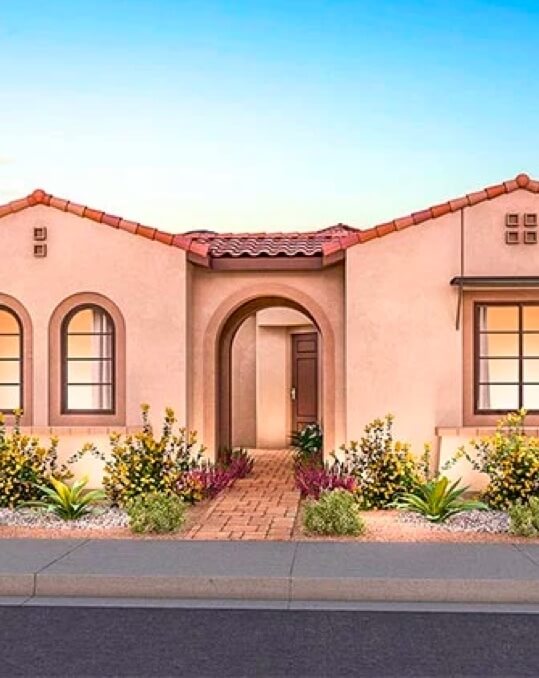
A 55+ community near a campus is the clearest version of that ownership path. Picture a condominium community within walking distance of a university, where you own your home outright, and no on-site medical care is built in. The result is campus adjacency and an intellectual atmosphere while you keep the independence of homeownership.
Name the trade-off honestly, because it is the whole decision:
- A UBRC offers built-in programming and a continuum of care, but it requires a larger financial and lifestyle commitment upfront.
- An active adult community near a campus offers ownership, independence, and lower commitment, but you arrange campus access and any future care yourself.
One more distinction is worth flagging. “Near a campus” alone does not make a community affiliated. Some communities simply sit on university-owned land under a ground lease, with no academic partnership behind the scenes. Proximity is real and valuable, but it is not the same as a documented university tie.
What Life Is Like Near a University in Retirement
Picture a Tuesday: You audit a morning lecture on jazz history, grab coffee with a neighbor who once taught the class, then walk over to an afternoon concert or evening game. Later in the week, you might mentor an undergraduate or attend a continuing-education seminar. That rhythm of learning, connection, and culture within walking distance is what draws active adults to campus life in retirement.
The benefits of learning go beyond enjoyment. Research from Rush University Medical Center, published in Neurology, found that lifelong cognitive enrichment was associated with a lower risk of Alzheimer’s disease and slower cognitive decline. The study followed 1,939 adults for an average of about eight years. Participants with the highest levels of lifetime cognitive enrichment developed Alzheimer’s disease an average of five years later than those with the lowest levels. Neuropsychologist Andrea Zammit, one of the study’s authors, noted that the association persisted even after researchers accounted for brain changes associated with Alzheimer’s and related conditions. A campus can make intellectual engagement part of everyday life rather than something you have to seek out.
Then there is the mix of generations. Campus life brings active adults into shared spaces with students, faculty, and visiting speakers, creating opportunities for varied social connections and new perspectives. Universities also offer libraries, arts venues, fitness facilities, athletic events, and continuing-education programs, some of which may be open or discounted to residents of affiliated communities.
Where You’ll Find Communities Near Universities
Communities near universities are not clustered in one corner of the country. They turn up in college towns large and small, from major research-university hubs to smaller liberal-arts towns where the campus sets the cultural pace. Wherever a school has room to share and an older audience eager to keep learning, the model tends to follow.
Geography spreads the category widely. You can find options in the Upper Midwest, across the Northeast and New England, throughout the Sun Belt and the desert Southwest, and down into the South. Some sit in dense metro areas anchored by a large state university, while others belong to smaller towns where the college and its arts and music programs are the main draw.
Both models show up across all of these markets. In some places, the fit is a life-plan community or full UBRC with a formal campus partnership and a continuum of care. In others, the fit is an active adult 55+ community near campus, where you own your home and visit the campus on your own terms.
The practical approach is to search market by market. Start with college towns where you would actually want to live, then compare nearby active adult communities by distance to campus, available home types, and the nature of their affiliation with the university.
What Does It Cost to Live Near a University in Retirement?
Cost depends almost entirely on which path you choose, and the two look nothing alike.
The life-plan community model offers a useful cost benchmark for UBRCs, since national UBRC-specific pricing data are not readily available. According to the National Investment Center for Seniors Housing & Care, the average entrance fee at continuing care retirement communities (CCRCs), also known as life-plan communities, surpassed $480,000 in 2025, up 22.3% over five years. At entrance-fee communities, the average monthly asking rate for independent living was $4,325 in the third quarter of 2025. Costs vary widely: entrance fees can range from about $100,000 to more than $1 million, depending on the community and residence. These figures offer a starting point for budgeting, but individual UBRC costs may differ. An entrance fee is also more than a move-in cost: depending on the contract, it may provide access to future care, priority for higher levels of care, or a partial refund when a resident leaves.
The active adult path is more familiar. You buy a home much as you would in any 55+ community, and costs vary by market. There is no large entry fee and no care contract, which keeps both the price and the commitment lower.
Here is the trade-off in plain terms. Entry-fee communities fold a continuum of future services into what you pay, while active adult ownership keeps costs and commitment lower but leaves any future care for you to arrange separately. Neither is better in the abstract. It depends on what you want your money to cover.
How to Find the Right Community Near a University
Start by deciding which option best fits your needs: a full continuum of care through a UBRC or life-plan community, or an active adult community near a college campus. That decision will help narrow your search more quickly than any other factor.
From there, work through a short checklist for any community you are considering:
- Distance to campus: Confirm how close it is and whether you can easily reach lectures, events, and venues.
- Campus access and programming: Ask what is genuinely offered to residents, from auditing classes to library and athletic privileges.
- Affiliation requirements: Check whether residency requires an alumni or university connection, as some communities do.
- Home types and ownership model: Clarify whether you own or hold a life-plan contract, and what home styles are available.
- Care arrangements: Determine whether care is on-site or something you would arrange separately later.
Because the “UBRC” label is used loosely, confirm these details directly with each community rather than relying on marketing language. 55places real estate experts specialize in active adult communities nationwide and can help you compare options and find homes near the campuses you love.
Frequently Asked Questions
Are there retirement communities near universities?
Yes, an estimated 75 to 100 U.S. communities have some tie to a college or university, and you can also find active adult 55+ communities located near campuses.
What is a university-based retirement community?
It is a retirement community with a formal, ongoing relationship to a college or university, meeting criteria like campus proximity, shared programming, and a documented partnership.
Does living near a campus make it a UBRC?
No, proximity alone isn’t enough. A true UBRC has formalized programming and a documented financial relationship with the school.
How is a UBRC different from a 55+ active adult community?
A UBRC is often a life-plan community with a care continuum and entry fee, while an active adult community near a campus lets you own a home and live independently.
How much does a university retirement community cost?
Life-plan communities follow national CCRC ranges, with entry fees averaging over $480,000 in 2025 and monthly fees around $4,325 for independent living, while active adult homes near a campus are priced like other 55+ homes and vary by market.
Can retirees take college classes at these communities?
Many affiliated communities offer access to campus courses, lectures, and events, often free or discounted for residents.
Find Your Place Near Campus
Whether you want a full continuum of care or an independent 55+ lifestyle a short walk from the lecture hall, 55places real estate experts can help you weigh your options and tour communities in the college towns on your list. Contact 55places.com today!

- Insights and market stats
- Instant new home alerts
- Answers from local 55+ experts