HIGHLIGHTS
- Yes, community gardens are a growing amenity in 55+ communities.
- Setups range from raised-bed plots to garden clubs to full agrihoods.
- Gardening counts as real exercise and supports healthy aging.
- Real examples include Del Webb Catalina, Solivita, and Sun City.
- Search by amenity and tour before you buy to confirm the garden.
The short answer is yes. Many 55+ active adult communities include community gardens as an amenity, and the number keeps growing. Retirement communities with community gardens come in more forms than most homebuyers expect, from a few raised beds behind the clubhouse to a resident-run garden club with its own planting calendar. Trading a big yard for a low-maintenance home doesn’t have to mean giving up the pleasure of gardening.
How Community Gardens Work in 55+ Communities
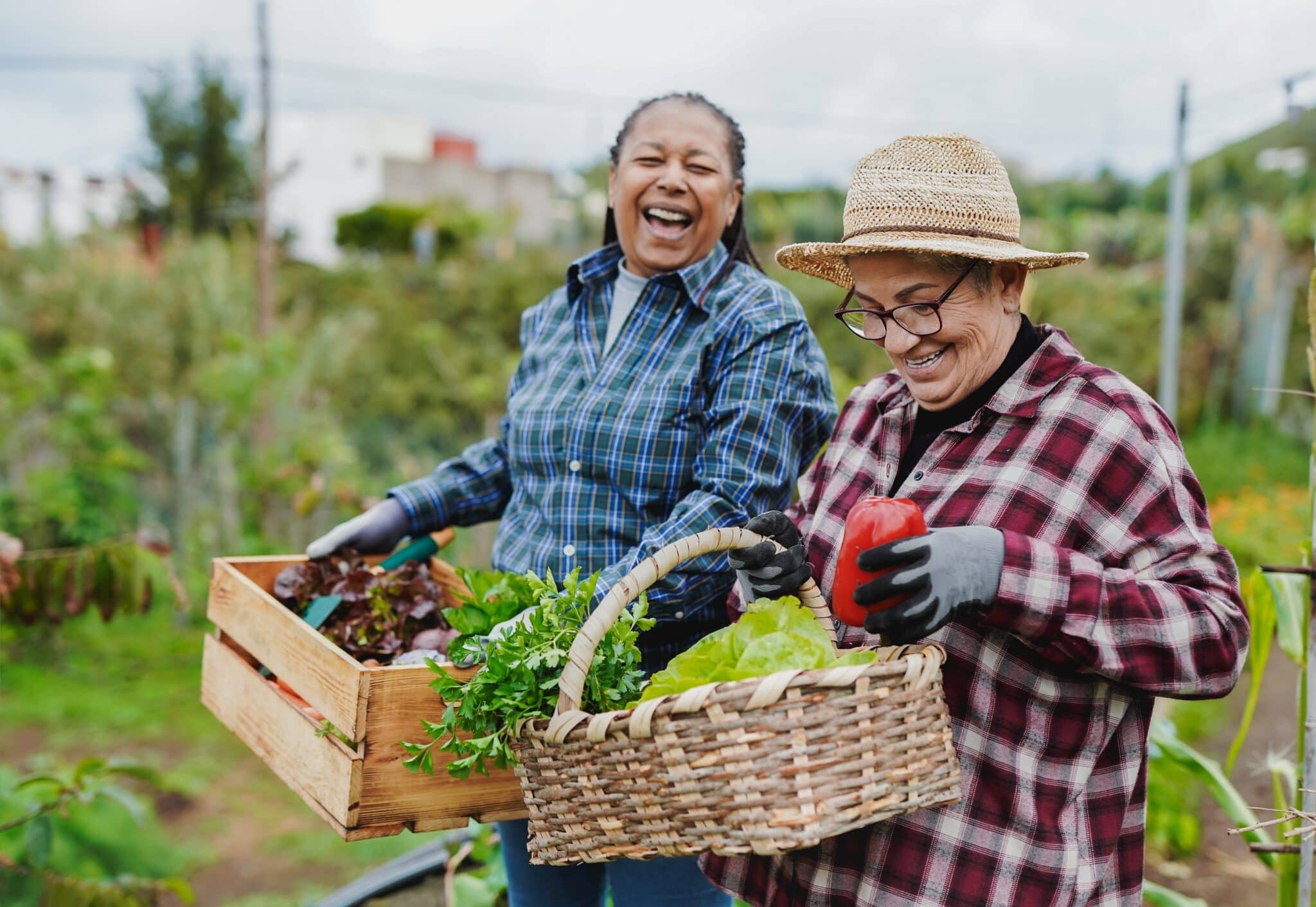
Many 55+ active adult communities offer community gardens, from shared raised-bed plots to resident-run garden clubs. In this setting, a community garden means space that residents actually tend themselves: individual plots or raised beds where neighbors can grow vegetables, herbs, and flowers on their own schedule.
That’s different from the decorative landscaping a community maintains around its entrances and clubhouse, which is lovely to look at but not yours to tend. It’s also different from horticultural therapy, which the American Horticultural Therapy Association describes as a treatment practice guided by a trained therapist and designed to achieve specific goals. A community garden is simply a lifestyle amenity: your own plot to cultivate, without the upkeep of a full yard.
Types of Community Gardens You’ll Find
Garden setups vary widely from one 55+ community to the next. Here are the types you’re most likely to find:
- Shared plots and raised beds: Residents can claim individual plots and grow their own plants, often for a small seasonal fee.
- Garden clubs: Resident-run groups that coordinate plot assignments, share tools, plan planting schedules, and organize events.
- Greenhouses: Shared spaces that extend the growing season into cooler months and protect seedlings.
- Agrihoods: Residential communities built around a working farm or shared gardens as a central feature.
- Accessible raised beds: Elevated beds that make gardening easier for people who have difficulty kneeling or bending.
Agrihoods are worth understanding if the farm-to-table life appeals to you. The Urban Land Institute defines an agrihood as a “community built with a working farm or community garden as a focus,” and its 2018 report documented agrihoods across 27 U.S. states and Canadian provinces. Some are age-targeted, while others are all-ages, such as Arden in Palm Beach County, Florida, which centers on a five-acre working farm.
Accessibility can also be easier to incorporate into a community garden than many buyers assume. Oregon State University Extension recommends raised beds about 3 feet high for standing gardeners and about 2 feet high for those gardening while seated. Beds should also be sized so gardeners can comfortably reach the center. With thoughtful design, a stiff knee or the need for a walking aid doesn’t have to mean giving up gardening.
Why 55+ Communities Are Adding Community Gardens
The benefits go well beyond fresh basil. Gardening can be a practical way to stay active and connected in retirement, which helps explain its appeal as a 55+ community amenity.
Start with physical health. The CDC’s physical activity guidance identifies gardening as a multicomponent physical activity and lists digging as a muscle-strengthening activity. For adults 65 and older, the CDC recommends at least 150 minutes of moderate-intensity aerobic activity each week, along with muscle-strengthening and balance-focused activities. An afternoon tending a garden plot can contribute to an active lifestyle, though the amount of exercise depends on the tasks and intensity.
Research on gardening and the aging brain is encouraging, too. The Dubbo Study of the Elderly, which followed 2,805 adults for 16 years, found that daily gardening was associated with a 36% lower predicted risk of dementia. This was an association, not proof that gardening prevents dementia. A 2024 study of more than 136,000 U.S. adults found that gardeners had 28% lower odds of reporting subjective cognitive decline than non-exercisers.
There’s a heart-healthy payoff, too. A 2023 study published in the Journal of the Academy of Nutrition and Dietetics found that adults 65 and older who gardened had better cardiovascular health indicators and were more likely to consume fruits and vegetables five or more times a day than non-exercisers. Because the study was observational, it showed an association rather than cause and effect. A separate randomized controlled trial found that community gardeners increased their vegetable intake by harvest time compared with a control group. In practice, that can mean more fresh produce on your plate, grown just a few steps from your home.
Then there’s the benefit that doesn’t fit neatly into a study abstract. A shared garden is an easy way to meet new neighbors after a move, offering an easy reason to get outside, swap seedlings, and share gardening tips with fellow residents.
Related Article: 55+ Communities With Awesome Greenspaces
55+ Communities With Community Gardens
To give you a better idea of what’s available, here are a few 55+ communities that offer gardening as an amenity.
- Del Webb Catalina in Lakewood Ranch, Florida, features a community garden alongside amenities such as a dog park, outdoor pool, and athletic courts.
- Solivita in Poinciana, near Kissimmee, Florida, spans 4,300 acres and offers hundreds of clubs and interest groups, including a gardening club called Green Thumbs.
- Sun City, Arizona, the original Del Webb active adult community, opened in 1960 and is known for its extensive amenities and social activities, including an active resident garden club built around learning and camaraderie.
These are just a few examples, not a complete list. Community gardens are turning up in active adult communities across the country, so browsing the most popular active adult communities and checking each amenity list is a good place to start.
Related Article: Why Gardening Is the Ultimate Retirement Hobby
How to Find a 55+ Community With a Community Garden
Finding a community with the right garden setup takes a little digging, and it’s worth considering alongside the broader pros and cons of 55+ communities. A few steps can make the search easier:
- Search by amenities and lifestyle. Browse 55+ communities and look for gardens, greenhouses, and garden clubs in their amenity lists.
- Ask specific questions. Are there dedicated resident plots or just decorative landscaping? Are raised or accessible beds available? Is there an active garden club or a waitlist for plots?
- Explore the possibility of starting a garden. If a community doesn’t have one, residents may be able to start a community garden with HOA approval.
- Talk to residents during your tour. Ask resident gardeners how often the space is used, what resources are available, and whether any challenges come with maintaining the garden.
- Consider the climate. Growing seasons, temperatures, and rainfall vary by region and can affect what you can grow and when.
- Consult a local expert. 55places real estate experts who specialize in active adult communities may be able to identify 55+ communities with gardening amenities that match your interests.
Frequently Asked Questions
Are there 55+ communities with community gardens?
Yes, many active adult communities offer community gardens, raised-bed plots, or resident-run garden clubs as amenities. Availability varies from one 55+ community to the next, so confirm the garden on the official amenity list or, better yet, during an in-person tour before you commit.
What is an agrihood?
An agrihood is a community built around a working farm or shared garden as its central amenity. The Urban Land Institute documented agrihoods across 27 U.S. states and Canadian provinces in its 2018 report, and they range from all-ages developments to age-targeted communities.
Is a community garden the same as landscaping?
No, landscaping is the decorative greenery a community maintains, while a community garden gives residents their own plots or raised beds to grow flowers, herbs, and vegetables. When you tour an active adult community, ask whether it actually offers a community garden so your expectations match reality.
Can you garden with limited mobility?
Often, yes. Many active adult communities use raised beds and smooth, accessible paths to keep gardening comfortable. Raised beds should be about 3 feet high for standing gardeners and about 2 feet high for seated gardeners. Beds should also be sized so gardeners can comfortably reach the center.
Ready to find a community with a garden?
Whether you want a raised-bed plot, a garden club, or a full agrihood, the right active adult community is out there. A 55places real estate expert can help you narrow the search by amenity and location. Contact 55places.com today!
- Insights and market stats
- Instant new home alerts
- Answers from local 55+ experts