HIGHLIGHTS
- The best hiking retirement spots pair everyday trail access with a mild climate, reasonable costs, and nearby health care.
- Western North Carolina and East Tennessee anchor the Appalachian region, while Arizona, the Texas Hill Country, and Colorado’s Front Range represent the West and Sun Belt.
- What sets a place apart isn’t a famous peak. It’s whether you can get on a trail several times a week.
- Several active adult communities integrate outdoor recreation into daily life with on-site trails, hiking clubs, and low-maintenance homes.
- Taxes matter, too: Tennessee and Texas have no state income tax, and North Carolina and Arizona exempt Social Security benefits.
A growing number of older adults are participating in outdoor recreation, making trail access a relevant consideration for retirement planning. In 2024, outdoor recreation participation among adults ages 55 to 64 reached 51.6% for the first time, while participation among adults ages 65 and older grew 7.4% year over year, adding 1.6 million participants, according to the Outdoor Industry Association.
For retirees who enjoy hiking, choosing where to live is about more than having a bucket-list summit within driving distance. It is about finding trails close enough to enjoy on an ordinary Tuesday morning.
| Region | Signature Trail Access | Featured Active Adult Community |
|---|---|---|
| Western North Carolina | Pisgah National Forest, DuPont State Recreational Forest, Blue Ridge Parkway, Mountains-to-Sea Trail | Biltmore Lake |
| East Tennessee | Great Smoky Mountains National Park (848 miles of trails) | Tellico Village |
| Prescott, Arizona | Prescott National Forest (~950 miles) | The Dells |
| North Tucson, Arizona | Coronado National Forest (100+ miles nearby) | SaddleBrooke Ranch |
| Texas Hill Country | Government Canyon State Natural Area (40+ miles) | Sun City Texas |
| Colorado Front Range | Pikes Peak-area trails and Front Range foothill trail systems (~650 miles of trails) | Windsor Gardens |
What Makes a Place Great for Retiring Hikers?
Everyday access beats a marquee trailhead you will only reach on special trips. The best places to retire in the mountains, or anywhere outdoors, are those where a trail sits close enough to become a habit, not an outing you schedule.
Climate is the next filter. Some regions let you hike nearly year-round, while others reward you spring through fall and make you plan around winter. Cost of living, home prices, and retiree taxes deserve the same honest look, and health care access grows more important with each passing decade.
Amenities help make an active lifestyle part of daily life. Communities with hiking trails, resident hiking clubs, and single-level, low-maintenance homes can make it easier to stay active. The health benefits are well documented. The CDC recommends that adults ages 65 and older get at least 150 minutes of moderate-intensity aerobic activity or 75 minutes of vigorous-intensity activity each week, along with muscle-strengthening and balance exercises. Hiking can count as vigorous activity, depending on the terrain and level of effort. Research highlighted by the National Institute on Aging also links higher daily step counts with a lower risk of death from all causes, reinforcing the value of making regular movement part of everyday life.
1. Asheville and Western North Carolina
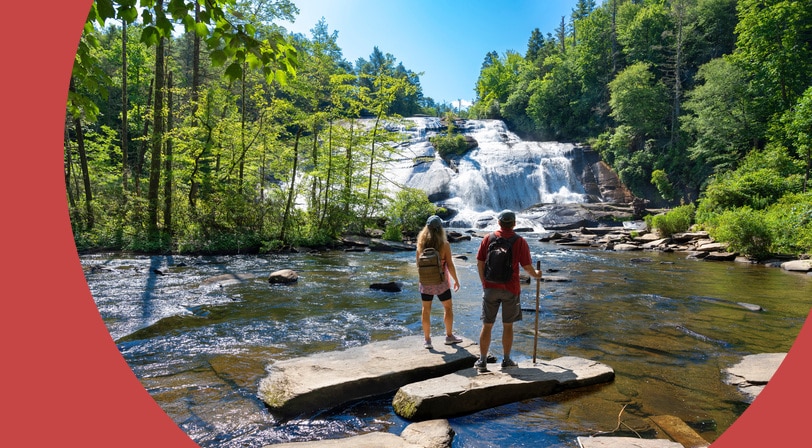
Imagine a morning that starts with coffee and ends with a waterfall walk before lunch. Western North Carolina makes that possible. Pisgah National Forest spans more than 500,000 acres and offers hundreds of miles of trails. DuPont State Recreational Forest, about 40 miles from Asheville by road, adds nearly 60 miles of multiuse trails and more than 40 miles of multiuse roads. The Blue Ridge Parkway offers another 300 miles of trails, according to the National Park Service. Threading through the region, the Mountains-to-Sea Trail spans a planned route of about 1,175 miles across North Carolina, with nearly 725 miles of footpath completed.
Biltmore Lake sits on 1,300 acres at the foot of the Blue Ridge Mountains, with trails, lakeside paths, and four trail-accessible campsites. Although it is not age-restricted, its walking paths and outdoor amenities may appeal to active retirees. For a community with an extensive trail network, The Coves Mountain River Club offers 39 miles of hiking and horse trails, along with waterfalls and scenic overlooks. North Carolina does not tax Social Security benefits, and its flat individual income tax rate is 3.99% for 2026, although other retirement income may qualify for specific deductions or exemptions.
Well-Suited For: Four-season mountain hikers who want a lively small city and its arts scene close at hand.
Active Adult Communities in Western North Carolina
- Bee Tree Village – Swannanoa
- Biltmore Lake – Asheville
- Blue Ridge Villas – Hendersonville
- Brigadoon – Candler
- Brookside Manor – Hendersonville
- Carriage Park – Hendersonville
- Country Meadows – Hendersonville
- Creekside – Asheville
- Crowfields – Asheville
- Cumberland Village – Hendersonville
- Deer Track – Brevard
- Kenmure – Flat Rock
- Pinebrook Farms – Asheville
- Riverwind – Etowah
- The Hills at Avery’s Creek – Arden
- Viewpointe – Asheville
- Vista at Blacksmith Run – Hendersonville
- Sweetwater Village – Hickory
2. The Great Smoky Mountains and East Tennessee
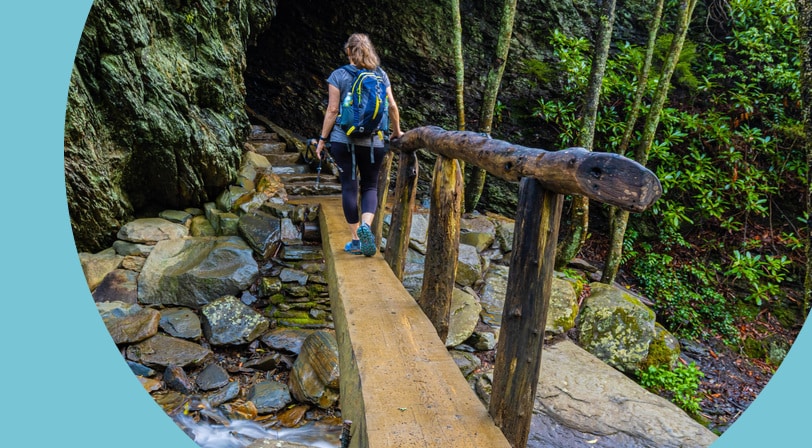
The draw here is simple: The country’s most-visited national park is practically in your backyard. Great Smoky Mountains National Park recorded more than 12.1 million recreational visits in 2024 and offers 848 miles of trails, according to the National Park Service. With hundreds of hiking routes across forests, ridgelines, and waterfalls, there’s enough variety to keep exploring for years.
Tellico Village, about 45 minutes from Knoxville, makes outdoor recreation part of daily life. Residents have more than 20 miles of walking and hiking trails within the community, while the East Lakeshore National Recreation Trail system adds roughly 30 miles of trails across Tellico Lake, with trailheads a 20- to 30-minute drive away. Tellico Village also has access to the lake’s 40 miles of shoreline for boating and other water activities. Tennessee’s lack of a state individual income tax can benefit retirees because Social Security benefits, pensions, and withdrawals from retirement accounts are not taxed at the state level.
Well-Suited For: Retirees who want big-park trails, lake life, and low taxes in one move.
Active Adult Communities in East Tennessee
- Cottages at Pryse Farm – Farragut
- Fairfield Glade – Crossville
- Rarity Bay – Vonore
- Tellico Village – Loudon
- The Grove at Cedar Hills – Lenoir City
3. Prescott, Arizona

Prescott answers a common concern about the Southwest: summer heat. At roughly 5,400 feet, the town stays cooler than Phoenix and Arizona’s lower deserts. The surrounding Prescott National Forest and nearby trail systems offer about 950 miles of hiking opportunities. The U.S. Forest Service notes that central Arizona’s mild climate supports year-round outdoor recreation, although winter snow, icy trails, and summer thunderstorms can affect conditions.
The Dells appeals to outdoor enthusiasts who want trails woven into daily life. The community offers walking and biking trails that connect to the Peavine National Recreation Trail and Iron King Trail, along with hiking, cycling, and pickleball activities. Prescott’s higher elevation also brings cooler summers than those in Arizona’s lower desert areas. On the tax side, Arizona has a flat 2.5% individual income tax rate, exempts Social Security benefits from state income tax, and imposes no state estate or inheritance tax, according to the Arizona Department of Revenue. For hikers seeking a relatively mild climate and opportunities to explore trails throughout much of the year, Prescott is worth considering.
Well-Suited For: Dry-climate hikers who want year-round trails and summers milder than the desert below.
Active Adult Communities in the Prescott Area
- Dorado at Verde Santa Fe – Cornville
- Jasper – Prescott Valley
- Prescott Canyon Estates – Prescott
- Prescott Lakes – Prescott
- Pronghorn Ranch – Prescott Valley
- Saddlewood – Prescott
- Talking Rock – Prescott
- The Dells – Prescott
- The Gardens at Willow Creek – Prescott
- The Views at Prescott Preserve – Prescott
- The Villages at Lynx Creek – Dewey
- Unit 8 at StoneRidge – Prescott Valley
- Victorian Estates – Prescott Valley
- Yavapai Hills – Prescott
4. The Tucson Foothills, Arizona

North of Tucson, the Sonoran Desert meets mountain trails, and one active adult community offers convenient access to both. SaddleBrooke Ranch in Oracle sits at about 3,500 feet in the Santa Catalina foothills, roughly 28 miles north of downtown Tucson. Residents can reach Coronado National Forest within about 10 minutes, opening the door to hiking and other outdoor recreation across the surrounding mountains.
The difference-maker is the community’s outdoor culture. SaddleBrooke Ranch has a resident Hiking Club that organizes fitness walks and hikes for a range of experience levels, from easy outings to challenging treks. Nearby destinations such as Oracle State Park and the Arizona Trail offer additional opportunities to explore Southern Arizona’s landscapes. For retirees concerned that moving might shrink their social circle, an organized hiking club can provide a practical way to meet neighbors and build connections around a shared interest.
Well-Suited For: Social hikers who want an organized club and desert-and-mountain variety close to home.
Active Adult Communities in the North Tucson / Catalina Mountains
- Casas Del Oro Norte – Tucson
- Casitas de Castilian – Tucson
- La Cholla Hills – Tucson
- Mona Lisa Village – Tucson
- SaddleBrooke – Tucson
- SaddleBrooke Ranch – Oracle
- Sun City Oro Valley – Oro Valley
- The Preserve at SaddleBrooke – Tucson
- Vistoso Village – Oro Valley
5. The Texas Hill Country
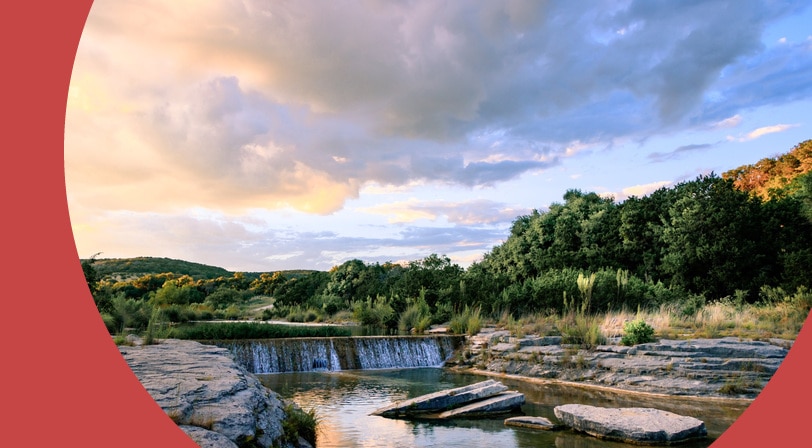
The Hill Country offers a different kind of hiking destination: rolling limestone terrain rather than high peaks. Just north of San Antonio, Government Canyon State Natural Area protects approximately 13,000 acres and offers more than 40 miles of trails through grasslands, wooded canyons, and limestone ridges, according to Texas Parks and Wildlife. Many trails are open year-round, although weather-related closures and summer heat can affect hiking conditions.
Sun City Texas, in Georgetown about 30 miles north of Austin, brings trail access into everyday life. A nine-mile network of walking and biking trails winds around the lake and through nature preserves and wooded areas within the 55+ community, giving residents multiple options for regular walks without a long drive. Texas has no state individual income tax, which can benefit retirees with taxable income. The result is a large, amenity-rich active adult community with convenient access to outdoor recreation.
Well-Suited For: Retirees who want warm-weather trails, gentle terrain, and a large, amenity-rich community.
Active Adult Communities in the North Tucson / Catalina Mountains
- Kissing Tree – San Marcos
- Regency at Santa Rita Ranch – Liberty Hill
- Sun City Texas – Georgetown
- Tuscan Village – Lakeway
- Tuscan Village Horseshoe Bay – Horseshoe Bay
- Regency at Esperanza – Boerne
- The Grove at Vintage Oaks – New Braunfels
- The Village of Encinal at Esperanza – Boerne
- Veramendi – New Braunfels
6. The Colorado Front Range

Colorado belongs on any hiker’s list, and the best way to frame it is as a gateway to a broad network of outdoor recreation. The Pikes Peak region around Colorado Springs offers roughly 650 miles of trail by regional estimates, and Cheyenne Mountain State Park alone holds roughly 28 miles of trails through grasslands, woodlands, and forests. Communities near Denver and Colorado Springs provide a starting point for exploring the Front Range, although proximity to specific trailheads varies by location.
Here’s the trade-off: Some Front Range communities offer extensive on-site walking and biking trails, such as Anthem Ranch in Broomfield, but access to mountain hiking depends on where you live and how far you’re willing to drive. Elevation and winter weather also shape the calendar, with lower-elevation trails often accessible earlier in the year than higher routes, where snow can linger into late spring or summer. For hikers drawn to the Rockies, that seasonal planning is part of the appeal of living near some of the country’s most celebrated mountain terrain.
Well-Suited For: Rockies-focused hikers who prioritize iconic trails and welcome real mountain winters.
Active Adult Communities in the Colorado Front Range
Northern Colorado
- Brennan by the Lake – Erie
- Country Lake Villas – Loveland
- Hover Park – Longmont
- Lakeshore at Centerra – Loveland
- Mirasol – Loveland
- Regency at NorthSkye – Erie
- Sonders Fort Collins – Fort Collins
- The Cottages at MacKenzie Place – Fort Collins
- The Courtyards at Lupton Village – Fort Lupton
- The Patios at Highland Meadows – Windsor
- The Villas at Pleasant Valley – Longmont
- Trilogy Centerra – Loveland
- Twin Peaks Village – Longmont
- West Point Village – Longmont
- Westlake Village Townhomes – Loveland
Denver Metro
- Anthem Ranch – Broomfield
- Bay Bridge – Lakewood
- Centennial at RiverWalk – Littleton
- Encore at Eastlake – Thornton
- Fairway Villas at Green Valley Ranch – Denver
- Gate N Green – Broomfield
- Gleneagles Village – Highlands Ranch
- Green Gables Reserve – Lakewood
- Heather Gardens – Aurora
- Heritage at Eagle Bend Golf Club – Aurora
- Heritage Todd Creek – Thornton
- Hilltop at Inspiration – Aurora
- Lincoln Creek – Parker
- Parkview – Golden
- Reverie at Looking Glass – Parker
- Skyestone – Broomfield
- Solstice – Littleton
- Sterling Ranch Patio Villas – Littleton
- The Reserve at Green Valley Ranch – Aurora
- The Retreat at The Links – Highlands Ranch
- The Ridge at Stony Creek – Littleton
- The Village at Highlands Ranch – Highlands Ranch
- The Village at McCoy Jenson – Lakewood
- The Villas – Lakewood
- The Villas at Great Plains Park – Aurora
- Valencia Condominiums – Wheat Ridge
- Verona – Highlands Ranch
- Waterford Place – Aurora
- Windsor Gardens – Denver
Castle Rock & Colorado Springs
- Elan – Colorado Springs
- Hillside at Castle Rock – Castle Rock
- La Scala – Colorado Springs
- Regency at Montaine – Castle Rock
- Rhyolite Ranch – Castle Rock
- Sunstone Village at Terrain – Castle Rock
- The Patios at The Meadows – Castle Rock
- The Retreat at Banning Lewis Ranch – Colorado Springs
- Village of Cortona – Colorado Springs
How to Choose the Right Hiking Community for You
Start with how you actually hike. Year-round desert trails, four-season Appalachian routes, and short alpine summers suit different preferences, so match the terrain and climate to your habits rather than an idealized picture of retirement.
Then weigh home prices and taxes against budget and lifestyle. Tennessee and Texas have no state individual income tax, while North Carolina and Arizona exempt Social Security benefits from state income tax, potentially making a difference for retirees on a fixed budget. From there, look for communities where outdoor amenities are built in: on-site or nearby trails, a resident hiking club, and single-level, low-maintenance homes that make it easier to stay active.
When you’re ready to compare specifics side by side, the 55places directory lets you sort active adult communities by area and amenities. 55places real estate experts specialize in these markets and know individual hiker-friendly communities well, so they’re a useful next step once you’ve narrowed your options.
Frequently Asked Questions
What are the best places to retire for hiking on a budget?
East Tennessee stands out, with no state income tax and 55+ homes starting in the low $200,000s. Parts of the Texas Hill Country also offer strong trail access at a lower cost than premium mountain markets like Asheville.
Can you hike year-round, or are mountain-town trails seasonal?
It depends on the region. Arizona’s Prescott and the Tucson foothills support year-round hiking, while Appalachian and Front Range trails are best spring through fall, with winter access varying by elevation.
Are there 55+ communities with hiking trails or hiking clubs?
Yes. Communities such as SaddleBrooke Ranch in Arizona, Sun City Texas, and Biltmore Lake in North Carolina offer on-site or adjacent trails and organized hiking clubs.
Which places let you retire near a national park for hiking?
East Tennessee offers convenient access to Great Smoky Mountains National Park, with entrances near Gatlinburg and Townsend. Western North Carolina puts residents close to Pisgah National Forest and the Blue Ridge Parkway, where extensive trail networks offer opportunities for everything from short waterfall walks to longer mountain hikes.
Is hiking a good way to stay healthy in retirement?
Regular walking and hiking can help older adults maintain their health and independence. The CDC recommends that adults 65 and older get at least 150 minutes of moderate-intensity aerobic activity or 75 minutes of vigorous-intensity activity each week, listing hiking as an example of the latter. The CDC also notes that regular physical activity can help prevent or manage chronic diseases, improve balance, and support independent living.
Find Your Trail-Ready 55+ Community
Whether you picture Blue Ridge waterfalls, Smoky Mountain ridgelines, or year-round desert trails, the right active adult community can put the trailhead minutes from your front door. 55places real estate experts can help you compare hiker-friendly communities, home prices, and amenities in the regions that fit your lifestyle. Contact 55places.com today!
- Insights and market stats
- Instant new home alerts
- Answers from local 55+ experts